Opinion: Women are building their own toilets in Rajasthan

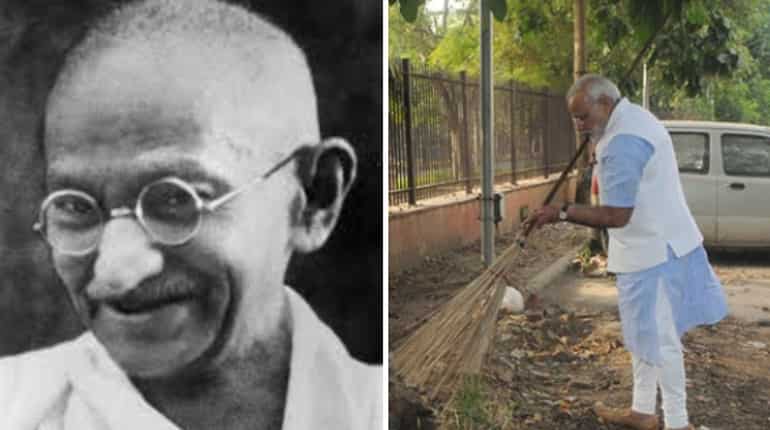
Swachh Bharat Abhiyan
Although the problems such as water availability etc. still persist, the women, having their own toilets at home, now feel more secure and way better than before.
In this era of global warming and climate change, everyone is striving towards a clean and safe India. The recent initiative led by the Indian government added to its up-scaling. My recent visit to Medh village for a SHG (self help group) meeting gave me an opportunity to analyse the impact of Swachh Bharat Abhiyan or Clean India Mission.
“A clean India would be the best tribute India could pay to Mahatma Gandhi on his 150 birth anniversary in 2019,” said Shri Narendra Modi as he launched the Swachh Bharat Mission at Rajpath in New Delhi. On 2nd October 2014, Swachh Bharat Mission was launched throughout length and breadth of the country as a national movement.
Its aim is to provide sanitation facilities to every family, including toilets, solid and liquid waste disposal systems, village cleanliness, and safe and adequate drinking water supply by 2nd October, 2019. The campaign of Clean India movement is the biggest step taken ever as a cleanliness drive till date. On the day of the launch of the campaign, around 3 million government employees, including students from schools and colleges, had participated in the event to popularize it globally and make the common public aware of it. Prime Minister Narendra Modi had nominated the name of nine famous personalities from business industries, sports and Bollywood to drive the clean India campaign. He also had requested from all nine personalities to invite another nine persons individually and requested to continue the chain of nine people to take this campaign to every Indian living in any corner all around the country. While leading the mass movement for cleanliness, the Prime Minister exhorted people to fulfill Mahatma Gandhi’s dream of a clean and hygienic India.
Lok Sahbhagi Sansthan (LSS), the organisation I am placed in, is working closely with the community with their signature project named ‘SAMMAN’ which is aimed at transforming the lives of women SHG members by helping them build their own toilets. SAMMAN is the Hindi word for honour/dignity and therefore it is a suitable name for this project.
It was being carried out by LSS with the involvement of, none other than one of previous AIF Clinton Fellow – Adil. He helped construction of many toilets along with support from this organisation’s staff and his mentor.
Our project seeks to transform and improve the quality of the life of the poor in rural Jaipur, Rajasthan, and largely, India, by motivating them to build personal toilets and helping them get loans from banks and the encouragement amount from the government under Swachh Bharat Campaign for construction costs. I carried a small case study of this SHG group named Ganga.
It consists of around 15-20 members. I was able to speak to all the members of this SHG individually and ask them to share their opinion towards sanitation and cleanliness. I was also able to document and record their achievement. For a big surprise, almost all the members in this SHG have constructed their own toilets and are now in a more comfortable situation. It was because they encouraged each other to build those toilets in or near their home. They have also received encouragement amount from the government to their respective bank accounts. Before having toilets they would have to walk miles away into the fields to get relieved, where they would feel insecure and also helpless. During winter seasons, due to the cold climate, it was again a big hurdle for them every day. But after getting the awareness for construction of toilets, they built their own toilets and are now free and happy. This was all possible because of the sincere efforts of LSS staff and the previous AIF Fellow.
Although the problems such as water availability etc. still persist, the women now feel more secure and way better than before having their own toilets at home.
Also, Jaipur district is now in the process of being declared as Open Defecation Free (ODF). It is having 100% ODF villages as of today.
Way ahead to go is to ensure that piped water supply to each and every single household is made available around these villages so that this initiative becomes completely successful and sustainable. Also, this is a major challenge for the government, as it requires a lot of budget and infrastructure to create this facility for all houses in the villages, due to their remoteness and various other issues.
A solution towards this issue can be the design of cost-effective toilets with low water usage and also if possible bio-toilets. Mainly, the poorest of the poor are unable to afford proper construction and maintenance of the toilets in the current design structure. It is also being said that the figures are manipulated since; many toilets are unconstructed or partially constructed with no real time usage at all. So, the challenge now is to ensure proper scrutinize and data collection. There have been efforts to make use of GPS to report the covered areas under this scheme but it needs to be dealt more accurately.
India consists of people of various faiths; Hindus, Muslims, Christians, Sikhs, Parsis, Jains etc, and they follow their faiths very devotedly. But it is a sad reality of our country that all the cleanliness and piousness is only confined to religious activities or kitchen.
Also, many insights can be taken from the book “Where India Goes” authored by former AIF Clinton Fellow Diane Coffey, which talks about the connection between caste, toilet and development in India and how to address these related issues. It calls for the annihilation of caste and attendant prejudices, and a fundamental shift in policy perspectives to effect a crucial, much overdue change.
I learned that change is possible only if you seek it. Especially rural India needs more of awareness and encouragement from people dedicated to promote sustainable development. People in rural areas are easy to understand, more humble and responsive than urban population. If you are successful in convincing them about which is the right way to do things and how it would benefit all the community, then they will themselves come forward to join any initiative and work towards its success.
To sum up, I realised that – Real INDIA lies in this 6 lakh plus villages of our country.
(Disclaimer: The opinions expressed above are the personal views of the author and do not reflect the views of ZMCL)