Opinion: With China in control, India can't take Nepal for granted

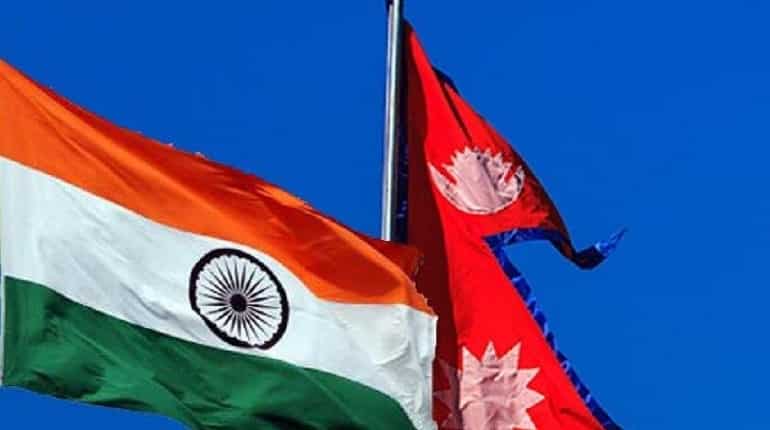
India, Nepal, diplomatic ties, Odissi dance troupe
Using their economic wealth, the Chinese have magnified their political influence dramatically despite citing “political interference in the internal affairs of other countries” as taboo.
Every time a Left government takes power in Nepal, old concerns and fears are expressed in India and Nepal about how the government will manage its relations with its giant neighbours. All Left parties once in power have called for a sweeping review of bilateral relations between India and Nepal, especially on the 1950 Treaty of Peace and Friendship and recruitment of Nepali Gorkhas in the Indian Army. In 1996, Prime Minister Manmohan Adhikari of CPN UML initiated this process. At that time, China was not a big player in the region. Further, Nepal was a constitutional monarchy governed by the 1990 constitution where King exercised real power.
When Maoists assumed power, they tried to subvert democratic institutions of state to establish a People’s Republic but were thwarted by democratic forces.
This is the first time a Left Alliance government -a CPN UML and Maoist Centre -have combined People’s Democracy and Maoist ideology to form the merged Nepal Communist Party. Two-term Prime Minister KP Oli is viewed as pro-China especially after the blockade of 2015, and the alleged dismantling of his government by India in August 2016. Oli is the first Prime Minister to ever sign a ten-point agreement with China as a backlash to the blockade which includes a trade and transit treaty and use of Chinese ports. But Oli is also an old friend of India and has studied the geography of politics carefully. His intention to deepen ties with China affords options to leverage India, precisely what Prachanda said in his first term – ‘we need China to balance India’.
Another issue every Left government has sought to review with India is the question of Nepali citizens recruiting into the Indian Army by a tripartite treaty including the UK in 1947. The Maoists’20-point representation to the government in 2000 included the question of recruitment. But as always, it is such an emotional and sensitive issue among Nepal’s soldiering community and an apparent thorn in the side of the nationalists that it has invariably had to be dropped due to acute joblessness in Nepal. One-third of Nepal’s population lives and works abroad and remittances make up for 25 per cent of government revenue. 40,000 Nepali soldiers are serving in the Indian Army and more than 5 lakh Indian ex-servicemen community in Nepal are a strong pro-India strategic constituency in Nepal. India-Nepal Armies have very special relations and their Army Chiefs are honorary Generals in each other’s armies.
The Chinese have been pushing Nepal to have deeper ties with the Chinese Army and break the Gorkha connection with India. In 2017 for the first time, a small joint Nepal China training exercise was held. The Chinese have increased military aid to Nepal ten times and are responsible for the training of the armed police force and also the police.
The prescient founder of modern Nepal, King Prithvinarayan Shah had observed that Nepal is a yam between two big boulders. When this ground reality is tempered with history, geography, religion, culture, and proximity, the Chinese realise they have a long way to go towards equivalence with India, notwithstanding the allure of Belt and Road Initiative including grandiose plans for connectivity. Using their economic wealth, the Chinese have magnified their political influence dramatically despite citing “political interference in the internal affairs of other countries” as taboo. Beijing played a major role in forging the Left Alliance and the Nepal Communist Party. If the government survives five years, a new stable Nepal is in the making. Incidentally, an India-Nepal Eminent Persons Group is already working on a review of bilateral relations for the last two years.
Meanwhile, India will nurture the democratic forces and support the new government so long as its key security concerns are red-lined. Nepal can no longer be taken for granted as the political landscape has changed and for the present, the Chinese are in the driver’s seat.
(Disclaimer: The opinions expressed above are the personal views of the author and do not reflect the views of ZMCL)