Opinion: Why Mayawati is opposition's best bet as Prime Minister

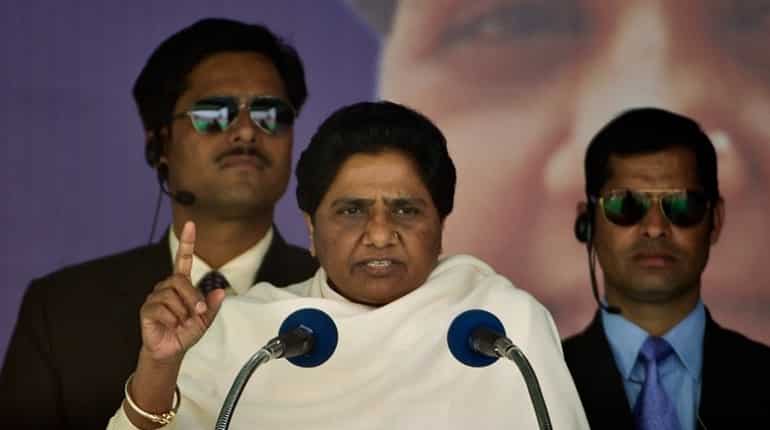
Mayawati
Going by the logic of selection, rather than election, it will be a compromise candidate whose elevation would be a political signal.
With Congress open to the idea of non-Congress Prime Minister, the signal to anti-BJP regional parties is that 1996 experiment can be repeated - when Congress propped up a government to stop BJP. This also means that Congress is fighting the 2019 electoral battle not to win but to stop the BJP from coming back to power.
Congress on its own cannot stop BJP so the party has sent feelers that it is ready to support a non-Congress face as Prime Minister to keep Narendra Modi out of power. However, this time Congress is weaker and would need to play the role of a shepherd to keep anti-BJP flock together. The indication from Congress camp that Rahul Gandhi might give way to some other leader to become the prime ministerial candidate of the opposition front, has excited the imagination of many regional satraps and also kept the door open for the former Prime Minister Manmohan Singh.
This has put spotlight on two players - Mayawati and Sharad Pawar. Former is a Dalit leader who is willing to stitch an anti-BJP alliance to stop Modi. India has never elected a Dalit Prime Minister. OBCs have been India's prime ministers but Dalits have not got the opportunity, though Indian politics since 1947 has revolved around Dalit issues.
The only problem with Mayawati is graft cases against her. But the prospect of her ascension gives opposition huge political advantage - to capitalise on the Dalit vote bank and consolidate it. It will give former CM of Uttar Pradesh Akhilesh Yadav better playing field in the home state.
Then comes Sharad Pawar. The former Union agriculture minister and chief minister of Maharashtra was once a contender to PV Narasimha Rao, but quietly bowed out of the PM race after realising that he does not have the numbers. Pawar rebelled when Sonia Gandhi was at the helm of affairs but went on to become minister under UPA for straight 10 years.
Pawar is known for political connections cutting across parties. His electoral base is limited but his contacts are far and wide. By extending support to the BJP in Maharashtra, he ensured that Shiv Sena becomes irrelevant. Pawar has no strong enemies and Mayawati has patched up with Akhilesh Yadav. They cannot be cancelled out politically. The other name doing the rounds is that of West Bengal Chief Minister and Trinamool Congress (TMC) chief Mamata Banerjee. Despite being a strong leader, Mamata gets cancelled out because of the Left. Sharad Pawar and Mayawati are more acceptable to them. Mamata's relationship with Congress has been hot and cold and Rahul Gandhi chose to fight assembly elections with Left rather than TMC.
Other regional leaders like JD(S) chief Deve Gowda are out of race. Andhra Pradesh Chief Minister Chandra Babu Naidu's fight with Prime Minister is more personal and local than on ideological lines. He can always make up and go back to BJP. Congress considers TRS chief and Telangana Chief Minister Chandrashekhar Rao as B-team of BJP. RJD leader Lalu Yadav is in jail and SP leader Mulayam Singh Yadav is not in the pink of health. And BJD chief and Odisha Chief Minister Naveen Patnaik is still undecided. So what principle will come to play at the time of selection if the mandate is fractured?
To understand this, let us examine the reasons which led to the elevation of Deve Gowda as Prime Minister of India. As the leaders got into a huddle to choose a leader of the United Front-led government in 1996, their first choice was former Prime Minister VP Singh. But he refused the offer. An intense power struggle followed between Lalu and Mulayam.
Lalu-led block prevailed and Mulayam’s candidature was cancelled. But Mulayam's supporters propped up the name of Deve Gowda, seen as the most unthreatening leader. Gowda became the Prime Minister but lost his pre-eminent position in the Karnataka politics. He was a chief minister when he accepted the offer but didn't last long in national politics.
What happened to Deve Gowda still serves as warning to many powerful chief ministers that a short stints like these can end one's political career. Once Deve Gowda was dethroned, the mantle went to IK Gujral who was not a mass leader. Again the most unthreatening leader was chosen.
This principle was applied again in 2004 when Sonia Gandhi, then Congress chief, chose not to become the Prime Minister and elevated Manmohan Singh to the rank. Neither of them had loyalty of the Members of the Parliament nor controlled the organisational steering of the respective set up.
Going by the logic of selection, rather than election, it will be a compromise candidate whose elevation would be a political signal. Mayawati tops the criteria but corruption charges against her is the baggage.

Both Pawar and Manmohan are old war horses who are electorally unthreatening. The rest, by virtue of being more powerful and resourceful, get cancelled out.
(Disclaimer: The opinions expressed above are the personal views of the author and do not reflect the views of ZMCL)