Opinion: Union Budget 2018 needs to end the sorry saga of Indian agriculture

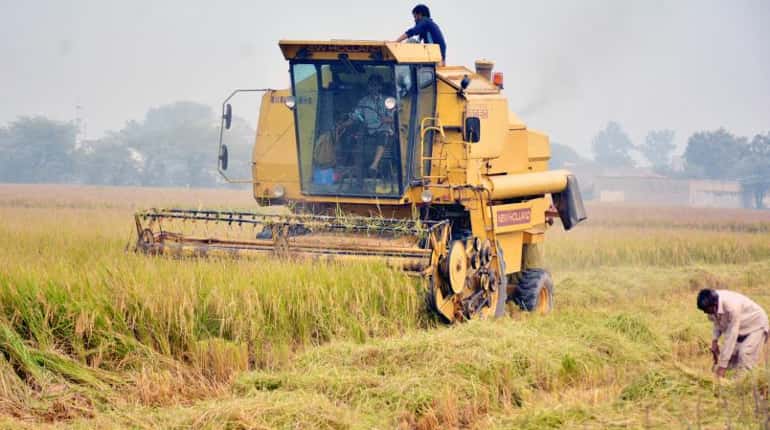
farmers
In the coming budget, it is necessary that the Finance Minister puts his attention to a strong policy-making group and look at the agricultural policy in a ‘Bottom-Up Fashion’ than the usual ‘Top-Down Fashion’ as has been the case always.
We are in the fourth year of the current government and it seems that the farm sector problems have not been sorted out during these four years. We are exactly stranded at the same place where we began a decade back or maybe earlier. Despite strong pressures from the farm lobby, the stagnation in productivity and consequent low net income in the farm sector did not improve.
Though in the current Indian Parliament, we have a large share of Members of Parliament (MP) declaring themselves as agriculturists or farmers, so far the fact has been of little use to the farm sector. The 16th Parliament has 53.8% of the total lawmakers as agriculturists and that is the largest share ever since independence. Despite this fact, and after four years of huge promises made to the agricultural sector, it continues to reel under economic pressure.
The farm sector of this country is trying to wriggle out of the low-income trap. Every day cultivators are leaving agriculture to become construction workers in urban localities. It needs to be seen if the Finance Minister takes a few tricks out of his ‘Brown budget Bag’ to get the farm sector on a higher growth track.
Slow down in agriculture
Under the pressure of many pulsating current issues, which include Padmaavat, Supreme Court judges, Tripple Talaq, the usual crisis in Kashmir, not much has been said about the significant drop in the growth rates of the farm sector. Parliamentarians are quite happy investing their time without looking into the ulcerating problem of the farm sector. Not a word is spoken about the farm sector nor a scheme introduced in order to enhance the farmers’ income. The farmers have been reduced only to a ‘coin’ to be used only during elections and then stacking into deep corners.
The World Economic Forum welcomed India broadly keeping in mind the kind of investment and the potential growth rates of the national economy. But below this shining surface, lies the crumpled face of the agricultural sector which cries for a boost. Productivity has stagnated, investment in the farm sector has not been increasing at the desired pace, real net income stagnated and marginalisation continues unabated. All these are increasing the miseries of the farmers.
Is it one of the usual downs in the growth cycles?
The history of Indian agriculture is replete with cycles of growth and stagnation. The long-term growth of the agricultural sector has never crossed the threshold of 3.5 to 4 percent. The current situation cannot be ascribed to monsoon and, therefore, the policymakers cannot get away by blaming the rain god as usual.
An irritating question can be posed to the policymakers, are they were really unaware of the monsoon dependence of Indian agriculture of the last 7 decades? Right from independence, we have been blaming the rain god for the overall failure of the agriculture sector rather than admitting that monsoon failures create only temporary troughs. With all information technology and supercomputers at our disposal, Indian agricultural scientists and policymakers are helpless before this situation. This powerlessness is shameful when we boast about the scientific advances and an army of agriculture scientists around.
A Large part of the country is still hanging precariously on the performance of monsoon. It is necessary, that the Finance Minister takes up the cudgel to deal with the situations constructively. It is well-known that the Rainfed Authority of India did not deliver its promises and, in fact, it is hardly heard if the authority is functioning at all.
Regional Differentiation
Regional differentiation in the performance of agriculture is well-known in India. There are regions that compare with international standards of agriculture and the other vast steppe is proliferated by poor farmers. This differentiation occurs because of dissimilar factor endowments, including natural and man-made capital formation. There are regions which were termed backward during the initial phase of planning in India and continued to linger around the same position without any visible efforts by successive governments. It is these regions that need to pick up the tempo of growth and aggressively push themselves into the mainstream growth process.
Theodore Schultz argued during mid-sixties, these regions required and external investment push. It is only with that, we may be able to bring in a new growth perspective to the country. Historically, we have bypassed regions and bypassed farmer groups. A number of schemes were undertaken in order to bring these two segments into mainstream growth. However, the story is very clear and the failure is boldly written on the walls of our experience. Clearly, we have not been able to rope in the small and marginal farmers, belonging to Scheduled Caste and Scheduled Tribes, into the mainstream growth pattern. The Finance Minister needs to look carefully into this process of regional disparity and put larger attention to the bypassed groups and the regions.
Policy Vacuum
A few years back we have been talking about a policy paralysis in the agriculture sector. Following that a commission under the chairmanship of Prof. Swaminathan prepared a large report, covering almost every corner of the agricultural sector. Either the report was too complex for the policymakers or it was totally non-implementable and, hence, respectfully trashed by the government.
It is strange that the Niti Ayog could visit only a few aspects of the agriculture sector in pursuit of ‘Doubling the Farmers’ Income’ during the coming years. This has become a fashionable phrase now and everyone small and big among the agricultural pundits is talking about ‘Doubling of the Farmers Income’.
It is known to all of us that the structure of Indian agriculture is quite complex, diversified and ground preparations for such a policy step are quite difficult. In the coming budget, it is necessary that the Finance Minister puts his attention to a strong policy-making group and look at the agricultural policy in a ‘Bottom-Up Fashion’ than the usual ‘Top-Down Fashion’ as has been the case always. It is quite unfortunate that in India the Agricultural Ministry does not have any policy specialists nor are policy document revisited routinely.
(Disclaimer: The opinions expressed above are the personal views of the author and do not reflect the views of ZMCL)