Opinion: The politics of stigma

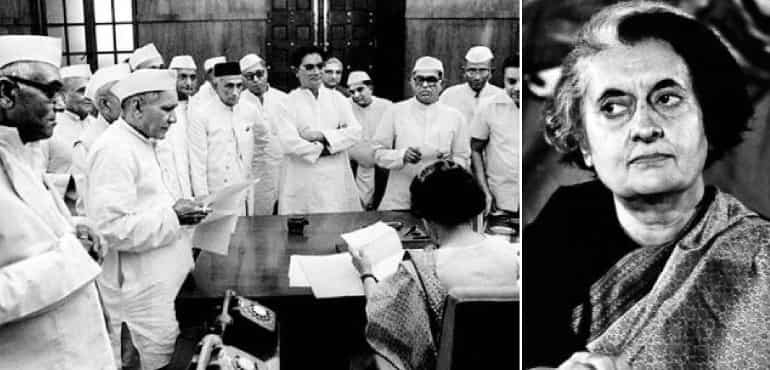
Emergency
The advertisement on Emergency is also an attempt to counter the Opposition on the issue of social rights and remind public as to what the real dictatorship looked like.
There is no denial that Emergency is a blot on nation’s history. Late Prime Minister Indira Gandhi suspended constitutional rights in the name of public order in order to survive politically. She subverted democracy in the name of national security and development.
It is also true that she apologized and withdrew the Emergency when no such pressure existed on her. A complex personality like her and an episode which touches every aspect of our constitutional system once again like others was consumed politically. It is a matter of separate discussion and debate but the fact of the matter is that BJP’s preparation for the Lok Sabha elections has already started.
It is for this reason that after 43 years, a public ad was issued remembering an episode on which public consensus already exists. The consensus being that it was India’s darkest hour.
By taking out the ad, BJP is pushing talking points in the public discourse for the conversations to revolve around them.
The first public declaration after withdrawing support from PDP in Jammu and Kashmir was that it was done in national interest and for the people of Jammu and Kashmir. The second signal came from party insiders who hinted that operations against terrorists would increase in J&K. The act of taking back the support was instantly converted into an act of sacrifice for nation’s health.
The advertisement on Emergency is also an attempt to counter the Opposition on the issue of social rights and remind public as to what the real dictatorship looked like.
Even while speaking at the function in Mumbai, PM Narendra Modi referred to the Emergency as a lurking symptom within the Congress Party. There is nothing wrong in remembering Emergency as an assault on democracy but to consume it electorally and connect it with current developments tells us two things. One it will continue to use Emergency as a counter attack on Opposition when it comes to the right issues, and second that like surgical strike and DeMo, it will be used for elections.
BJP’s current politics also does not move beyond the past. It is stuck in what if Patel was the PM, what if Ambedkar was in Congress or what if Bose came back to India. Even the Emergency and Operation Blue Star fall in the same category.
The general elections are 11-month away and there exists no narrative of critical evaluation of government has achieved. By going back to previous episodes of violence, BJP wants to fight the elections on past rather than what it has achieved in last four years. Though a negative campaign can have resonance in main stream media, it is not clear how far issues like these will resonate with younger audience.
The turnaround from the issues of governance and growth reflects BJP’s electoral anxiety. Not only it has become politically friendless, it has been repeatedly cornered on the issues related to social unrest and law and order breakdown related to cow vigilantism. It also feels politically alienated on count of growing Opposition cooperation.
It is because of this anxiety, the electoral rhetoric is moving into familiar territory of family, national security, historical mistakes and political instability. BJP’s B strategy of 2014 will become the A strategy in 2019. In 2019 for this reason old slogans of temple, Article 370, national security, cultural nationalism, dynasty and urban Maoists will dominate the narrative.
It will not be an exception but in line with global pattern where right has been able to assert itself over the liberal order. It also shows that politics of stigma will prevail over politics of manifesto and achievements. In short run, the politics of stigma can work but in long run voters will only respond to work done on the ground because that is the only thing which matters.
(Disclaimer: The opinions expressed above are the personal views of the author and do not reflect the views of ZMCL)