Opinion: Stop witch-hunt against Army

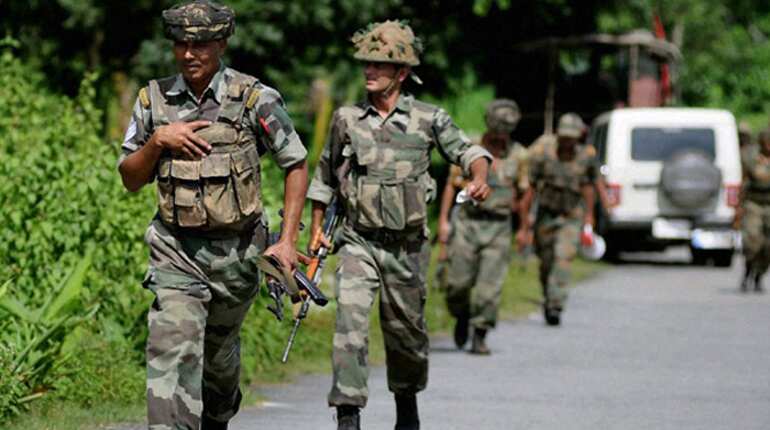
Indian Army
There is an industry that is mushrooming across the country to malign and weaken the morale of the Army engaged in counter insurgency (CI) and counter terrorism (CT) operations.
At a time when India is facing serious internal security challenges, there is an industry that is mushrooming across the country to malign and weaken the morale of the Army engaged in counter insurgency (CI) and counter terrorism (CT) operations by mounting Human Rights (HR) violation cases against soldiers in various courts of law. In spite of the immunity provided by the Armed Forces Special Powers Act (AFSPA), more and more soldiers today are being dragged into litigation for their actions while discharging their lawful command.
The soldier who has been requisitioned by the state under extraordinary situations, because institutions of governance have either failed, collapsed or subverted, is made to create stable conditions for the state to function. Of course, this is a solider’s duty and he makes all endeavours to do so, even at the cost of his life. But the moment the situation improves, HR complaints flood courts of law. These soldiers are then abandoned by politicians, bureaucrats and even at times by their own military leadership. They are thus left all by themselves to defend their actions during conflict in courts of law.
The situation has taken a serious turn, and soldiers now feel betrayed by a system that seeks their assistance to save the integrity and authority of the state. Currently, soldiers in conflict situations like Kashmir have been given two untenable options by the system: First, discharge your lawful duties and face the court of law and prosecution. Second, if you don’t respond, then be prepared to lose your life.
The recent case of Major Aditya, who was forced to use minimum force to save his men from a murderous crowd of stone pelters is an eye-opener. He was abandoned by the political leadership, Ministry of Defence (MoD), state administration and even by the military leadership. Ultimately, it was the father of the officer who had to go to the Supreme Court to stay the FIR against the officer. This is the state of affairs today.
India needs to learn from other countries to better protect its soldiers. In Britain, Prime Minster Theresa May had publicly declared that UK troops would be protected from the “industry of vexatious claims that has pursued those who served in conflicts”. She also declared that she would “rip up” human rights laws that impede the fight against terrorism. If Britain can take such a stand, why is the Indian political leadership and MoD silent? It is a perplexing question.
The problem has only become worse with more than 300 officers and soldiers recently going to the Supreme Court and complaining of “persecution” by civilian agencies such as the CBI for simply carrying out their duties in sensitive areas such as Jammu and Kashmir and the Northeast. The petition filed by these senior officers is the outcome of growing stress and widening gap between the leadership and the rank and file. The military brass must sit down and find answers as to why soldiers have gone to the court instead of the MoD and Army HQ?
This lack of accountability of the political leadership, bureaucracy, police and judiciary has ensured that soldiers are becoming jittery and the chain of command is in danger of being threatened. What the state needs to do is provide broad guidelines for the deployment of the Army. States here should ideally sign and provide Rules of Engagement (RoE) since the situation is volatile and can move towards worst case scenarios. For instance, what is the RoE for the Army to deal with stone pelters, who are disrupting them from carrying out their duties? This is something that the Chief Secretary, acting on behalf of the Chief Minister of the state, should address.
By issuing RoE, the state is then allowing the Army to take action as deemed necessary by them if disrupted by stone pelters. But so far, neither has the military leadership been insisting on RoE for evolving situations, nor has the political leadership and bureaucracy obliged by issuing RoE. This is worrying and the judiciary needs to ask the political leadership and police why the Army is being disrupted from discharging their duties against stone pelters in Jammu and Kashmir. Likewise, instead of the Army personnel facing CBI probe in HR cases in the North East, it should be the state administration that should be held accountable. The state knows what it will get when it calls in the Army and it cannot duck responsibility simply because it was not in the firing line. The court and the public have the right to ask on what basis and terms the state engaged the Army and they must reply. We must remember that running of the state is not the Army’s business, and politicians must be made to answer as to how they allowed the rise of insurgencies in the first place.
The fact that soldiers today are willing to go to court should be taken as a warning by both the political and military leadership. Morale and trust is something that if lost once, is difficult to restore to its original level. The responsibility for the actions of soldiers in the line of duty rests with the political leadership and the state administration, who requisitioned the Army to carry out its mission in the manner it sees fit. If soldiers do not feel they can do that anymore, it could lead to a crisis situation within the country.
(This article was first published on The DNA. Read the original article.)
(Disclaimer: The opinions expressed above are the personal views of the author and do not reflect the views of ZMCL)