Opinion: Pakistan's nuclear black market endangers the world

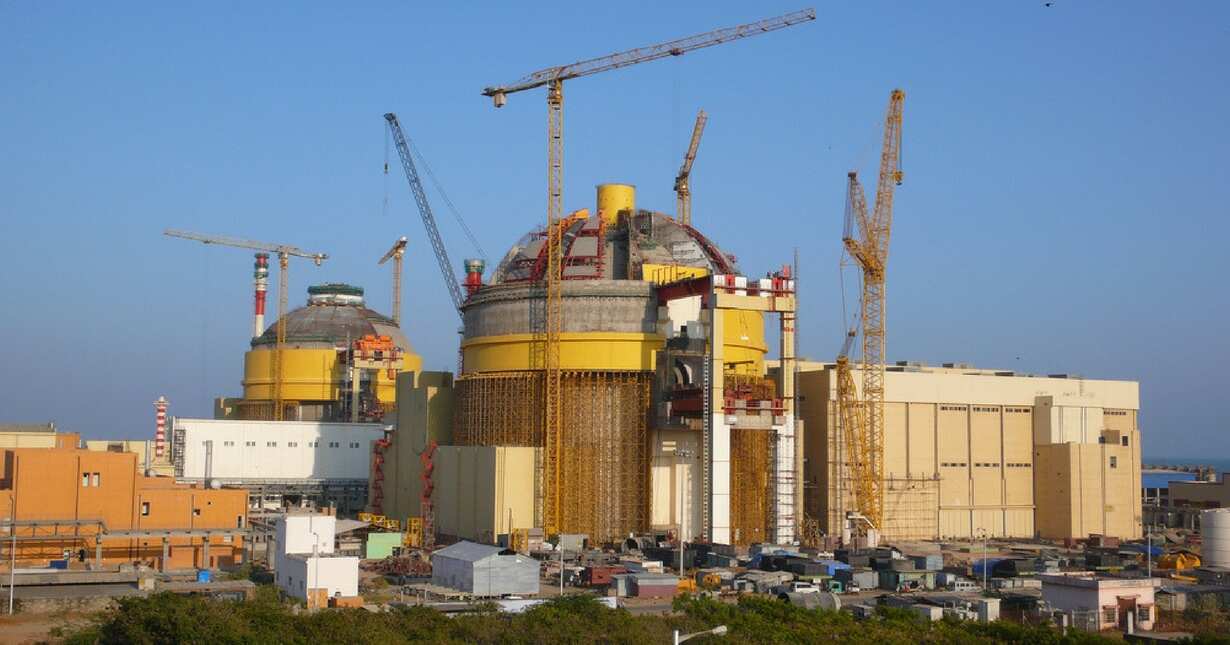
Nuclear power plants
Pakistan's nuclear black market extended through N.Korea, Libya, Iran
A few days back, I was talking to one of the Pakistan Defence Experts on the panel of a renowned news channel over the issue of ceasefire violation at Line of Control. The Indian panelists were in anguish over the recent killings but, surprisingly, the Pakistani panelist who was a retired Lieutenant General mentioned repeatedly in his statement that Pakistan is nuclear capable and any adventure from Indian side will be answered by a nuclear missile.
Before we become a victim to these lies and deceits, we must understand the reality of Pakistan’s nuclear programme.
As per the statement of AQ Khan to Newsweek on 16 May 2011, Pakistan’s nuclear programme started as a countermeasure of India’s first nuclear test in 1974 but he is wrong. If we go back to study the nuclear program of Pakistan, we must start with their humiliating defeat in 1971. Then PM Mr Zulfiqar Ali Bhutto said that Pakistanis will have to make a nuclear bomb even if they have to eat grass. The entire blueprint of Project 706 or the Kahuta Research Laboratory (KRL) was ready as early as 1973 and the project actually kicked off in 1974. This was the start of a dirty mess created by Pakistan which is still haunting the world.
To me the actual father of Pakistani Nuclear program was not AQ Khan, it was Dr Munir Ahmed Khan of Pakistan Atomic Energy Commission (PAEC). Munir was a true genius and fathered Pakistan’s nuclear weapon programme using Plutonium. AQ Khan, who started Project 706, had the sole objective to develop Pakistan’s own nuclear bomb using Uranium as fuel. And, finally, all the devices of Pakistan’s Nuclear arsenal were Uranium based only.
Technically speaking, any nuclear fission device has two major parts. The Device consists of many parts, such as mechanical, electrical, electronic and the detonation mechanism in the body of the bomb is the first part, and the nuclear fuel is the second part. While the first part is not very difficult to obtain, Pakistan could create it easily in 1974 itself. The second part which is the nuclear fuel was the factor which delayed Pakistan’s nuclear programme for another 10 years and they could be ready with their first device in 1984 only.
To understand Pakistan’s nuclear programme and the role of AQ Khan in this, we must understand the concept of nuclear fuel. Uranium has several isotopes and the main fissile isotope which acts towards the generation of energy or creation of nuclear bomb is Uranium-235 which is only .5% to .7% in the naturally obtained Uranium. The energy grade uranium has 4-6% of U-235 while in the weapon-grade uranium, the concentration should be more than 90% and that was the main concern for Pakistan.
The equipment required to make weapon-grade uranium is an ultra-high-speed gas centrifuge and the technology was not available with Pakistan. The centrifuge is required to spin the gaseous form of Uranium Hexafluoride at more than 100,000 RPM to generate fissile material.
This was the time when AQ Khan played a vital role. Though he was a nuclear scientist, he was working as a translator in URENCO at Belgium and Netherlands. He approached the Pakistan Government and asked to help them in making the bomb. As per Mr Kuldeep Nayyar, the Pakistan Government was not aware of him and, thus, the ISI was made to run a full background check on him.
Ironically, the ISI declared him incompetent for any nuclear weapon development but still he made his forays in the government set up through his connects in the PAEC and successfully arranged a meeting with Mr Bhutto. Somehow, he was successful in convincing the top leadership and AQ Khan was given the charge of Kahuta Research laboratory after he returned to Pakistan from the Netherlands.
Khan knew the importance of Pakistan army in the political scenario; he had seen many coups. Hence, to secure his project from any political disturbance, he made this project separated from PAEC and ran it in close connection with the Pakistan Army.
Over the next few years, he established administrative setups at various shell companies in Dubai and the Middle East to route the centrifuge technology. The designs, calculations and blueprints of these centrifuges were stolen by AQ Khan from URENCO and transferred to Pakistan through different international routes. Unconfirmed reports say that certain Middle Eastern Islamic countries also helped him in this on the pretext of having a dedicated Islamic Bomb.
By 1980, Pakistan had developed some prototype centrifuges for uranium enrichment which were called as PakSat-1. They developed the centrifuges further and by 1984 could have enough fissile material required for their first bomb.
I would like to mention here that there were two organisations working in Pakistan towards the development of a nuclear bomb. One was KRL under the Pak Army and AQ Khan which was making a Uranium-based bomb; the other was PAEC itself which continued its 1972 program of the Plutonium-based bomb and established its facilities in Khushab, Jorarabad. By late nineties, Pakistan had the design and capability to produce its Plutonium based device too, however, all the existing devices with Pakistan are Uranium-based and the Plutonium-based device was limited to experiments only.
The bomb was in the making and Pakistan needed the missile technology to drive this project too. Its ally and friend America refused to give any technology to Pakistan on the pretext that it could fall into the wrong hands and the eyes moved to their other friends- China and North Korea.
Under Kim-Jong-Il, North Korea was successful in making its missiles with the help of China and was desperately looking for someone who could help them achieve their mission. When Pak PM Benazir Bhutto visited Pyongyang in 1990, certain secret agreements were signed between both the countries and some classified information about the designs of device and centrifuges was shared with North Korea in 1993 in exchange of missile technology. This missile technology formed the base of most of the missiles of Pakistan which surprisingly resemble North Korean missiles.
It was not only North Korea but Iran too. When in 2003, International Atomic Energy Agency (IAEA) inspected Iran and found a large uranium enrichment facility, Iranian government revealed that the centrifuges were obtained from a foreign intermediary through URENCO but surprisingly the design was exactly same as PakSat-1 centrifuge which was invented by Pakistan. Some of the Pakistani centrifuges which were transferred to Iran in 1989 were also recovered.
Pakistan was expanding his black market for other countries too and the key person in this was AQ Khan who was working closely with every government and military chief of Pakistan. In 2003 itself IAEA decided to dismantle Libya’s nuclear program and to their surprise, they found Pakistani PakSat-1 centrifuges in one of the Libyan uranium enrichment facility. Libyan government openly accepted that they bought this technology from the black market and the supplier was Pakistan. Imagine had that dismantling not been done, the nuclear bomb would have gone into the hands of Islamic terrorists by now as entire Libya is facing turmoils of war with ISIS.
The cost paid for these materials to Pakistan by North Korea, Iran or Libya were not known. It was also not known if Pak government had sold these designs to any other country too. However, as per rough estimates, the payments went into billions of US Dollars which were reportedly used by Pakistan in spreading terror network in Indian and Afghanistan.
In 2004, Pakistan government dismissed AQ Khan and initiated an inquiry against him and, ironically, his military connects saved him when Parvez Musharraf took over the country and issued him a presidential pardon. The Pak government said that AQ Khan ran this nuclear black market purely on his own. However, the fact is that he was awarded the highest civilian decoration of Pakistan- “Nishan-E-Imtiyaz” twice in 1996 and 1999 which proves the undeterred support of Pakistani government to him.
(Disclaimer: The opinions expressed above are the personal views of the author and do not reflect the views of ZMCL)