Opinion: Northeast pins its hopes on government's policies

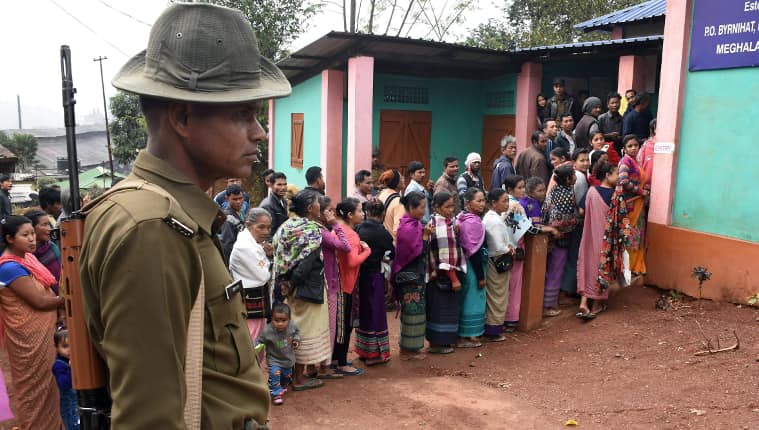
Counting of votes in Northeast
Politics with appropriate policies for the Northeast will surely strike the right cord one day and bring the region more closer to New Delhi.
The package of freedom, liberty and fraternity, which our founding fathers of the Constitution envisaged for future Indian citizens, seems to fluctuate in upholding the national spirit over the 71 years of Independence. The “trust” between the Northeastregion and Delhi has eroded down the years, specially when a new wave of scaling and defining “nationalism” prevails.
The “fraternity” envisioned for future India is in deep dilemma. Over the years, the insurgency campaign has gone deeper and wider,to the extend that, secessionism has entered into the realm of demands and petitions. At these juncture, we need to stoop over and reflect on the “politics of insurgency”, “politics on Northeast” and the reception of the people. One bewildering statement could be, the anticipations of the present generation on the government has grown. There are many more questions and equal assumptions on these line of rhetoric. The expectations of the people for better facilities were never fulfilled and they remained voiceless forever.
Resources and identity withered nonchalantly. If we have to revisit the past decades before the onslaught of various insurgent groups, unemployment was one big issue. It remained unaddressed for decades and the situation became malignant eulogising into diverse magnitudes with adverse effects. We now hope that the “Look East Policy” and “Act East Policy” bring much of what they promise.
When the question of nationalism arises within the ethnic belt of more than 500 different tribes, with their own super powerful insurgent group. There are moderate insurgent groups, who felt necessitated with the rise of non-state units from neighbouring tribes but remain loyal to their citizenship. Following the region closely, it is ever challenging to keep track the rising number of organisations and their rhythm of politics. Here again, if we have to focus and compare on the “trust” level between the mosaic of tribes living together in the region, it may be lower than what existsbetween the mainstream and the region.
Atribe has to be vigilant and protect the interest of their community.One standing example among the Northeast states is Mizoram. Ravaged and inflicted by insurgency, the state has been appreciated and held in high esteem in their pursuit towards peace and good governance.
One incident which Late Professor BK Roy Burman loved to narrate on the issue of “trust” between the Prime Minister of India and PLA (Peoples’ Liberation Army), one of the oldest insurgent group of Manipur, is worth mentioningtoday. In 1980, Indira Gandhi visited a village in an insurgent prone area in Manipur. The insurgent group through an intermediary offered to take care ofthe security of the Prime Minister, provided that the Army outpost located on the village was removed. Following which, she ordered the removal of Army personnel. The barrack was raged to the ground and the place was turned into a helipad. The helicopter carrying the Prime Minister landed on the spot. Indira Gandhi travelled 2 kilometers in an open jeep to reach the destination as a gesture of her confidence in the people. The insurgents joined the police to ensure the security of the then Prime Minister.
Appropriate government policies for the Northeast will surely strike the right chord one day.Politics is undefinable and unpredictable, but with an objective of winning faith of people and spreading hope among them, government can bring the region more closer to Delhi.

(Disclaimer: The opinions expressed above are the personal views of the author and do not reflect the views of ZMCL)