Opinion: 40 elephants die in Assam. Who is responsible?

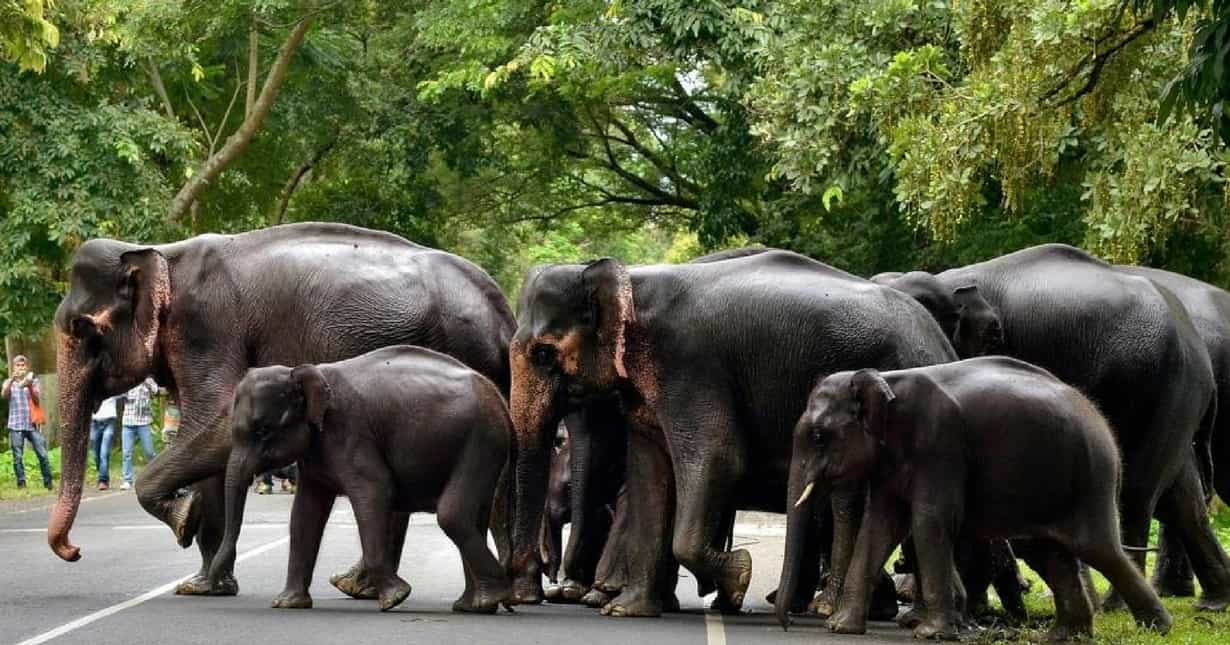
Elephants
There is an urgent need to build more protected areas to conserve the wildlife and also to keep both, animals and humans at bay which will avoid the human-animal conflicts.
Recently, in Assam, 40 elephants diedin 100 daysbecause of man-animal conflicts. There are several other reports which talk about how animals are dying on a regular basis due to unnatural causes. Many conservationists claim that moving train, electrocution, poisoning, falling in the ditches etc, are the causes responsible for such tragic deaths and surprisingly all of the mentioned reasons are man-made.
While stories about man-animal conflict and how it impacts people and their resources are pretty common, very few discussion, on the other hand, takes place on thesufferings endured by the animals due to continuous human intervention and forest encroachment.
This infringement of wildlife leads to the reduction of the habitat, increased human-wildlife conflicts, migration of some animals, killing or dying of animals, extinction of flora and fauna, wildlife predation, the collapse of wildlife populations and reduction of geographic ranges.
Development in India is moving at a very fast pace but it is completely neglecting the ecosystem. The growing infrastructure is providing room for humans only, there is not any space for other species, be it birds or animals. Shrinking habitat and lack of accessible sources of food from expanding urban and suburban land use have brought animals and humans into conflict.
Habitat encroachment, fragmentation, and destruction have produced a plethora of problems. Habitat destruction is a leading cause of species endangerment. This is the reason why wildlife is invading villages and cities.
The state of Assam has five elephant reserves, covering an estimated area of 10,967 sq km. Only a small portion of these reserves are in protected areas, in the form of national parks or wildlife sanctuaries, while the rest are reserved forest areas.
 40 elephants die in Assam in 100 days as man-animal conflicts increase (PTI)
Not only are the herbivores are affected butforest encroachment has lefta huge impact on carnivores, such as tigers. The decline in numbers of natural prey is one of the major reasons why carnivores shift their diets to livestock. They need food but we humans are taking it away from them, So, obviously, they will trespass through human habitation to fulfill their needs. The herds of animals have been invading human localities majorly for food. They are not getting enough food because humans have muddled with the ecology by excessive deforestation.
In Pokharan, Rajasthan, the Griffon vultures are dying. These birds migrate from across the border. Usually, these birds come here during the winter. Villagers were passing through the area when they noticed carcasses of the birds on the railway tracks. It is obvious to speculate that a train must have mowed down them.
The ecological imbalance is also responsible for the increase in infectious diseases in both humans and wildlife due to increasing anthropogenic disturbance of natural ecosystems.
There is an urgent need to build more protected areas to conserve the wildlife and also to keep both animals and humans at their separate domain which will avoid the conflicts. If humans are considered to be more sensible then it is expected of them to not interfere withanimal's ecosystem.
(Disclaimer: The opinions expressed above are the personal views of the author and do not reflect the views of ZMCL)