Now, Locusts attack India's agriculture amid coronavirus pandemic

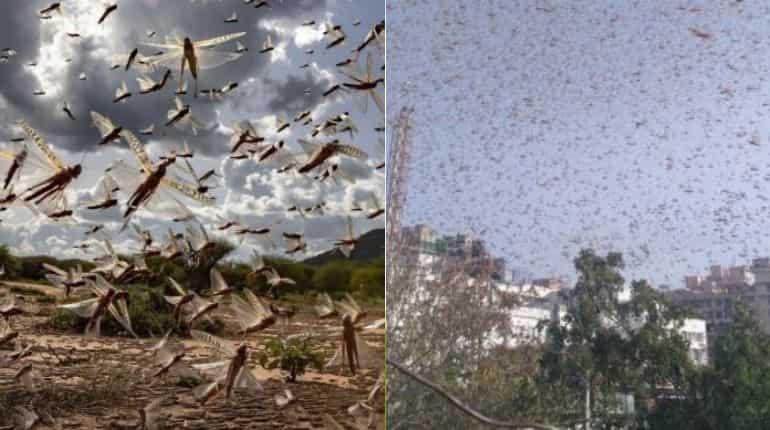
Locusts
After the coronavirus pandemic, India is braced for anotherunwelcome guestin the form of the world'smost dangerous migratory pests -locusts.
Large swarms of parasitic bugs entered the country via Pakistan in April and have been feeding oncrops, pasture, and fodder. It is the worst locust attack on India in 26 years.
The locustsspread from the horn of Africa to Yemen, then flew to Iran before attacking hectares of cotton fields in Pakistan. The pests have now attacked in India.
A single swarm can cover one square kilometer and canravage crops meant for over 35,000 people with over 80 to 150 million locusts.
They possess the ability to breed phenomenally and have a long flying range.In a single day, they cover about 150 kilometers. Thesepests have been giving farmers sleepless nights since winters.
Over the past year, most of the farmlands affected by locusts have lost over one-third of their crops.They usuallycome to India around June to feed on summer crops but this yearthey landed in April.
It has jeopardisedthe agriculture-based economies of several states and there is no quick-fix solution to thepest menace.
Truck loads of pesticides are being sent to different parts of the country butthepests can only be destroyed at night when they settle on the trees.
Even drones are being used to counter this problem but unfortunately it is much bigger due toglobal warming. The higher temperature even in winter is perfect for locusts to breed.
They have journeyed the world from Africa to West Asia to South Asia.
Locusts arrived in Pakistan from Iran in June 2019 where they devoured the summer crops including cotton, wheat and maize.Although the invasion was expected to subside but it did not. The locusts stayedand spread.
Some of the poorest countries in the world are the worst-affected.Locusts have threatened food security and livelihoods in East and West Africa, South and West Asia, and India.
India is coordinating a joint-effort with Iran and Pakistan to stop the emergence of fresh swarms of locusts.
For India, this is a national calamity.In the past, locusts have caused plagues in the country. But, India has not witnessed any full-blown locust cycles after 1962.Theproblemcannot be swatted away easily and requires a sustained responselike the COVID-19 virus.