New Year present for Delhiites as air quality improves, stage-III GRAP restrictions revoked

&imwidth=600&imheight=450&format=webp&quality=medium "New Year present for Delhiites as air quality improves, stage-III GRAP restrictions revoked")
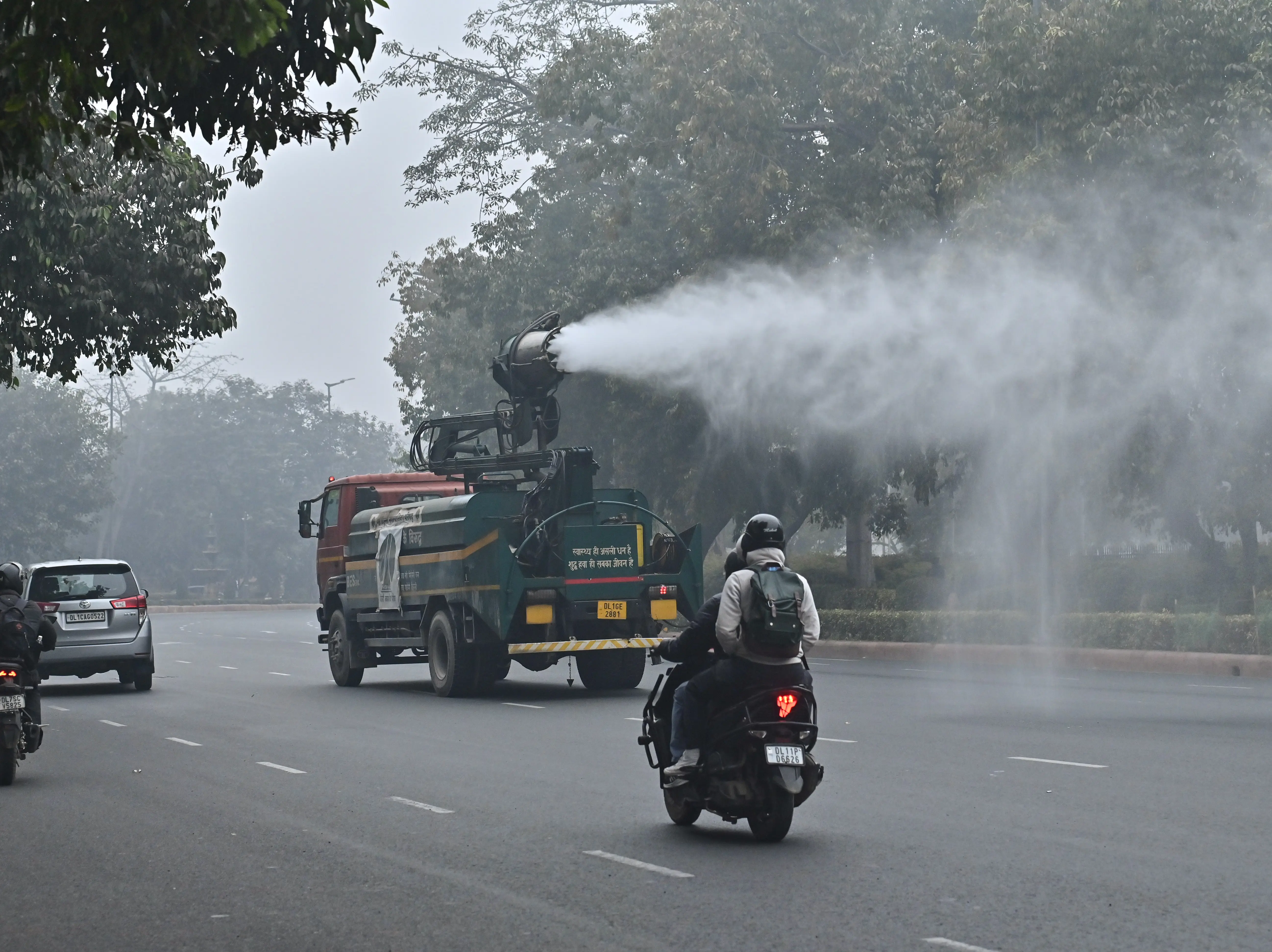
An anti-smog gun vehicle sprays water droplets to curb air pollution Photograph: (ANI)
The CAQM revoked Stage-III GRAP measures in Delhi after air quality improved, but Stage-I and Stage-II measures will remain in place to ensure ongoing air quality control
The Commission for Air Quality Management (CAQM) decided to revoke Stage-III measures of the Graded Response Action Plan (GRAP) in the National Capital Region on Friday (January 2), following a significant improvement in Delhi's air quality. As of 4 pm on January 2, Delhi's Air Quality Index (AQI) had decreased from 380 the previous day to 236, reflecting a steady decline. In response to this positive change, the CAQM’s GRAP sub-committee announced the immediate removal of all Stage-III restrictions across the NCR.
“Keeping in view the prevailing trend of air quality, the CAQM Sub-Committee on GRAP decides to revoke all actions as envisaged under Stage-III of the extant GRAP, with immediate effect, in the entire NCR,” the order read.
However, the update made it clear that preventive measures and regulations outlined under GRAP’s Stage I and Stage II would remain active to prevent any future air quality deterioration. "The AQI of Delhi, which was recorded as 380 on Thursday, has significantly improved and recorded 236 at 4 pm on Friday, exhibiting a trend. Keeping in view the prevailing trend of air quality, the CAQM Sub-Committee on GRAP decides to revoke all actions as envisaged under Stage-3 of the extant GRAP, with immediate effect, in the entire NCR," an official said. "All actions under Stages 1 and 2 of extant GRAP to remain in force in NCR," the official added.
The India Meteorological Department (IMD) reported that Delhi's temperature was around 11°C on Friday (January 2) morning, with very dense fog in the early hours. The fog was expected to persist throughout the day, though the weather is anticipated to improve starting Saturday (January 3). According to IMD, Friday’s temperatures in Delhi were predicted to vary between 15°C and 17°C for the maximum, and 9°C to 11°C for the minimum. While the minimum temperature will be 2°C to 4°C higher than usual, the maximum temperature is expected to remain significantly below the normal range.

