
&imwidth=800&imheight=600&format=webp&quality=medium "Mystery of Netaji Subhash Charda Bose's death: Are his ashes really in Japan?")
The death of Netaji Subhash Chandra Bose remains one of the biggest historical mysteries of India. More than 80 years have passed, and there have been several claims and counterclaims surrounding his death, but no conclusive evidence of his death has been found. Bose's daughter, Austrian-born economist Anita Bose Pfaff, urged scientific proof, DNA testing, not political narratives and has not fully endorsed the official plane-crash version. According to a PTI report, she has urged the remains to be brought to India and the facts to be established conclusively.
How did Netaji die?
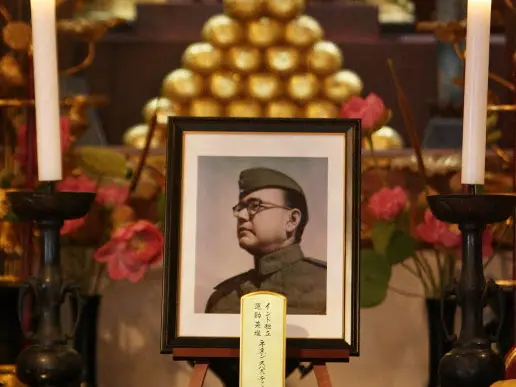
The most prominent idea is that Netaji died in a plane crash on his way to Taiwan on August 18, 1945, and his ashes are at the Renkoji temple near Tokyo. The Ministry of Home Affairs, in May 2017, in response to an RTI, confirmed that Netaji died in a plane crash on August 18, 1947, based on the reports from the Shah Nawaz Committee, Justice GD Khosla Commission and Justice Mukherjee Commission. However, these three reports are contradictory in essence. The Shah Nawaz Committee and Justice GD Khosla Commission accept the theory that Netaji died based on the circumstantial evidence, such as the Japanese officials and doctors. It also takes into detailed investigative report of 1956, which quotes the Japanese individual with whom Netaji was last seen. These two commissions were formed under Jawaharlal Nehru and Indira Gandhi. The Justice Mukherjee Commission, set up by Atal Bihari Vajpayee, denies such a claim; it asserts that there is no forensic and physical evidence to verify Netaji's death. Suresh Chandra Bose, Netaji's brother, dissented, saying that no bodies as well pictures were there to conclude his death, the Taiwanese government also did not report any plane crash. There were several inconsistencies in the Japanese record, and there was no proof of Netaji boarding the aircraft that supposedly crashed. The report was submitted to the UPA government under Manmohan Singh, and it was rejected.

Why are the remains still in Japan?
The reported remains of Netaji are still in Japan because there is a mixture of indecision and lack of political motivation from the Indian government. Japan has never denied returning the alleged remains of Bose. It, however, would refrain from interfering in Indian internal political matters. This is particularly important due to the polarising viewpoints which led to the censure of the inquiry into the matter. The ruling BJP had always accused the Congress party of suppressing Netaji, as part of its broader project to delegitimise Nehru and reframe the narrative of history. It attempted to place Netaji among its preferred national icons and co-opt his legacy. In 2016, the Modi government declassified 100+ files related to Netaji, claiming to restore truth and claim high moral ground. But those files do not provide any decisive evidence. Now, if the ashes do belong to Netaji, it will disregard the claims of sidelining Netaji’s legacy, and confirm all the memorials and recognitions align with reality, thus vindicating the BJP-led Vajpayee government's effort to honour Netaji’s legacy. On the other hand, if the ashes do not belong to Netaji, it will cast doubt on the official claims of restoring truth. In both ways, leaving the ashes unresolved allows the BJP to benefit from the ambiguity of historical legacy, without taking any definitive risk.

