
&imwidth=800&imheight=600&format=webp&quality=medium "Maharashtra bets ₹10,000 crore on AI as India's IT giants lose half their value")
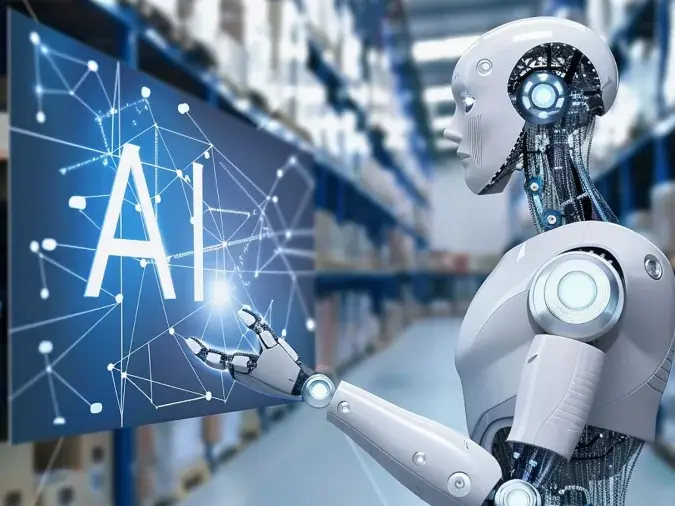
Maharashtra has approved its largest state-level technology policy in years, and the timing is not coincidental. India's IT industry is being reshaped by artificial intelligence faster than anyone forecast, and the state that hosts much of it is trying to get ahead of the outcome.
What The Policy Contains
The Maharashtra Cabinet has cleared AI Policy 2026, aimed at expanding the use of artificial intelligence across industry, governance and public services. It targets ₹10,000 crore in investment and more than 1.5 lakh job opportunities by 2031.

The policy establishes a Maharashtra AI Mission, with a programme to train two lakh youth and working professionals in artificial intelligence. It provides for AI cities to be developed across five innovation areas, a State AI Data Exchange, and the Maharashtra Advanced Centre for Artificial Intelligence Training.
On the startup side, it creates a dedicated AI Startup Venture Fund of ₹500 crore and provides for 12 AI incubators across the state.
The policy is framed as a state-level implementation of the national India AI Mission, which carries a central government outlay of ₹10,371.92 crore and coordinates compute infrastructure, talent pipelines, language models and startup support under a single mandate.
Trending Stories
)
Trump-Xi Summit: Trade, Taiwan and the red lines shaping US-China talks | Race To Power
)
US citizen injured in Illinois after ICE agents mistook him for fugitive, hospitalised
)
US judge questions Trump’s decision to ban CNN, MS NOW and Politico from White House
)
Afghan woman cyclist who disguised herself as a boy to escape Taliban, wins Asian Games medal
)
Italy hit by floods in the north, drought in the south
)
'There will be elections': Venezuela's interim leader Delcy Rodriguez makes big announcement at UN
)
Would you date an AI? South Korea’s My AI Partner: Strange Love sparks buzz on relationship and intimacy
)
'Arrogant parasites': Milei blasts UN over Falklands dispute, warns Argentina will ‘take matters into our own hands’
)
IIT Bombay CCTV footage emerges: Sahil Wakode seen looking at phone in examination hall
)
Cyclone Arnab: Landfall expected before midnight tomorrow as IMD issues orange alerts across six states
)
9 killed, several injured as tourist bus catches fire on Yamuna Expressway
)
NBA player Steven Adams shares hilarious GTA VI theory
)
WION Iconic Tourism Summit 2026: Union Minister Shekhawat on 'experiential travel', peace diplomacy
)
'AI got into my speech': Prince Harry jokes after teleprompter failure at event in New York
)
Scientists detect first radio signals directly from faraway planet
)
China to test supersonic jet that moves at Mach 2, double the speed of sound
)
WION Iconic Tourism Summit: 'Hanuman Ansh' Director on blockbuster success
)
'Partners rather than rivals': Xi Jinping's first message after landing in US for Trump summit
)
WION Iconic Tourism Summit: Is India's travel boom outrunning its airports, airlines and hotels?
)
IIT Bombay student suicide case: CCTV from the exam hall hours before suicide
)
2,000-foot tube, laser tests and more: China builds towns to expand nuclear arsenal, satellite images show
)
French court upholds decision to send PSG and Morocco footballer Hakimi to rape trial
)
WION Iconic Tourism Summit and Awards 2026: Key voices to discuss India’s tourism future
&im=FitAndFill=(700,400))
New OTT releases this week (September 21-27, 2026): Shaque: Trust No One, Hunkkaar, Don’t Be Shy- 5 new titles coming to Netflix, Prime Video and more
)
WATCH | China President Xi Jinping lands in US as Trump greets him ahead of high-stakes summit
)
Australian PM Anthony Albanese calls OpenAI AI incident 'unacceptable' after restricted data access
)
Claude Opus 5.5 is here: Anthropic claims it can finish a 680,000-line code migration in less than a day
)
'What kind of confession is this?': Pakistan PM Shehbaz Sharif’s 'terrorists would be roaming New York' remark goes viral, raises alarm online. Watch
)
WION Iconic Tourism Summit: How local tourism MSMEs must upskill for AI integration
)
Eight USS Abraham Lincoln sailors attempted suicide, Acting Navy Secretary says
)
Trump’s Board of Peace unveils $2.45bn Gaza plan,66 projects: But where’s the money?
)
EC appointment law: Why is the 2023 act controversial, and what happens next? WION explains
)
'Putin is patient zero': Zelensky slams Russian president at UNGA, accuses him of using fighters from 47 countries
&im=FitAndFill=(700,400))
National Film Awards 2026: Kartik Aaryan, Mammootty, Yami Gautam, Randeep Hooda and other key winners
)
El Niño 2026 heats up to become strongest in 1,000 years
)
Israeli envoy to US Yechiel Leiter’s son critically injured in West Bank ramming attack
&im=FitAndFill=(700,400))
Trump welcomes Xi Jinping in rare airport gesture: Photos from Chinese President's arrival in US
)
Xi-Trump meeting: China’s human rights red line and past protests explained
The Problem It Is Responding To
The urgency comes from what AI is currently doing to India's existing technology industry rather than what it might build.
The combined market capitalisation of TCS, Infosys, Wipro, HCL Technologies and Tech Mahindra has fallen more than 46 per cent — from a record ₹33.71 lakh crore in August 2024 to ₹18.15 lakh crore in July 2026. TCS alone is down roughly 56 per cent from its all-time high. The Nifty IT index has fallen nearly 40 per cent from its peak.
That decline is not a demand cycle. Generative AI is automating application coding, testing, customer support and back-office processing — precisely the categories of work that India's IT services export model was built to supply. The threatened business model is labour arbitrage: billing clients in dollars for work performed by engineers paid in rupees, with revenue scaling on headcount. When AI performs a share of that work, the headcount per rupee of revenue falls.
Wipro's most recent quarter showed the squeeze clearly: revenue up 10.6 per cent year-on-year, net profit essentially flat, and operating margin at a 15-quarter low, which the company attributed partly to AI investment.
Training Versus Absorbing
The gap between the policy's ambition and the problem's scale deserves noting honestly. Training two lakh people in AI skills is a substantial programme. But India's IT sector employs several million, and the roles most exposed to automation are the entry-level and mid-level positions that the industry has historically used to absorb large graduate intakes.
Reskilling addresses the supply of AI-capable workers. It does not by itself create demand for them. The ₹500 crore venture fund and the incubators are aimed at that second problem — building companies that employ AI talent domestically rather than exporting the skill — but ₹500 crore is a modest figure against a market where individual AI startups raise more than that in single rounds.
What Would Make It Work
The policy's most consequential provisions may be the least prominent ones: the State AI Data Exchange and the compute and infrastructure commitments under the national India AI Mission.
India's structural disadvantage in AI is not talent — it supplies engineers to every major laboratory in the world. It is compute and data. Indian companies wanting to train substantial models have largely rented capacity from American cloud providers on American terms. Europe has just opened a €30 billion tender for seven AI gigafactories to address the same gap.
If Maharashtra's policy contributes meaningfully to domestic compute and to usable, shareable public data, it addresses something the market has not solved on its own. If it functions mainly as a training and incubation programme, it will produce skilled people for an industry whose value is being captured elsewhere.
The state is making the bet either way. What the last two years have established is that not making it is not an option.
