Kerala: Crisis-ridden cashew industry leaves lakhs of workers jobless

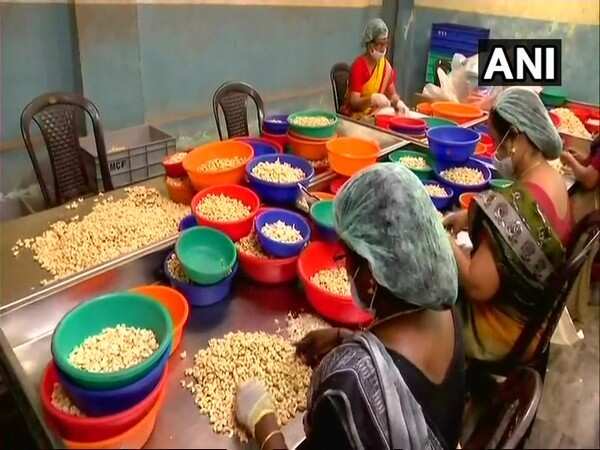
cashew
Today, more than 700 of its 865 cashew processing factories are closed and nearly 2.5 lakh cashew-workers, of a total of 300,000, are jobless
The cashew industry in Kerala has lately been facing a crisis, as over 90 per cent of the factories have shut down, leaving lakhs of workers unemployed.
The state, ten years ago, accounted for 85 per cent of the country’s cashew production. Today, more than 700 of its 865 cashew processing factories are closed and nearly 2.5 lakh cashew-workers, of a total of 300,000, are jobless.
Most of the factories are headed the way of becoming non-performing assets for the banks that have lent to them—60 already have, reports say.
The factories were a source of livelihood for many women in the district, who say they are ready to compromise on their wages if the units are reopened.
Sudharma, a former worker at a cashew nut processing unit told ANI, "I used to get about Rs 3,000 each month. I am simply sitting now. We hope the company will reopen. Owners said they were in crisis due to the increase in wages directed by Kerala government. We are ready to work on lower wages."
Another former worker at a cashew nut processing unit in Kalluvathukkal, Girija said, "I used to work in peeling section. We got wages according to weight of the cashews we processed, which was hiked from Rs 16/kg to Rs 36/kg. There were more than 640 workers in our company."
Meanwhile, the Indian National Trade Union Congress (INTUC) held the state government responsible for the crisis.
"In the last six months, cashew factories in Kerala closed due to wrong policies of governments. The industry provides job to over 3 lakh people in and around Kollam. Some people want to spoil this industry by imposing unnecessary compliance and formalities," INTUC president R Chandrasekharan said.
He also raised the issue of obsolete machinery at the cashew factories and wages below the minimum wage, "They (factory workers) get only Rs 350 while state government announced Rs 600 as the minimum wage. There has to be separate dispensation for this sector."
A new trend has come to shift cashew industries to other states like Tamil Nadu, Andhra Pradesh, Odisha, Karnataka. There is no protection from government in spite of repeated requests from trade union and common people," Chandrasekharan added.
The Cashew Export Promotion Council of India (CEPCI) has come out with a revival package for short-, medium- and long-term implementation to save the crisis-ridden industry.
A decision by the State government in 2014 to increase wages by an unprecedented 35 per cent has increased the cost of production to Rs 3,200-3,400 per bag of 80 kg. This is almost five times as much as in Vietnam, where the cost is the equivalent of Rs 700 per bag or around $500, said CEPCI Chairman R K Bhoodes.