Karnataka elections: Bengaluru water scarcity a reality, but not a priority

Bengaluru-lake-froth
In 2008, 110 villages were added under the Bengaluru Municipal limits. All these villages were promised Cauvery water connection, but they are still waiting for it 10 years later.
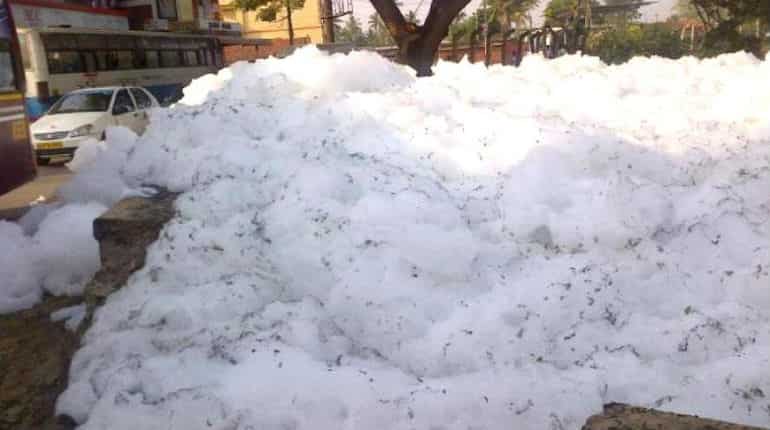
India's IT hub Bengaluru has become infamous for its water problems - be it frothing lakes or the shortage in drinking water. Many experts have predicted doomsday for the city, some even pegging it to be the next Cape Town which is staring at a drought.
But these problems have not cropped up overnight. Many leaders, over successive elections, have promised clean drinking water to the city. Yet, more than 40 per cent population of the IT city has been left to fend for itself when it comes to potable water.
"Forty five per cent of Bangaloreans depend on ground water resources and water from other sources like tankers etc. The tragedy of the city is that it is governed by mafia - water, waste and land mafia. And they are dictating terms. During election time, politicians make promises about water supply from various parts like Western Ghats etc. But the reality is - there is no water at these sources. Even in Western Ghats, last year I noticed decline in water yield," said TV Ramachandra, Professor at prestigious Indian Institute of Science (IISc).
In 2008, 110 villages were added under the Bengaluru Municipal limits. All these villages were promised Cauvery water connection, but they are still waiting for it 10 years later.
"Water connectivity is very low. There are several apartments in the city's outskirts who do not receive Cauvery water. Most of them either have borewell, or they buy water from tankers which is a mafia in itself," lamented Murali Govindarajulu, who live in one such society.
Whether it is the decades-old frothing lakes, or the drying up groundwater table or the steady rise in temperature, the citizens here have been crying hoarse to successive governments to bring sustainable change.
So how successful has the Siddaramaiah government been in bringing change? Looking at the water scarcity and toxic lakes - not much.
For environmentalists like Kshitij Urs, who has actively campaigned for the city's water bodies, taking the legal route has enabled them capture the government's attention.
"In the past five years, there has been a significant change in the way we've been able to get the government look at the issue. Obviously, we had to force them through legal interventions because they did not bother when people got together and protested. The high court very clearly said that the common water has to be protected and encroachments, for which we had gone to the court, had to be removed," Urs said.
It has certainly not been all rosy for the citizen activists of Bengaluru. In 2014, the government passed the landmark law called the Karnataka Lake Conservation and Development Act which gave substantial powers to the Karnataka Lake Development Authority in the state. But the same government that claimed credit for this progressive law, repealed it just a few days before the election dates were announced this year.
"It was a mischief that the then chief minister had played on Karnataka because he had made it an authority but registered it as a society. And never made it a law. So even when there were encroachments happening, they were not able to do anything. So we got the law passed. That law was indeed an extremely progressive law. Unfortunately, that got reversed, just before the elections got announced," Urs said.
Unfortunately, repealing the law in question was not the only attempt made by the government to make lake encroachments easy. Scientists have also criticised the move to handover all lakes to the Minor Irrigation department, that has no expertise to maintain the fragile and unique ecosystem of each lake. The lack of expertise in looking after the lakes could lead to their eventual death and encroachment.
"Quality of people who are getting elected into the system, that is the root cause of all the problems. The day when bangaloreans assert and start electing the right people, we will regain the glory of Bangalore, and Karnataka. We need to do that," said Professor Ramachandra.
In 2015-16, the government spent Rs 4,259 lakh on lakes, the figure was revised to Rs 8,171 lakh in the following year. In 2017-18, it substantially increased to Rs 22,321 lakh, but the amount was almost halved to Rs 11,322 lakhs in 2018-19 outlay.
Citizens have also been critical of the government for not being able to plug the leak, literally, as nearly 50 per cent of the water pumped to Bengaluru is lost due to leakages. Added to that, rainwater harvesting has not been effectively implemented too.
While precious little has been done to save the lakes despite the NGT and high court orders, the government seems more focused on implementing big-ticket projects, like planning to bring desalinated water all the way from the Arabian Sea, or pumping Bellandur lakes's treated water to dried up lakes in Anekal and Kolar.
Surveys have shows that Bengaluru water problem features right on top of the list for politicians this election season. But with barely any visible progress made when it comes to lake conservation or providing a clean and sustainable source of water to nearly 40 per cent of city's population, it will surely have a bearing on the minds of the voters as they head towards the polling booths on May 12.