ISRO developing indigenous space tourism capabilities, says Indian minister; how credible is it ?

Gaganyaan
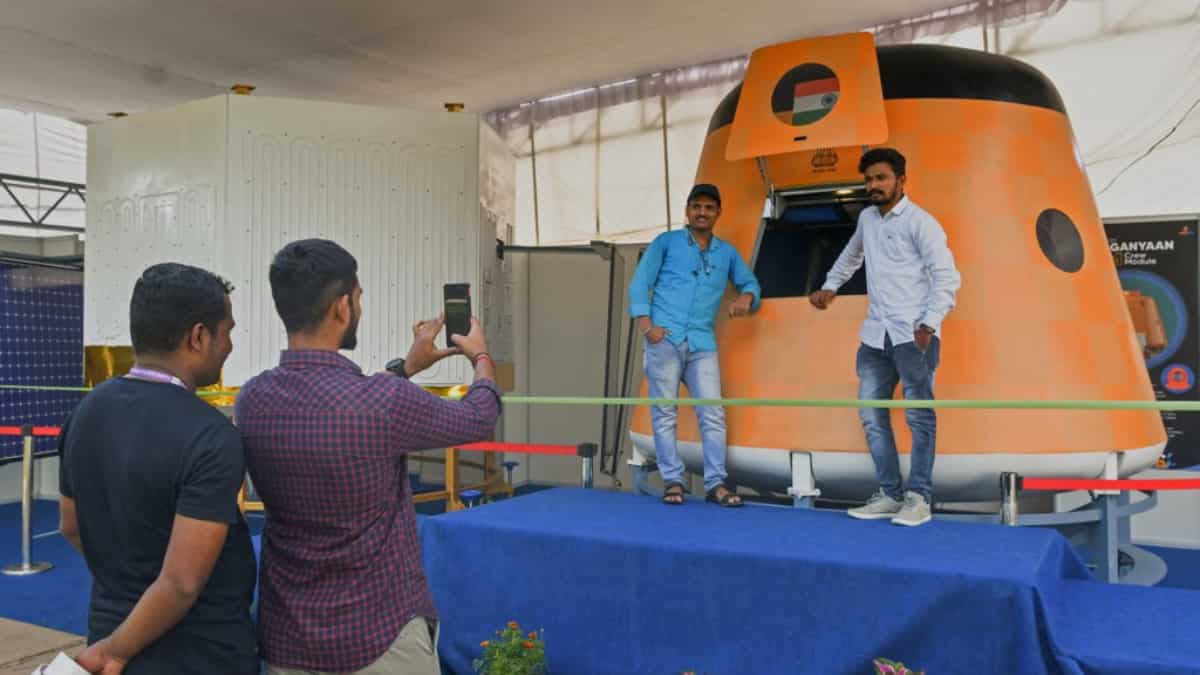
India's 'Gaganyaan' or first-ever Human Spaceflight programme has been garnering attention as India is working on launching Indian astronauts on home-grown rockets. Dr. Jitendra Singh who serves as India's Minister of State, Science and Technology, added to the buzz around the subject by recently mentioning that India is working on indigenous space tourism capabilities.
"The Indian Space Research Organization (ISRO) is in the process of developing indigenous capabilities towards space tourism through the demonstration of human space flight capability to Low Earth Orbit (LEO)" the Minister had said. However, this seems easier said than done and also seems decades away. Here's why it is so:
As it stands, the manned Gaganyaan mission itself could be accomplished by only 2024-25. Before the manned mission, ISRO has lots of work to do, because launching satellites(cargo) to space and launching humans to space are two extremely different things.
To accomplish Gaganyaan, ISRO has to essentially modify its cargo-carrier GSLV Mark 3 rocket and make it reliable enough to carry astronauts. As per ISRO Chairman Dr.S. Somanath, the organisationwould have to perform Crew Escape system tests in 2022, followed by the first unmanned mission in mid-2023, followed by two more escape tests and another unmanned mission, before the manned flight(expected in 2024).
Why Gaganyaan can't be compared to space tourism ventures?
Gaganyaan is a science mission aimed at sending astronauts to space and it is vastly different from the much-talked about space tourism ventures - such as Virgin Galactic's Space Plane or Blue Origin's New Shepard rocket or even SpaceX Dragon capsule(carried by the Falcon 9 rocket) etc. The major differences are that - India's Gaganyaan has not yet flown or proven its reliability, Gaganyaan uses an expendable rocket(which falls into the sea after its burn time), as opposed to re-usable rockets/space planes that foreign companies use. All the above foreign private firms are funded by maverick billionaires and not their respective national governments, whereas ISRO lives off modest Indian Government funds.
What it takes for India to really foray into space tourism?
Sending a tourist to space on board a rocket/spaceplane requires confidence and immense faith in the reliability of the technology - both Sir Richard Branson and Jeff Bezos flew to space on their respective company vehicles, and took immense risk to prove a point. For example, Virgin Galactic has been a service aimed at catering to the super-rich who can afford a fun ride to space. India is still at a stage when work is underway to ensure that we can send our trained astronauts to Low Earth Orbit and bring them back safely. India remains far behind in this aspect and has to master Human Spaceflight step-by-step and do so entirely on its own. Whereas, most forieign companies are operating with the prior experience, know-how, know-why, that their respective space industries have gained over the years.
So, for indigenous space tourism to become a reality in India (as the Minister suggested), it would require all of the following - flawless success of the Gaganyaan programme, multiple repeats of the same, development and successful flights of a re-usable rocket meant for ferrying tourists, ensuring that all systems are reliable& low-cost to be feasible as a business etc. All of this requires time(in decades), large-scale investment and true dedication to the cause of Space tourism, as seen in the private-sector examples from the Western world.
Watch WION's live TV here:
