ISRO designates Sankarasubramanian as Principal Scientist for Aditya-L1 mission

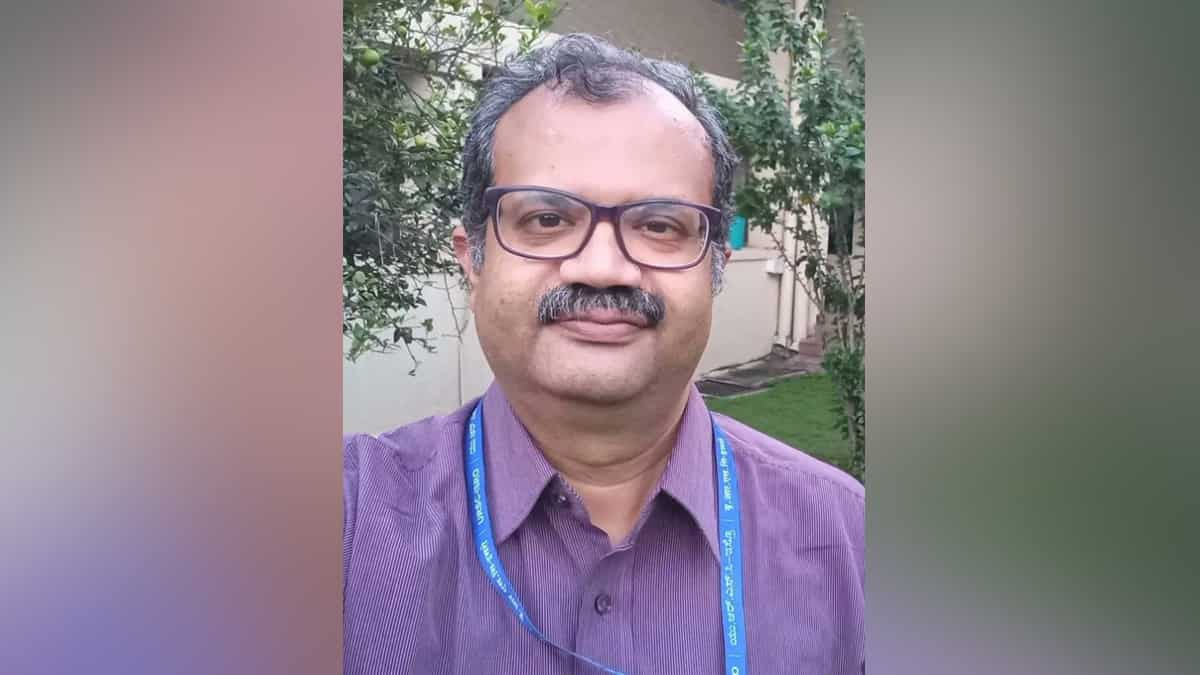
Dr Sankarasubramanian has a PhD in Physics from Bangalore University
Indian Space agency ISRO has designated senior Solar ScientistDr Sankarasubramanian Kas the Principal Scientist of the 'Aditya-L1' Mission. He heads theSpace Astronomy Group (SAG) of ISRO's UR Rao Satellite Centre, Bengaluru, and had contributed to ISRO mission such as Chandrayaan 1 &2, AstroSat, in several capacities.
DrSankarasubramanian has aPhD in Physics from Bangalore University through the Indian Instituteof Astrophysics, Bengaluru. His research's areas of interest are the solar magnetic field, optics, and instrumentation. The Space Astronomy Group (SAG) which he heads is involved in developing scientific payloads for the upcoming missions of Aditya-L1, XPoSat, and science payload onboard the Chandrayaan-3 propulsion module.
He is also the Principal Investigator for one of the X-ray payloads onboard Aditya-L1. DrSankarasubramanian K also heads the Aditya-L1 Science Working Group, which has members from several institutes of India engaged in solar science research.

Aditya-L1 is the first observatory-class space-based solar mission from India and is said to be scheduled for launch in 2023. The spacecraft will be placed in a halo orbit around the first Lagrange point, L1, of the Sun-Earth system. A satellite around the L1 point has the major advantage of continuously viewing the Sun without occultation/eclipses. This position provides a greater advantage of observing solar activities continuously.
Aditya-L1 carries seven payloads to observe the photosphere, chromosphere, and the outermost layers of the Sun (the corona) using electromagnetic and particle detectors. According to ISRO, four payloads on Aditya-L1 directly view the Sun from the unique vantage point of L1, and the remaining three payloads carry out in-situ studies of particles and fields at the Lagrange point L1.
