IS40M is India's space traffic management facility, ISRO Chairman explains to WION

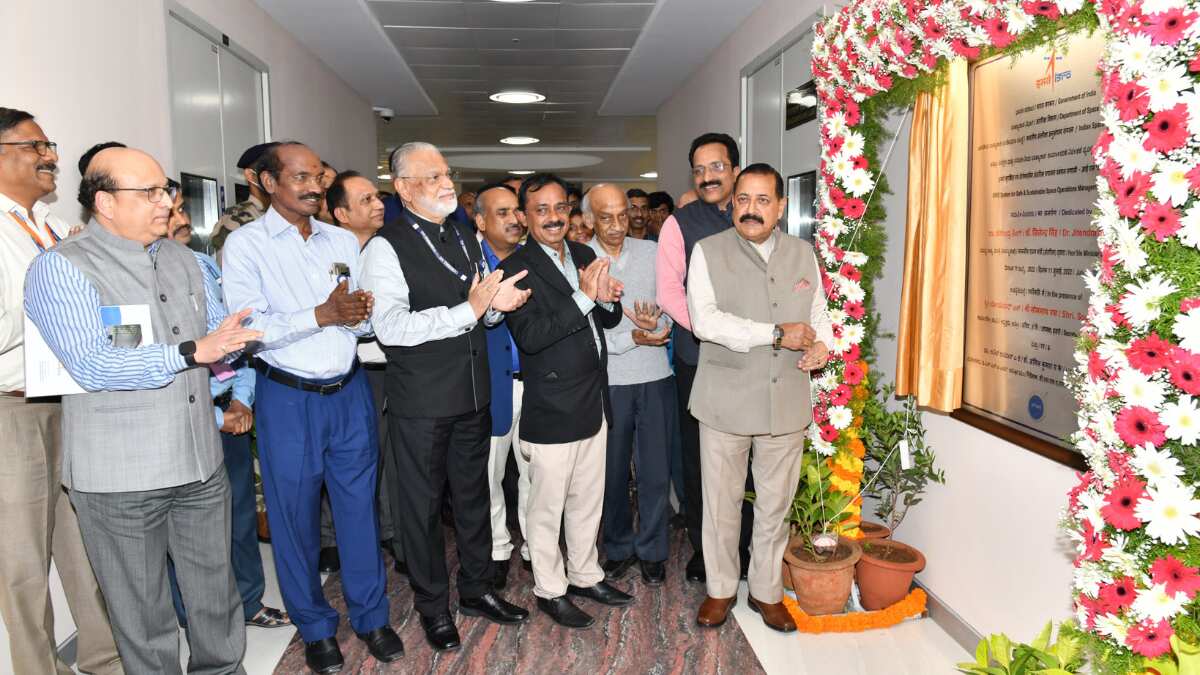
The Indian Space agency now has a new facility aimed at performing what in simple terms can be explained as a holistic 'Traffic Management in Space' and to ensure the sustainable use of space. Known as the'ISRO System for Safe & Sustainable Operations Management' (IS4OM), the new facility based in Bengaluru will perform a host of functions - safeguarding India's space assets, protecting them from space debris, predicting the orbital movement of debris, predicting likely collisions and coordinating with global agencies for all of the above.
With every passing day, the number of satellites orbiting earth are increasing in number, this also naturally means an increase in space debris. Debris includes everything from the spent upper stages of rockets, and defunct satellites, to even smaller objects that emerge after debris collisions. Given that these objects orbit the earth at nearly 27,000km per hour, any collision with space assets can prove catastrophic and could cause a massive outage of space-based services. Hence, it becomes increasingly important to havea 'Space Traffic Management System'.
"This is not about (space)traffic management alone, it is about keeping orbits available to everyone, operating in space without causing problems to one another, and ensuring sustainable use" explained Chairman, ISRO Dr. S. Somanath.
Elaborating on the different functions of 'IS40M', Dr. Somanath told WION, "Firstly it is about using radars and optical observation to watch and tag objects in space, then we will have toconsider the effect of earth's gravitational pull, impact of sun and moon etc. andpredict the movement of the said object/debris. Based on this, we will have to look for possibilities of collisions. This entire process has to be carried out on a daily basis. In case an object poses a threat to our satellite, we must accordingly move our satellite out of harm's way and also inform foreign agencies(whose satellites are in the vicinity) about our collision avoidance maneuver."
In addition to this, the objects that are likely to fall back onto the earth (recently, parts of a spent Chinese rocket landed in an Indian village), asteroids that are on collision course with earth will also have to be tracked. These are complex calculations and are error-prone, owing to the large number of factors involved, thus necessitating various corrections.Dr. Somanath added that these mathematical models used to calculate and project the path of debris and their impact etc. are indigenously developed and even if a country wanted, such models are not available for purchase in the International market.
On India's capabilities, he explained that India has radars that aremeant to observe satellites and the Indian space agency is also installing optical tracking facilities. However, the Indian space agencydoes not have all facilities required to track objects of 10cm size and for this it relies on data provided by foreign agencies.
"Overall, we have to cover every aspect of safety and security of space assets and do so round-the-clock. Our scope of coverage from a single location will be limited. Multiple tracking stations across the globe are required to have entire coverage like America and Russia are having.For India's national security we will also have to observe and watch movements of foreign satellites over our country. As part of cooperation with foreign space agencies, we will exchange useful data, with the exceptions being the classified data and the precise ones which we need for our national security" Dr. Somanath concluded.
Watch WION's live TV here:
×
