India’s UPI system gaining global attention: Indian Railways Minister Ashwini Vaishnaw to WION

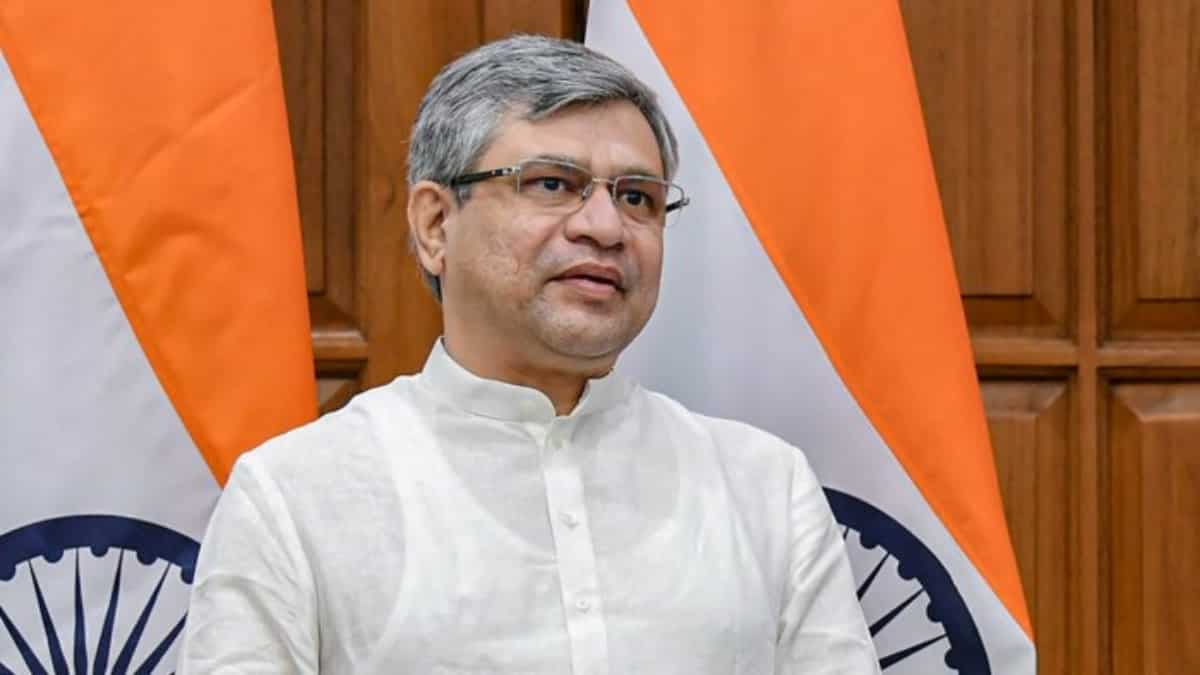
Ashwini Vaishnaw
India’s Minister for Railways Ashwini Vaishnaw said that the Indian digital transaction system—the Unified Payments Interface—is getting global attention and added that many have expressed interest to implement it in their countries.
Speaking exclusively to WION’s Sidhant Sibal, the railway minister said that Indian Prime Minister Narendra Modi pitched the idea in the G7 meeting and many highly appreciated the “comprehensiveness and democratisation of technology”.
His comments came a day after Japan's digital ministerKono Taro revealed that the Japanese government was considering to join India's UPI payment system.
Here are a few excerpts
WION: What is your take on Japan’s Minister of Digital Affairs Kono Tarosaying that Japan would like to join India’s UPI payment system?
Vaishnaw: In the G7 Meeting, the ‘Digital India’ vision of Prime Minister Narendra Modi was presented to all the G7 digital ministers. There was very good response to it. When people understood the comprehensiveness and democratisation of technology, that kind of approach was highly appreciated. I thank the Japan's digital minister Taro Kono on agreeing to evaluate the UPI for implementation in Japan.
WION: Can you elaborate on how Japan and India can work to implement that? Are we looking at some kind of team from Japan to India?
Vaishnaw: It will require a lot of collaborative work. This is a very complex and comprehensive system involving the Japanese authorities, the Reserve Bank of India, and National Payments Corporation of India. We will constantly be in touch and monitor it closely. This is one major initiative that the whole world will be looking for.
WION: Apart from Japan, other countries have also shown interest in India’s UPI. If you can elaborate on what has been the response so far?
Vaishnaw: There is very good interest all across the world because this kind of system is unique. As you must be aware, the UPI has got patent in Japan. This is actually a patented technology now. So all over the world there is excitement about the UPI, the way it is structured. The fundamental thing is no single company can have a monopoly because of this kind of public-private partnership. And this is what everybody is appreciating that in India, PM Modi has been able to democratise digital technologies. So, there is a very good response across the world, in Europe, in Americas, Africa, and the Southeast Asian countries.
WION: Any specific country, if you can point out?
Vaishnaw: Negotiations going on, good discussions are going on with many countries.
WION: When it comes to UPI, I believe there is no transaction. If you can elaborate on that. We found out that it costs Indians roughly 7 dollars abroad to send 100 rupees back, but in UPI there's no transaction cost. Can you explain or expand on it further?
Vaishnaw: In financial transactions whether they are transaction using cards or they are transactions across borders, there are lots of friction. When the UPI kind of system comes, quite a large number of these friction points get resolved. So, then it can become a very smooth transaction and the cost of transaction reduces significantly. That is one of the objectives of the ways in which UPI is created. The architecture of UPI is such that frictions are removed. So that reduces the transaction costs dramatically. I wouldn't be able to give you the exact numbers because that will all depend on how the Reserve Bank of India is equivalent to the central bank of particular country, finally agrees on so that will always be specific to that country.
WION: India has a huge market in terms of remittances, India has a huge diaspora abroad sending money back home. So how can UPI tap into this market?
Vaishnaw: Yes of course UPI can help smoothen those transactions, make sure that those transactions are at a very low cost.
WION: Transaction costs are low at the moment, but essentially, are we looking at any other similar kind of announcements, ventures or perhaps understanding on which the Indian government might be working on that might improve in the ease of doing business or in ease of transactions in India and of course across the world as well.
Vaishnaw: Yes of course, we're working as I said. As and when we get to agreements we'll keep you informed.
WATCH WION LIVE HERE