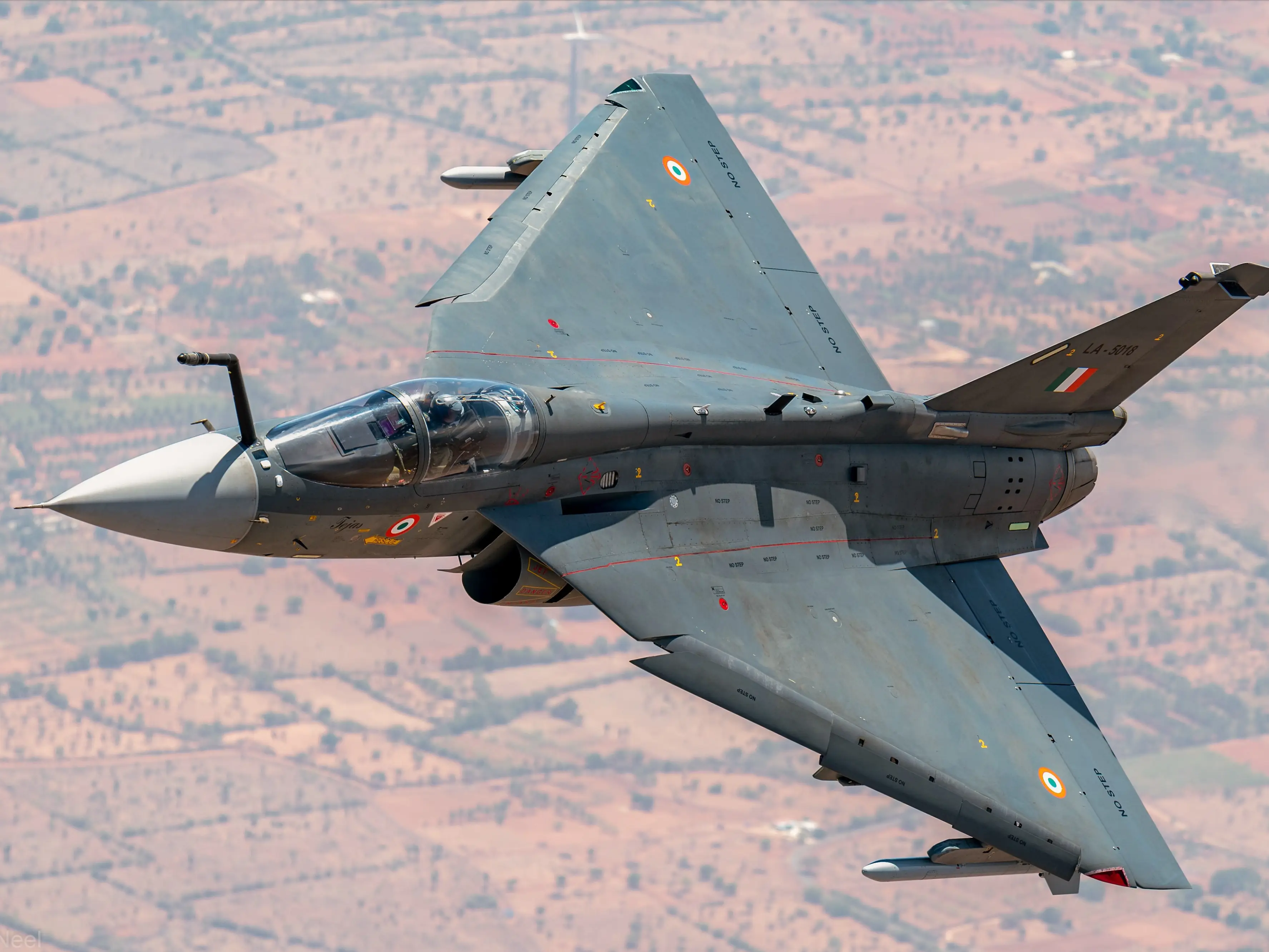
Indian government inks $7 Billion deal for 97 Tejas Mk1A jets

&imwidth=600&imheight=450&format=webp&quality=medium "Indian government inks $7 Billion deal for 97 Tejas Mk1A jets")
Indian government inks $7 Billion deal for 97 Tejas Mk1A jets Photograph: (Wikipedia)
The delivery of these indigenously designed and developed jets would commence during 2027-28 and be completed over a period of six years. The 97-jet order comprises of 68 fighter aircraft and 29 twin seaters that can serve as trainer aircraft
The Indian ministry of defence has inked a Rs62,370 crore ($7.03bn) deal with government firm Hindustan Aeronautics Limited (HAL) to procure 97 Tejas Mk1A fighter jets for the Indian Air Force (IAF). According to the government, the delivery of these indigenously designed and developed jets would commence during 2027-28 and be completed over a period of six years. The 97-jet order comprises 68 fighter aircraft and 29 twin seaters that can serve as trainer aircraft.
The latest deal is over and above a 2021 deal for 83 Tejas jets, which itself is being fulfilled gradually. While HAL has a massive orderbook for Tejas fighter jets, the Indiann establishment has repeatedly raised concerns over delays in deliveries and their impact on the Air Force's fighting capability. While the Tejas jets are designed and developed by India, they are powered by American General Electric F404 engines. The Indian government says that the Tejas Mk1A, the latest and most advanced variant of the homegrown fighter would have over 64% indigenous content.
It was added that the higher level of indigenous content is owing to addition of UTTAM Active Electronically Scanned Array (AESA) Radar, Swayam Raksha Kavach (self-protection suite), control surface actuators, and more than 60 other components. The Tejas Mk1A programme is being supported by over 100 Indian firms that supply various components, systems and sub-systems. The government estimates suggest that this contract could generate 11,750 direct and indirect jobs annually for the duration of six years, boosting the domestic aerospace ecosystem.
The deal for procuring more Tejas aircraft comes just a day prior to the retirement of India's Soviet-era Mig-21 fighter jets. First inducted into the Indian Air Force in 1963, the variants of Mig-21 served the IAF for more than six decades, playing a role in almost every conflict involving India in that period. With the retirement of the Mig-21 fleet, the IAF will be down to a fleet of 29 squadrons, with each squadron comprising 16-18 jets. However, even these 29 squadrons include ageing jets like the Jaguar, Mirage-2000 and Mig-29UPG. Therefore, there is an urgent need for the Indian establishment to ramp up fleet strength to meet the growing challenges in the volatile neighbourhood.
While the IAF has a sanctioned squadron strength of 42, it is down to 29. Meanwhile, Pakistan has about 25 squadrons of fighter jets and China has about 66 squadrons, with advanced variants being rapidly added and even sixthgeneration versions being tested. The backbone of the Indian fighter fleet is the Russian-origin Sukhoi-30MKI, of which there are well over 250 jets, and India's latest and most advanced jet variant is the Rafale from France's Dassault Aviation.
