India successfully test-fires nuclear-capable Agni-I missile

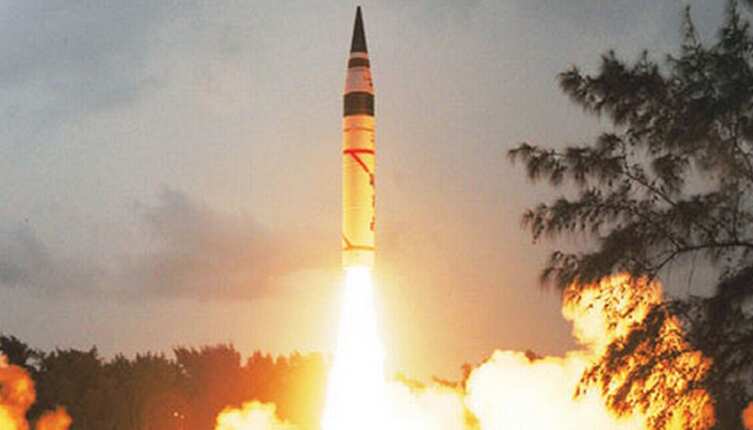
Agni-V
The missile was fired from Odisha coast
India today successfully test-firedshort-range nuclear-capable Agni-I ballistic missile from atest range off Odisha coast.
The indigenously developed surface-to-surface missile was launched as a part of a periodic training activity by the Strategic Forces Command (SFC) of the Army to consolidate operational readiness.
The state-of-the-art missile was launched around 8:30 am from a mobile launcher at Pad 4 of the Integrated Test Range (ITR) at the Dr Abdul Kalam Island, formerly known as Wheeler Island.
Last month India had test-fired surface-to-surface nuclear-capable Agni-V missile from the integrated test range at Abdul Kalam island off Odisha coast.
Agni-V missile is said to be India's most advanced missile in the Agni series with a range of 5000 kilometres.
It can carry nuclear warhead of about 1.5 tonnes. The first test of Agni-5 was conducted on April 19, 2012.
Agni-V subsequent tests took place on September 15, 2013, January 31, 2015, and on December 26, 2016 from the same base. The ballistic missile is capable of launching small satellites.
Describing the trial a "complete success", Defence sources told PTI, adding that all the "mission objectives" were met during the test.
"The trajectory of the trial was tracked by a battery of sophisticated radars, telemetry observation stations, electro-optic instruments and naval ships right from its launch till the missile hit the target area with pin point accuracy," the sources told PTI.
The sophisticated Agni-I missile is propelled by a solid rocket propellant system and is equipped with a specialised navigation system that ensures it reaches the target with a high degree of precision, they said.
Weighing around 12 tonnes, the 15-metre-long Agni-I can carry payloads up to 1,000 kg and is capable of hitting a target beyond 700 km. The missile is also capable of carrying nuclear warheads.