India's own Israel-like Iron Dome soon: PM Modi announces Mission Sudarshan Chakra to strengthen defence system

&imwidth=600&imheight=450&format=webp&quality=medium "India's own Israel-like Iron Dome soon: PM Modi announces Mission Sudarshan Chakra to strengthen defence system")
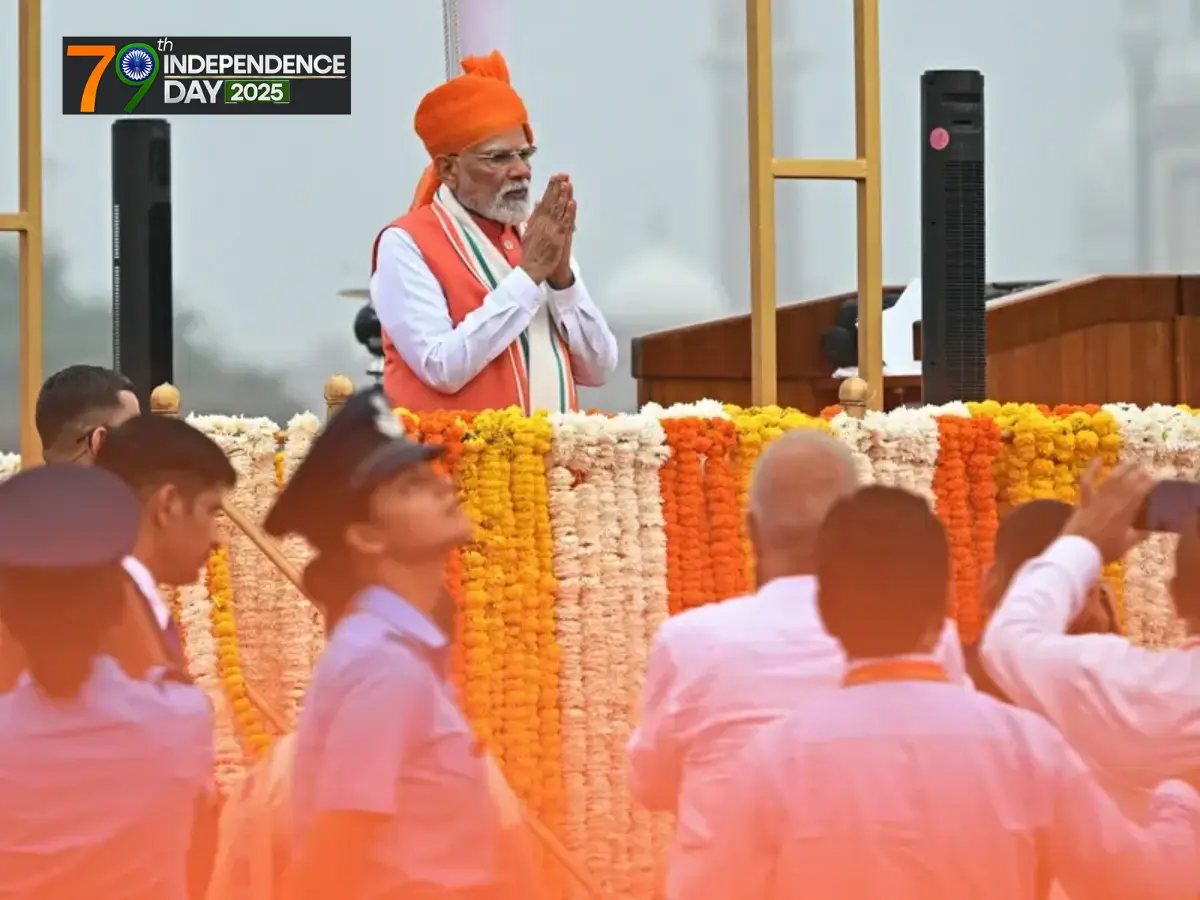
Indian PM Narendra Modi Photograph: (AFP)
PM Modi announced Mission Sudarshan Chakra, aiming to build an Iron Dome-like indigenous defence system by 2035. Inspired by Lord Krishna’s Sudarshan Chakra, the system will prevent and counter terrorist threats, protecting key sites with advanced surveillance and interception tech.
Indian Prime Minister Narendra Modi announced that over the next decade, by 2035, India aims to expand, strengthen, and modernise its national security framework through the launch of Mission Sudarshan Chakra. He said that inspired by Lord Krishna’s Sudarshan Chakra, the mission will focus on developing a comprehensive, indigenous defence system, fully researched, developed, and manufactured in India, with the involvement of the country’s youth. The PM stated that the system would not only prevent terrorist attacks but also deliver effective counterstrikes. He added that the mission envisions creating an Iron Dome-like defence shield to protect critical and civilian sites, combining advanced surveillance, interception, and multi-domain response capabilities.
"In the next ten years, by 2035, I want to expand, strengthen, and modernise this national security shield. Drawing inspiration from Lord Shri Krishna, we have chosen the path of the Sudarshan Chakra...The nation will be launching the Sudarshan Chakra Mission." The entire modern system should be researched, developed, and manufactured in India, harnessing the talent of our youth. This powerful system will not only counter terrorist attacks but also strike back at the terrorists," he said. "India aims to develop its own Iron Dome-like defence system, named Mission Sudarshan Chakra, designed to safeguard critical sites, including civilian areas," he added.
Israel's Iron Dome
Israel’s Iron Dome has become one of the most widely recognised and effective air defence systems in the world. Designed to intercept and destroy short-range rockets, artillery shells, and mortars, the Iron Dome has played a crucial role in protecting Israeli civilians and infrastructure from frequent attacks, particularly from militant groups such as Hamas and Hezbollah. The Iron Dome was developed by Rafael Advanced Defence Systems in collaboration with Israel Aerospace Industries (IAI), with significant financial and technological support from the United States. The system became operational in 2011 and has since become a cornerstone of Israel’s multi-tiered missile defence strategy. Since its deployment, the Iron Dome has intercepted thousands of rockets, with Israel claiming a success rate of over 90%. It has been especially critical during conflicts in Gaza, where hundreds of rockets can be launched within a short period. Countries like the United States, South Korea, and European nations have shown interest in acquiring or developing similar systems. Its effectiveness has reshaped modern defence planning, particularly in regions vulnerable to asymmetric threats.
India's Independence Day
Prime Minister Narendra Modi hoisted the Tricolour at the Red Fort in New Delhi and addressed the nation. In a big message to the US amid the ongoing tariff war, PM Modi said that he will never compromise with the needs of farmers, livestock rearers and fishermen. He firmly declared that he would oppose any policy that poses a threat to their livelihoods, saying, “Modi will stand like a wall against any move that harms them.” He also stressed the need for self-reliance in each sector amid the 50 per cent tariffs imposed by Trump on India. PM Modi also emphasised the need for India to strengthen itself by producing high-quality, affordable goods, guided by the principle of “Daam kam, dum zyaada” (lower cost, higher value). Without directly referring to the United States, he advised that India should concentrate on enhancing its own abilities instead of attempting to undermine others. “We should not waste our energy trying to shorten someone else’s line. We must extend our own line with full energy. The world will respect our strength,” he said.

