
&imwidth=800&imheight=600&format=webp&quality=medium "'India exercised its right to defend its people': S Jaishankar slams Pakistan for Pahalgam attack, calls Islamabad 'epicentre of terrorism'")
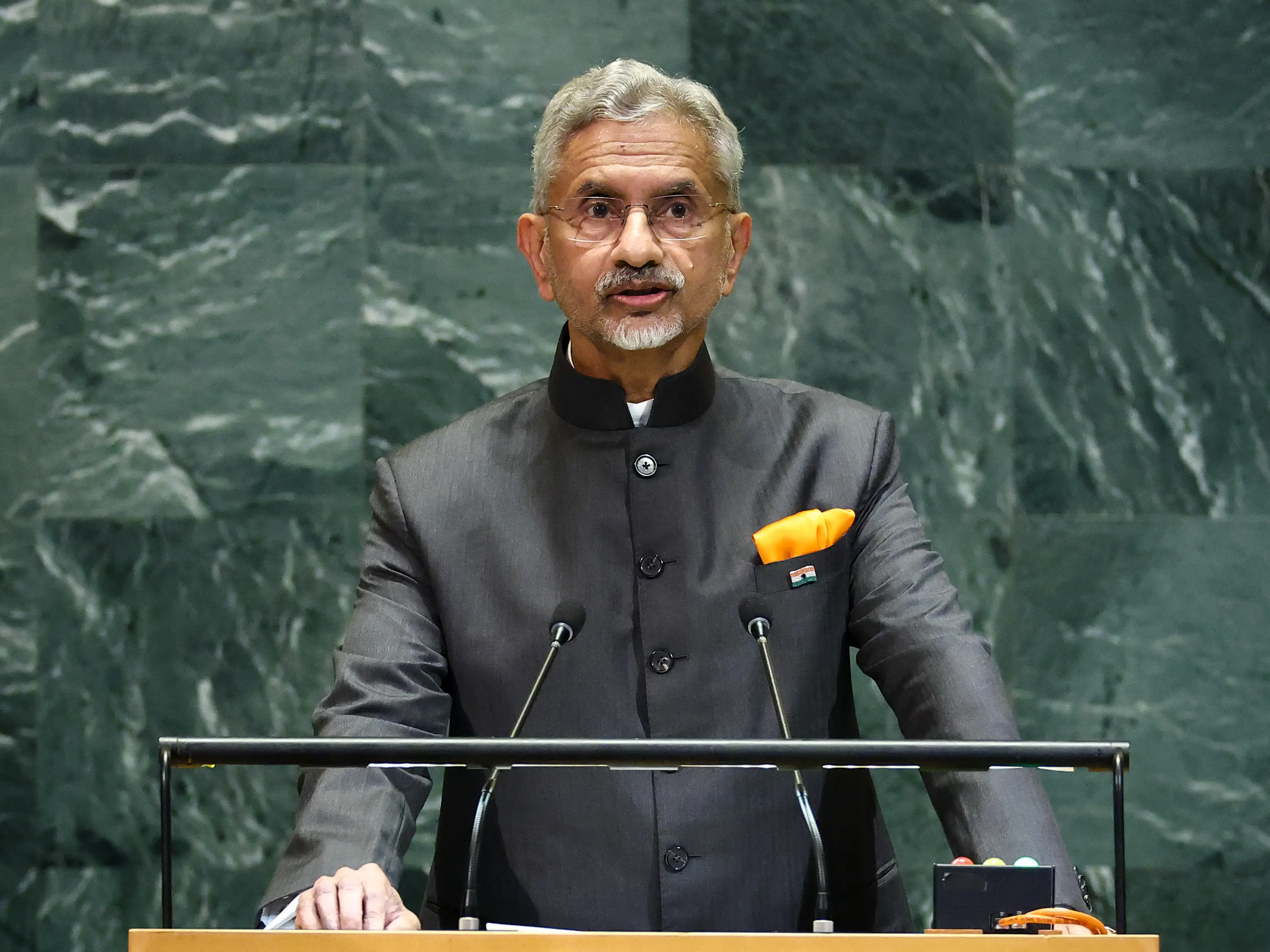
Minister of External Affairs of India, S Jaishankar, in his UN General Assembly speech on Saturday (September 27), called Pakistan the epicentre of terrorism. Mentioning the April 22 terrorist attack in Pahalgam, Jammu and Kashmir, the Indian minister said, “India exercised its right to defend its people.”
"The most recent example of cross-border barbarism was the murder of innocent tourists in Pahalgam in April this year. India exercised its right to defend its people against terrorism and brought its organizers and perpetrators to justice.," Jaishankar said.
"Because terrorism is a shared threat, it is essential that there is much deeper international cooperation. When nations openly declare terrorism as state policy, when terror hubs operate on an industrial scale, when terrorists are publicly glorified, then such actions must be unequivocally condemned. The financing of terrorism must be choked, even as prominent terrorists are sanctioned. Relentless pressure must be applied on the entire terrorism eco-system. Those who condone nations that sponsor terror will find that it comes back to bite them," the Indian minister added.

Jaishankar highlights ‘tariff volatility’
Jaishankar said that “tariff volatility” and “uncertain market access” have resulted in a growing compulsion of de-risking. This comes amid the global trade tensions unleashed by US President Donald Trump. Meanwhile, negotiations are ongoing between New Delhi and Washington to discuss a Bilateral Trade Agreement.
“When it came to trade, non-market practices gamed rules and regimes. The resulting concentration exposed the world to leveraging. On top of that, we now see tariff volatility and uncertain market access. As a result, de-risking is a growing compulsion, whether from limited sources of supply or over-dependence on a particular market,” Jaishankar said.
He further added, “Economic concerns have other dimensions as well. Heightened technology control is one. The grip on supply chains and critical minerals is another. The shaping of connectivity is no less sensitive. Protection of key sea lanes has become a challenge. Restricting the evolution of a global workplace is an issue.”

