India-Japan Moon mission LUPEX could break the records of Chandrayaan-3

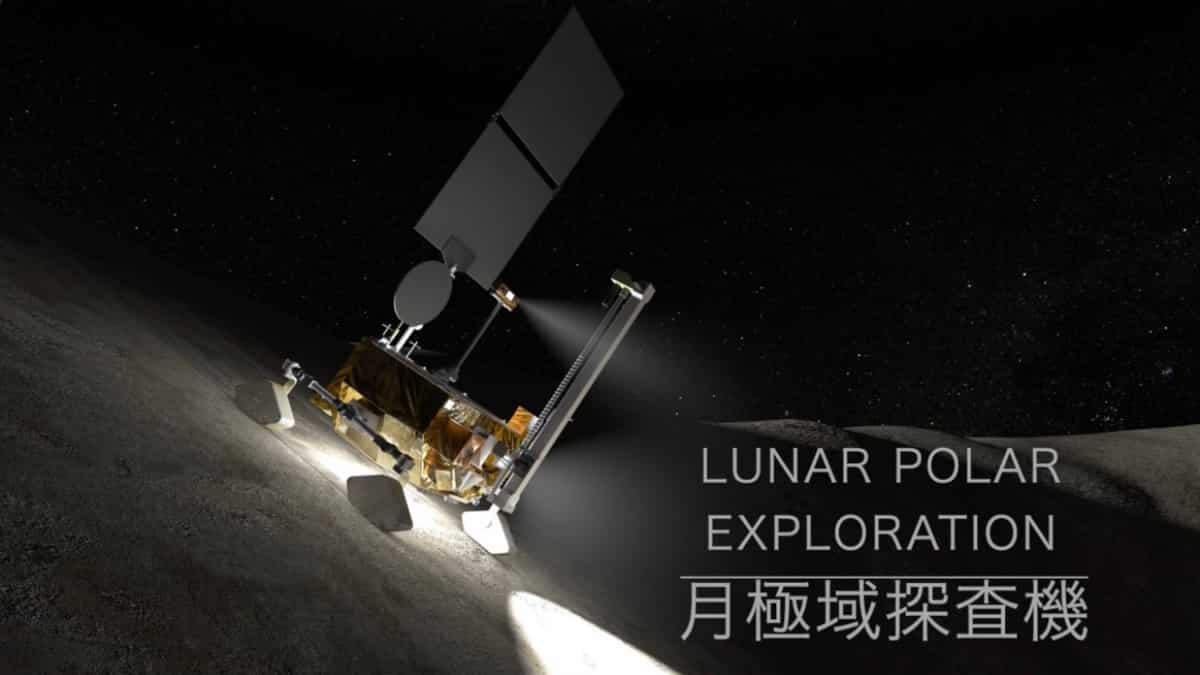
Lunar Polar Exploration Mission (LUPEX)
Indian and Japanese space agencies have been working on a lander-rover mission to explore the moon. Known as LUPEX (Lunar Polar Exploration Mission), this mission is currently in its planning phase. The latest details to emerge from the Indian Space Research Organisation (ISRO) suggest that the mission could live for 100 days on the lunar surface, which is more than five times the mission life of India's successful lunar mission Chandrayaan-3. LUPEX could also involve a massive lunar roverthat weighs 350 kg. For scale, the Chandrayaan-3 rover 'Pragyan', weighed 26 kg. These preliminary details were shared recently by Nilesh Desai, director, Space Applications Centre, ISRO.
Addressing students and faculty at the Indian Institute of Tropical Meteorology, Desai elaborated on the plans related to the LUPEX mission. He said that the Japanese H3 rocket would be used for launching this mission, which would eventually land at the exact lunar south pole (90-degree latitude) and explore the permanently shadowed regions in the vicinity of the south pole, by performing drilling and in-situ experiments.
Notably, the Chandrayaan-3 Vikram lander had touched down near the 70-degree latitude of the moon and it was the closest that any craft had landed to the unexplored lunar south pole. He added that the lunar lander would be built by ISRO and it would carry a Japanese-built lunar rover. The permanently shadowed areas at the lunar south pole are of significance, as they are widely believed to contain ice and other minerals.
While the third Indian lunar mission lasted for its planned mission life of 14 Earth days (1 lunar day), he said that LUPEX was being planned for a mission life of nearly 100 Earth days. The LUPEX rover is also meant to explore a 1km x 1km area at the lunar south pole, as opposed to the 500m x 500m exploration area that was chosen for Chandrayaan-3.
Watch |Chandrayaan-3 successfully completed fortnight-long mission
Sharing insights into the payloads that the ISRO-built lander would carry, he said that it would have a ground penetrating radar, mid-infrared spectrometer and Raman Spectrometer, Permittivity and thermophysical investigation for Moon's aquatic scout (PRATHIMA) payloads. In addition to this, there would also be Japanese sensors, he said. For the Chandrayaan-3 landing mission, the Space Applications Centre(SAC), Ahmedabad, has contributed 11 systems, of which eight were camera systems, Desai added.
Ishii Yasuo, vice president of the Japanese Space Agency JAXA had earlier toldWIONabout how the successful landing of Chandrayaan-3 would offer further confidence for the Indo-Japanese moon mission and its progress. Likewise, Nilesh Desai mentioned that the Japanese moon mission 'Moon Sniper' that is travelling to the moon is aiming to demonstrate a precise landing within a small area.
Desai said that LUPEX would be looking to do something similar and attempt to land at the rim of a lunar crater. The lunar south polar region has very harsh and unpredictable terrain that comprises 2km-tall mountains, deep craters, and boulders, thereby making any landing attempt immensely challenging.
However, it must be remembered that such a joint mission requires various phases of detailed discussion, and technical consultations before it can even proceed to the hardware being finalised, developed, integrated, tested and readied. In such cases, scientists from both agencies are required to visit the facilities of the other and work together on crucial aspects of the mission.
It would be safe to say that a mission of this kind that involves close cooperation between two space agencies, would take a handful of years to materialise. Given that this mission is years away, the various science outcomes and lessons learnt from Chandrayaan-3 could be implemented in LUPEXto make it more advanced and thereby derive more science and data from the lunar South Pole.
