India Independence: Diaspora power - From remittances to diplomacy, overseas Indians script India's success story

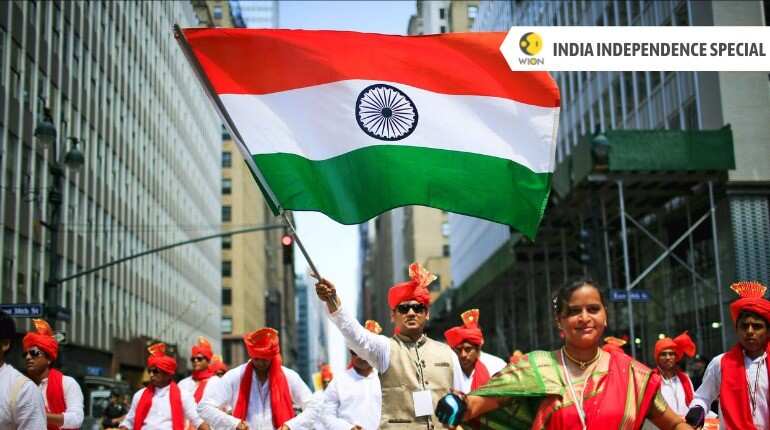
India Independence: Diaspora power - From remittances to diplomacy, overseas Indians script India's success story
Earlier this year, when India was battling a "once-in-a-century crisis" in the form of the second wave of COVID-19 pandemic, two aid groups in the US—led by people of Indian origin—raised more than $25 million towards assisting the country's strained health care system.
In the UK, three Hindu temples raised more than 6,00,000 pounds ($8,30,000). Sikhs, similarly, donated $700-$2,000 to each of dozens of people in need of oxygen cylinders back home.
For decades now, India's large and vibrant diaspora has been leveraging its wealth, political clout and expertise to steer the country's economic growth, while seamlessly integrating with the countries of their adoption.
The largest expat community in the world, nearly 18 million Indians are living outside their homeland as of 2020, according to the United Nations, with United Arab Emirates (UAE), the US and Saudi Arabia hosting the largest Indian diaspora populations. India has also retained its position as the largest recipient of remittances- money transfers from non-resident Indians (NRIs) and People of Indian Origin (PIOs) employed outside the country to family, friends or relatives living in India
According to aWorld Bank report, India's remittances in 2020 reached over $83 billion, despite a pandemic that pushed global economic growth off its course. The country had received $83.3 billion in remittances in 2019.
In contrast, China—which ranks second—received $59.5 billion in remittances in 2020 against $68.3 billion the previous year.

India’s large diaspora is distributed across a number of major countries, with the UAE (3.5 million), the US (2.7 million) and Saudi Arabia (2.5 million) hosting the largest numbers of migrants from the South Asian nation.
"In whichever part of the world Indians went, they not only retained their Indianness but also integrated the lifestyle of that nation," Prime Minister Narendra Modi had said in 2018 at the Pravasi Bhartiya Divas, the government-run convention for expatriate outreach. He called the diaspora "true and permanent ambassadors" of the country.
Apart from promoting and upholding the rich Indian culture and interests on foreign lands, the diaspora has also emerged as a soft power asset in New Delhi's scheme of things.

Yoga diplomacy
Yoga has contributed proactively towards bolstering India's image as a spiritual superpower. Ever since the United Nations announced June 21 as the 'International Day of Yoga', mass yoga practices and awareness camps have become prevalent across the global capitals, with the Indian missions proactively promoting the ancient science, that integrates physical and spiritual disciplines. Indian yoga instructors and practitioners abroad have played a key role over decades in popularising the ancient practice abroad.
From government to Google
The story of Kamala Harris ascending to the vice presidency also emerged simultaneously with the rise in her popularity among the large Indian diaspora in the US, which proudly embraced her Tamil roots.
Similarly, the ancestors of Mauritian Prime Minister Pravind Jugnauth, son of former PM Anerood Jugnauth, had migrated to the island-nation from the Indian state of Uttar Pradesh, while the South American country of Suriname has Indian-origin Chandrikapersad (Chan) Santokhi as its president.
Silicon Valley—the home of several big, innovative US tech companies—now hosts the highest concentration of Indian-Americans. From Google's Sundar Pichai to Microsoft's Satya Nadella and Adobe's Shantanu Narayen, Indian-Americans have risen up to occupy the high positions at global tech companies, and continue to take giant strides in the banking, finance and other sectors too.

Shaping policies
One of the richest minorities in many developed countries, the Indian diaspora, has, on several occasions, helped in lobbying for favourable terms regarding New Delhi's interests and exercising greater control over policy making. The presence of over 9.3 million expats across the several Gulf states has also helped India in buttressing its global image, amid New Delhi's growing strategic interests in West Asia. Indian nationals also make up the Gulf states' largest expatriate community, putting the diaspora at the centre of immigration and labour policy-making.
Cinema connect
The increase in the popularity of Indian films among the Indian diaspora community has also contributed to rekindling "Indianness" among this demographic. These cultural exports—many of which are increasingly portraying the diasporic Indian life—serve as a medium to explore a common bond among the strangers in another country.

As India enters her 75th year of independence, the Indian diaspora's role as a catalyst for economic and social development—both in the host country and the country of birth—remains noteworthy.
The largest transnational population is not just keeping the Indian values within itself alive, but also constituting the cog in the wheels of India's progress, from all the corners of the world.