Easier to hire and fire- Why unions are warning about weaker rights in four labour codes?

&imwidth=600&imheight=450&format=webp&quality=medium "Easier to hire and fire- Why unions are warning about weaker rights in four labour codes?")
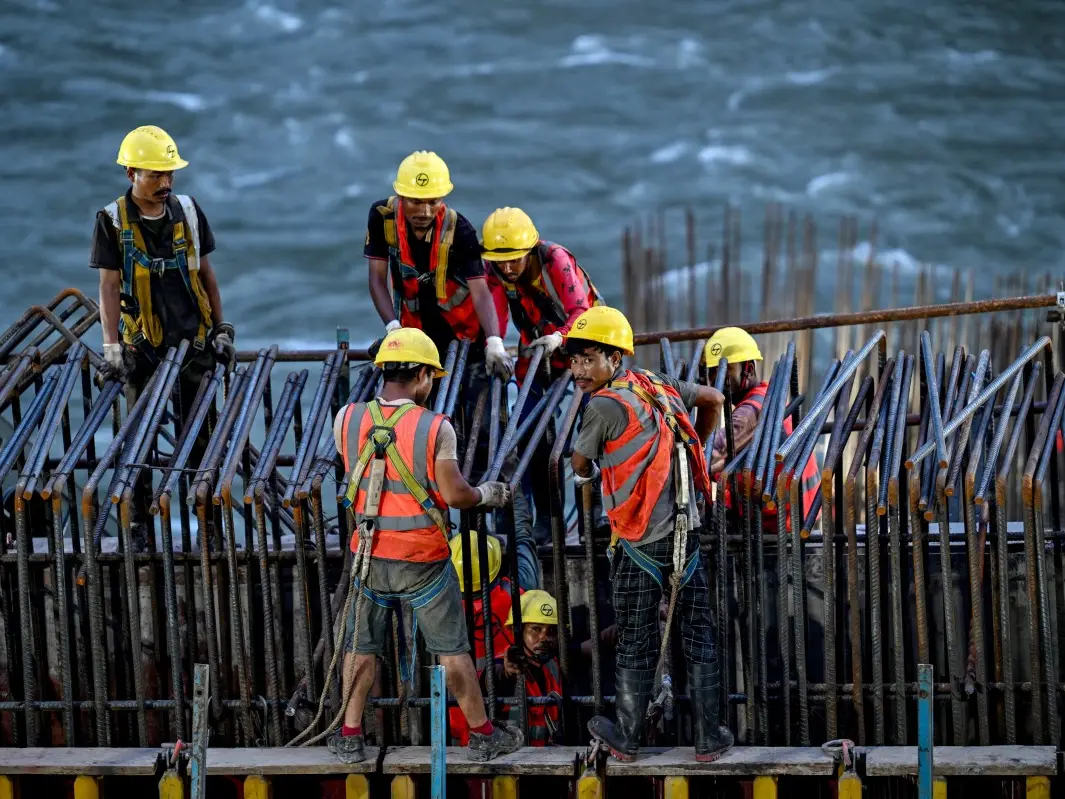
This photograph taken on August 22, 2025 shows labourers working at the under-construction site of the Dibang Multi-purpose Hydroelectric Project on the Dibang river, in the Lower Dibang Valley district of the northeastern state of Arunachal Pradesh. Photograph: (AFP)
India has implemented four new labour codes aiming to simplify regulations, but unions warn of weaker rights, ambiguous wage rules, and reduced protections.
The Union Government of India has consolidated the 29 labour laws into four codes. The codes were introduced between 2019 and 2020, after being deferred several times; they were implemented on Friday. The labour rules, some of which had been there since colonial times, were perceived by the corporate India as slowing down its manufacturing sector. The Union Government of India calls these reforms historic, which streamlines compliance, modernises the archaic provisions and creates an efficient framework for ease of doing business. But the unions call it undemocratic and “are a blueprint to impose a condition of virtual slavery” for the working people of the country.
What are the four labour codes? Why do unions warn of weaker rights?
The four labour codes include the Code of Wages, the Code of Industrial Relations, the Code of Social Security, and the Occupational Safety, Health and Working Conditions Code. The main highlights of these codes are
- The primary highlight of the code of wages is that it fixes a minimum wage for both organised and unorganised sectors. It also introduces a floor wage that no state can fix minimum wages below this level.
- The Code of Social Security defined gig and platform work for the first time, expanding legal and social protection to workers outside traditional employment structures.
- A national database is to be developed for unorganised workers, including migrants, to help migrant workers get jobs
- Women are allowed to work in all sectors, including night, with mandatory security.
- Only fixed-term employees are eligible for gratuity after one year.
- Free annual health checkup for workers above 40 years.
- Expanded ESIC (Employees' State Insurance) Coverage
- Raised the threshold for prior approval for firing from 100 to 300.
However, the union called this "a deceptive fraud committed against the working people of the nation", They allege that the Union government "dizzied by the victory in the Bihar election, felt super empowered' to implement the four labour codes. They have previously protested these four codes. The code undermines the democratic voices of dissent. Code on Wages makes the definition of wage ambiguous, undermining the federal structure by reducing the state-level negotiation powers of workers to demand better wages that reflect the local living costs. Code on Social Security fails to universalise mandates on social security; it creates ambiguity, even though it recognises the gig workers, but it does not include a detailed framework related to job security, minimum wage, and working conditions. The Occupational Safety, Health and Working Conditions Code leaves out informal workers and migrant labourers, defining 'workers and employers' vaguely. The Unions allege that the union government has implemented the labour codes in the guise of ease of compliance. Despite repeated calls, the Union Government has not convened the Indian Labour Conference since 2015.

