Explained | Women’s reservation bill and its impact in Indian electoral democracy

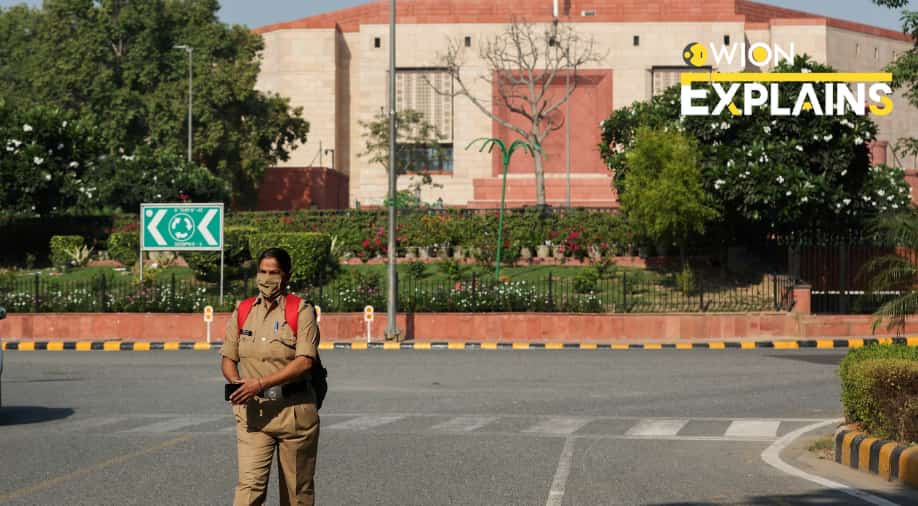
Indian Parliament
Rajya Sabha, the upper house of the Indian Parliament, passed the women’s reservation bill with an overwhelming majority on Thursday (Sep 21), allowing the 33 per cent of state and central legislature seats to be reserved for women.
The constitution amendment bill was passed in Lok Sabha a day earlier with near unanimity during the special session of parliament, held in a swanky new building to which the Indian legislature shifted.
Prime Minister Narendra Modi hailed the passage of the bill, calling it a "defining moment in our nation's democratic journey".
He extended his gratitude to all the Rajya Sabha MPs who voted for the Nari Shakti Vandan Adhiniyam, the official name of the bill.
"With the passage of the Nari Shakti Vandan Adhiniyam in Parliament, we usher in an era of stronger representation and empowerment for the women of India. This is not merely a legislation; it is a tribute to the countless women who have made our nation. India has been enriched by their resilience and contributions," PM Modi said.
The passage of the bill marks a turning point in the Indian electoral democracy, which has long debated greater participation of women in political decision-making.
There have been several efforts to reserve seats for women in elected bodies, starting from the 1990s when the central government of that time enacted the 73rd and 74th Amendment Acts reserving one-third of seats for women in urban and village local bodies.
Key components of the bill
According to The Constitution (128th Amendment) Bill 2023, “as nearly as maybe, one-third (including the seats reserved for women belonging to the Scheduled Castes and Scheduled Tribes) of the total number of seats to be filled by direct election to the House of People shall be reserved for women”.
It means that the bill provides for 33 per cent reservation of seats in the Lok Sabha, state assemblies, and Delhi's National Capital Territory.
The bill doesn’t cover Rajya Sabha since its MPs are elected by the members of state legislative assemblies and not the public.
The reserved seats may be allotted by rotation to different constituencies in the state or union territory.
Reservation for women shall cease to exist 15 years after the commencement of this amendment.
The next stage
The bill, which was passed in both houses of parliament, will now be tabled before the president for her approval as per Article 111 of the Indian Constitution.
The president can give assent or withhold assent to a bill or can return a bill, other than a money bill which is recommended by the president to the houses.
Since the bill found support from almost every member of the parliament, and President Droupadi Murmu on earlier occasions hailed it, the possibility of it getting turned down is highly unlikely.
Tumultuous journey
The women’s reservation bill’s journey can be traced back to 27 years ago, in September 1996, when it was tabled in parliament by former prime minister HD Deve Gowda-led administration.
Since then, almost every government has attempted to approve it, with the Congress-led UPA administration even succeeding in the Rajya Sabha in 2010. However, owing to a lack of political will and consensus, the endeavour was unsuccessful in Lok Sabha.
When will it be implemented?
On Wednesday, Union Home Minister Amit Shah said the women’s reservation bill will be implemented only after 2029.
He said that the implementation of the bill is contingent upon the census and the delimitation exercise that is expected to be conducted immediately after the general election.
Shah, however, did not specify the dates for the delayed census that has remained under ambiguity since 2021 despite the apparatus being ready.
The last census was held in 2011. The central government initially attributed the COVID-19 pandemic for postponing the exercise that was to start in two phases in 2020 and conclude by March 31, 2021.
The previous two notifications by the Registrar General of India (RGI) did not specify any reason for the delay.
What do census and delimitation have to do with women's reservation bill?
There are 545 seats in Lok Sabha. Since 1976, the number of seats hasn’t increased because the government froze the delimitation of the constituencies of the lower house so that states' family planning programmes would not affect their political representation. The delimitation exercise was paused till 2000.
Then in 2001, the government at the time extended the stay till 2026. Now, delimitation will take place after the first decennial census after 2026.
The number of MLAs and MPs in Lok Sabha has not changed since 2002, whereas the population increased from over 1.28 billion to over 1.42 billion.
The addition of 1.4 billion people necessitated the census and delimitation. The government wants to implement the bill in the new setup so that changes after delimitation would not affect the constituenciesearmarked for women candidates.
WATCH WION LIVE HERE