
&imwidth=800&imheight=600&format=webp&quality=medium "Explained: ISRO's maiden Cryogenic stage restart in space")
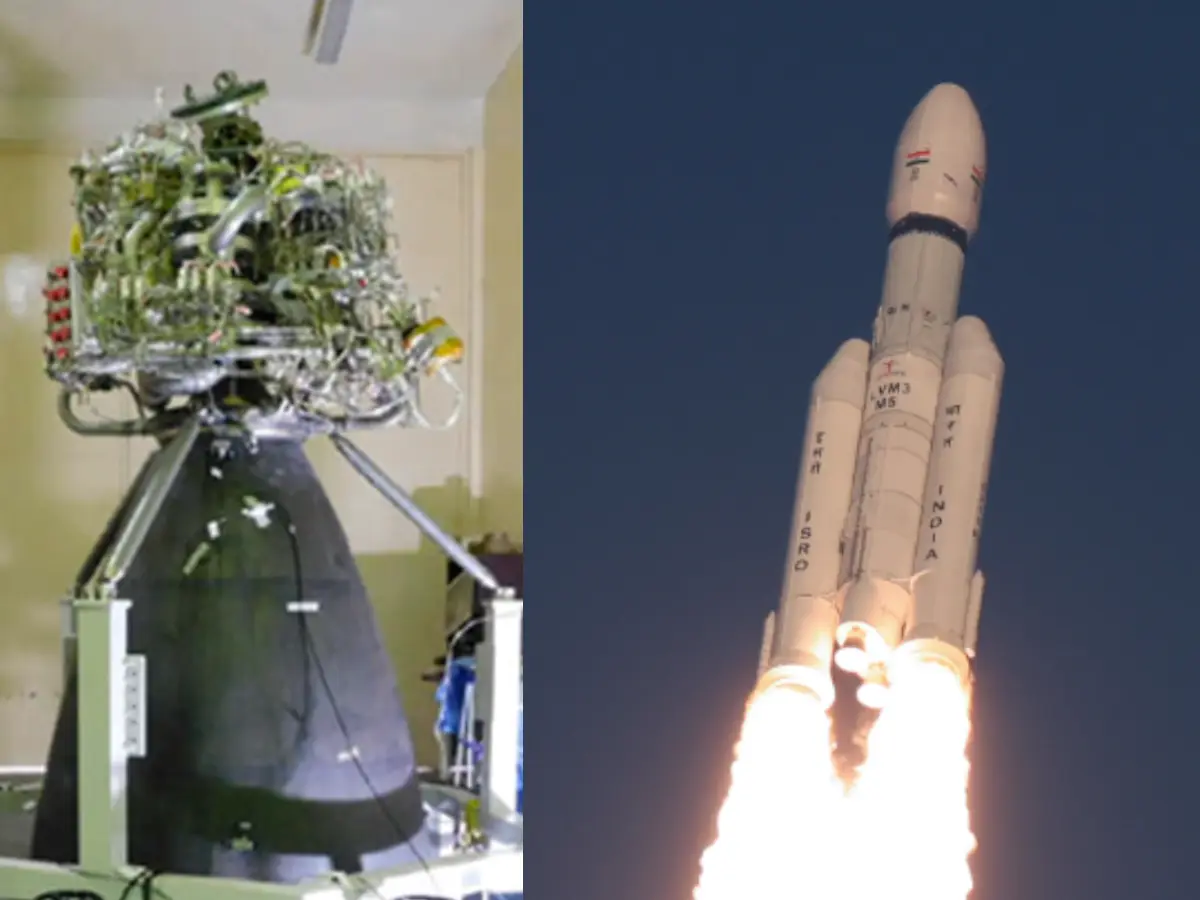
While ISRO has operated three variants of Cryogenic rocket engines(one foreign-origin and two indigenously developed) and associated stages for more than two decades, in a first, ISRO restarted its indigenous C25 Cryogenic stage during the LVM3M5/CMOS-03 mission earlier this month.
A cryogenic rocket engine is among the most efficient means of propelling a space vehicle. It is also among the most sophisticated technologies to master. A cryogenic engine, its fuel tanks, and all associated systems working together form a Cryogenic stage.
After the primary mission was successfully accomplished, ISRO announced the achievement of the Cryogenic stage reignition. "After the CMS-03 satellite was injected into the designated orbit, the C25 Cryogenic upper stage was reoriented, and after 100 seconds of waiting time, the Cryogenic upper stage was reignited. This is the first time that the Cryogenic upper stage is being reignited in the deep vacuum of space," said ISRO.

Why is a Cryogenic stage restart technologically challenging?
A Cryognic engine burns Liquid hydrogen (stored at -253 degrees Celsius) and Liquid oxygen (stored at -183 degrees Celsius). The handling and storage of these fuels is highly challenging because they need to be super cooled to ensure that the gases exist in liquid form.
On Earth, the fuels can be maintained in a super cooled condition. In tanks on Earth, gravity pulls the fuel downwards and keeps it grounded within the tank.
Trending Stories
In the microgravity environment of space, fuel floats inside the rocket's fuel tank, which could cause bubbles and vapour pockets. To restart the engine, the turbopumps require a continuous liquid fuel feed, not gas or bubbles.
First, the fuel must be settled at the bottom of the tank. For that, special motors known as ullaging motors/settling thrusters need to be used to push the fuel to the bottom of the tank. If this process is not done correctly, the pump could fail when it takes in gas, instead of fuel.
In earth orbit, temperatures range from 150 degrees Celsius to -150 degrees Celsius, therefore the fuel tank must be insulated and thermally maintained in the ideal condition. Heat from sunlight could causes liquid hydrogen to boil and lead to formation of gas bubbles and change in pressure. "Once the Cryogenic engine is fired once and then it is shutdown, we will again have to re-attain the required thermal conditions for a reignition. Engine components like injectors and turbopumps needs to be pre-chilled to ideal temperature again before reignition. Adequate quantity of fuel needs to be there in the tank for reignition, the fuel must be at the ideal temperature and pressure," ISRO Chief Dr. V. Narayanan explained to WION.
In addition to all these factors, the ignitor must work reliably in vacuum and near-zero pressure of space. For this mission, ISRO placed three ignitors for the restart of the engine, said the Chief.
ISRO has the capability to restart the 4th or final stage of the PSLV rocket multiple times, because PSLV uses Unsymmetric Dimethyl Hydrazine(UDMH) + N204 fuel combination, which can ignite on coming with contact with each other. These are known as hypergolic fuels. Therefore, just opening the two valves and bringing the fuel and oxidizer into contact can enable the engine firing. In contrast, a cryogenic engine re-firing is much more complicated and requires many factors to work together perfectly.
In 2022 and 2023, ISRO managed to launch a total of 72 OneWeb satellites in two launches. While ISRO did not have Cryogenic engine restart capability at that time, ISRO used cold gas thrusters, where an inert gas like nitrogen or helium is pushed out of a compressed tank. This is like letting air out of a balloon, which leads to the balloon moving in the opposite direction of the gas exit.
That's how ISRO steered the upper stage and aligned it perfectly to eject 36 satellites in a single mission. However, cold gas thrusters offer very minimal thrust, and are useful only for minor alignment changes and not for completely changing the orbit.
What additional capability does a Cryo stage re-ignition offer?
ISRO Chief Dr. V. Narayanan said that the re-ignition of the Cryogenic upper stage in the vacuum of space enables multi-orbit missions where a single LVM3 rocket can carry satellites to different orbits. In simple terms, it is a like a vehicle performing multiple start-stops to allow passengers to get down at different locations.
Further, the reignition ofthe Cryogenic stage can also be used for post-mission disposal or de-orbiting of the stage. This is a step that is undertaken to remove the used rocket stage from orbit, so that it does not end up as space debris. This is done to ensure space sustainability, and minimize the overcrowding of orbits.
Dr. Narayanan suggested that ISRO would conduct more such cryogenic engine reignition tests in space, and study the data thoroughly before attempting multi-orbit missions using the LVM3 rocket's C25 cryogenic stage reignition. He said that ISRO needed to perform more such tests when future LVM3 launch missions provide such opportunities.
