
&imwidth=800&imheight=600&format=webp&quality=medium "EXPLAINED: How does unseasonal rain affect India's farmers & strain economy")
The India Meteorological Department (IMD) said on Monday (April 6, 2026) that rain and hailstorms will continue over North and Central India over the next few days till March 31. Additionally, most of the weather officials indicated that the wet spell in North India is likely to spill over with back-to-back western disturbances.
While the shift may offer temporary relief to the urban population from intense summer heat, it poses a risk to standing wheat crops, especially late-sown varieties, if heavy rain and thunderstorms occur. This could hurt farmers’ incomes and disrupt supply chains, potentially adding to inflationary pressures.
Meanwhile, the Western Disturbance has already begun affecting some regions of North India, including the higher reaches of Himachal Pradesh and Jammu and Kashmir, which experienced fresh snowfall. The wet weather has also gripped parts of Delhi, Punjab, Haryana and Rajasthan with light rain affecting wheat growers in these states, leading to major losses due to crop damage.

In Jammu and Kashmir, snowfall also forced the closure of several key inter-district roads. The Meteorological Department warned of short but intense spells of heavy rain in isolated areas, which could trigger flash floods, landslides in vulnerable regions, and waterlogging in low-lying zones. Meanwhile, Himachal Pradesh experienced a drop in both daytime and night temperatures, with light to moderate rainfall and snowfall reported across multiple areas.
How does unseasonal rain affect wheat-growing farmers
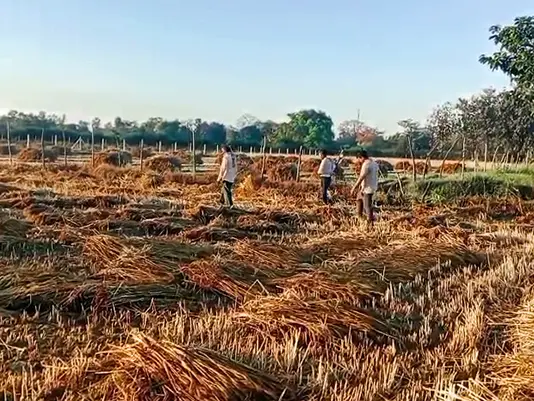
The unusual weather has disrupted normal life across northern and central India and inflicted significant damage on standing Rabi crops just before harvest. Local field reports indicate crop losses of around 20 per cent to 30 per cent in several districts.
Trending Stories
For farmers, the timing has been especially unfortunate. Vast areas of wheat, gram, mustard, along with fruits and vegetables, were ready for harvest when hailstorms on April 3–4 flattened crops and damaged produce. The back-to-back weather disturbances have worsened the situation, with continuous moisture further reducing grain quality. In response, farmers have taken emergency steps such as early harvesting, covering crops with tarpaulins, improving drainage, and using nets in orchards.
In Jhajjar, Haryana, a farmer said most of his crop was destroyed by a sudden weather shift and called for adequate government compensation. Similar concerns were echoed in Prayagraj, Uttar Pradesh, where unseasonal rain and hailstorms also damaged standing rabi crops.
Market impact and procurement challenges
The fallout is already visible in market prices. According to Commodity Online data, the average wheat price on April 6 stood at Rs 2,382.83 per quintal, ranging between Rs 2,000 and Rs 2,600, below the Minimum Support Price (MSP) of Rs 2,625 per quintal for the current season.
If the unseasonal rain continues for the next few days, then the "ripple effect" of damaged crops will extend far beyond the farm gate. A reduced harvest leads to lower market arrivals, driving up prices. In March 2026, wheat prices had already shown a slight upward trend; this rain could trigger a spike in Consumer Price Index (CPI) inflation.
All the affected state governments will have to make payouts under the Pradhan Mantri Fasal Bima Yojana (PMFBY) or may also have to announce special relief packages, putting further strain on fiscal deficits. Meanwhile, the Madhya Pradesh government has already assured that procurement will proceed as scheduled. Chief Minister Mohan Yadav said, "Wheat produced by all farmers registered on the procurement portal will be purchased; wheat from small farmers will be purchased first."
In addition, farmers who have already spent on fertilisers and pesticides see their investment wash away. According to data from previous unseasonal events, a 10–15 per cent crop loss can wipe out a small-scale farmer's entire profit margin, pushing them deeper into the debt trap.

