Did blaring music at Chennai resort cause death of rare crocodile?

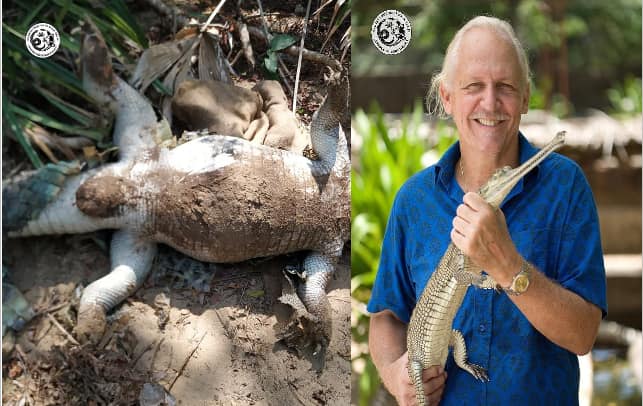
Romulus Whitaker
Enjoying loud music and partying is a pleasure for many, but for those in the neighbourhood, it may not be as enjoyable. If in case these neighbours are endangered species of wildlife, the effects of the blaring speakers could even lead to their death!
The Madras Crocodile Bank Trust(MCBT) was established by Romulus and Zhai Whitaker in 1976 with the specific goal of securing breeding populations of the three species of Indian crocodile. Today Croc Bank is home to 17 species of crocodilians. It is also one of the largest reptile zoos in the world, spread over eight and a half acres of land and is home to over 2500 reptiles.
The MCBT lies on the picturesque East Coast Road and is located about 40 kms away from Chennai city. Since, mid-2018 the Croc Bank has had a new neighbour, Sheraton Grand Chennai Resort and Spa. The Crocodile bank trust claims that the resort is “built right against our wall”.
In a Facebook post shared yesterday, Padma Shri Romulus Whitaker, the founder of the Crocodile Bank shared details regarding the death of a Cuban Crocodile (Critically Endangered species in the World Conservation Union (IUCN) listing) on the night of 30th March, due to the stress caused by the blaring music played on the hotels lawns, despite many requests to lower the volume. It also mentions that “the Cuban crocodile enclosure is around 50 ft from the wall which divides the hotel from us and the powerful hi-fidelity speakers had been placed right next to it. The animal had been healthy, had fed recently, and had no injuries or history of sickness. This is a critical breeding group of one of the most endangered animals in the world: 1 male and 4 (now 3) females. Extremely lucky that it wasn’t the male who succumbed. We will now consider moving the group to another location, an expensive and difficult undertaking.”
Going by the earlier Facebook posts of the MCBT, problems began in February 2019, when the Crocodile Bank expressed anguish over what they called, “loud music with booming bass levels that triggers aberrant behaviour among the animals”. The statement also adds, “the decibel levels and timings consistently exceed the legal limits. On one particular day, our decibel readings (taken at the Croc Bank) ranged from 85 to 140. The legal daytime decibel level is 55 and post-6 pm, 45 (Pollution Prevention Act 2002). It was like a combo of war zone and earthquake. What are the long-term effects going to be on the zoo animals? The sound is a weapon, and I’m guessing that this auditory torture may well change their breeding and behaviour patterns.”
MCBT had also issued a clarification in February stating that “There was a meeting at the Crocodile Bank today which was attended by our trustees and the Sheraton Grand Hotel team, which included management and two sound technicians. As a starting point, they have assured us that they will comply with the legal regulations in terms of acceptable decibel limits and permitted timings. Additionally, they will take measures to control vibrations. Sheraton will also be appointing a sound consultant who will submit a report in 10 days recommending additional mitigatory methods which the hotel can take.”
However, the death of the endangered Cuban crocodile on March 30th has come as a shocker.
Hotel’s general manager Shibil Malik said, “We at Sheraton Grand Chennai are equally saddened and disturbed to hear of this unfortunate incident. We have continuously worked with the crocodile bank management and taken all possible measures to maintain the safety of the wildlife in the neighbourhood. Hence we do believe that the allegations are unfounded. The death could have been due to a number of natural or unnatural causes. Whilst as a company we are extremely sensitive to animal welfare we do deny these false accusations. We remain committed towards the environment and wildlife and to working with the crocodile bank to ensure the safety of the wildlife so we can all coexist.”
