Delhi wakes up to 'very poor' air quality ahead of Diwali festivities despite firecracker ban

Delhi air quality
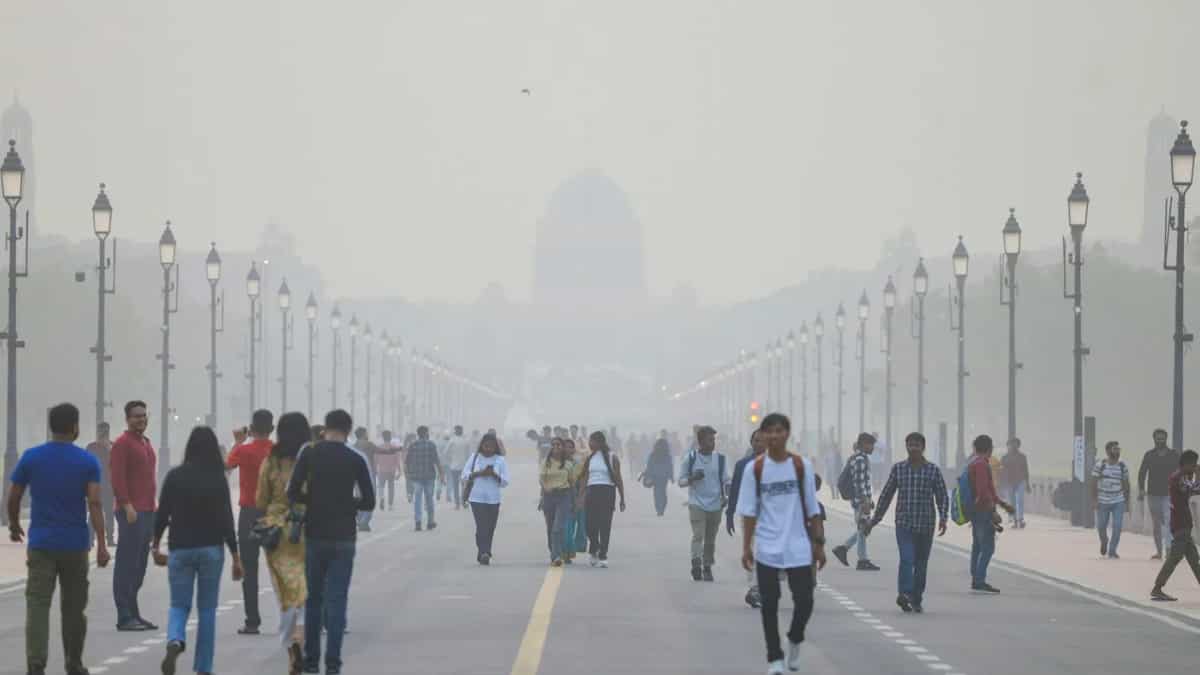
Delhi woke up to ‘very poor’ air quality on Monday (Oct 28), ahead of the Diwali week festivities. The national capital recorded a 24-hour average Air Quality Index (AQI) of 264 at 6:00 am, though it was 90 points down from the previous day, still hazardous for health.
The air quality in the capital city for the last two days was worse than Monday; on October 28 the AQI had dropped vigorously due to lack of strong winds.
In Delhi’s Pitampura, the air quality index stood at 167 at 6:00 am, as shown by the data from the IQair website. In Defence Colony, the AQI was recorded at 324, indicating a rising trend in the pollution levels in the national capital.
Also Read |Stampede at Mumbai’s Bandra station: 9 injured as festive travel surge overwhelms station
The air quality is likely to get worse this week as Diwali celebrations will begin from Monday across the National Capital Region (NCR).
On Sunday, Delhi's air quality turned 'very poor' as calm winds prevented the dispersion of pollutants. Some areas in the national capital recorded 'severe' pollution levels.
Delhi's 24-hour average AQI was recorded at 355 at 4:00 pm as against 255 on Saturday, Central Pollution Control Board (CPCB) data showed. Meanwhile, data from 37 of the city's 40 monitoring stations shared by the CPCB showed that three stations -- Bawana, Burari and Jahangirpuri -- recorded 'severe' air quality.
Tackling Delhi’s air quality
The upcoming winter season teamed up with Diwali festivities is a menace for the capital city’s already deteriorating air quality. To curb air pollution, the Delhi government has taken several steps including pushing for public transport, curbing dust pollution, and a firecracker ban during the festival season.
Another crucial action in this direction was to invoke the Centre’s emergency Graded Response Action Plan (GRAP) when the air quality in Delhi-NCR is expected to decline in the winter months. At present, GRAP Stage II (when AQI is between 301 and 400) has been activated in Delhi by the Commission for Air Quality and Management (CAQM) since October 21.
In addition, all conventional firecrackers are banned in Delhi-NCR allowing only green crackers that do not use barium slats in their production, since 2020. However, due to the absence of distinction between a green cracker from a normal one, authorities have been imposing a blanket ban every winter since 2020.
(With inputs from agencies)