Delhi pollution crisis: NASA scientist claims farmers concealing stubble burning from satellite

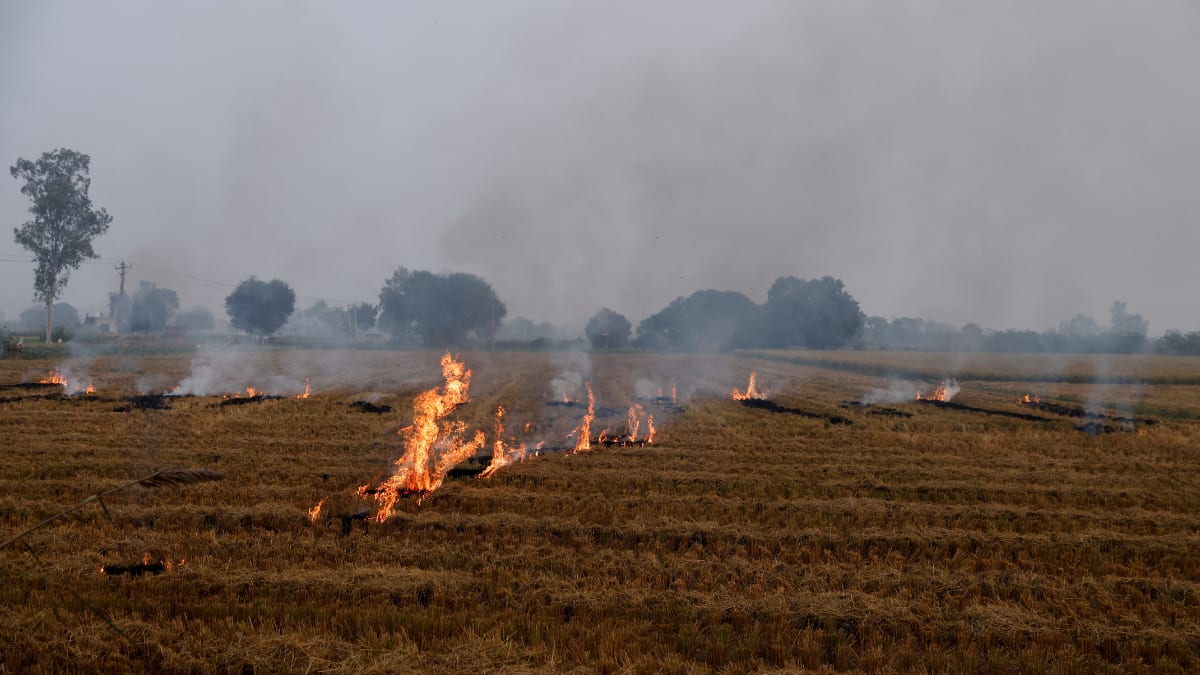
Image of stubble burning in the village of India.
NASA Goddard Space Flight Centre senior research scientist Hiren Jethva recently said that even though the number of reported incidents of stubble burning has gone down, there has been no decrease in aerosol levels.
He further questioned if the farmers in northwest India and Pakistan have been escaping detection of fires by the satellite.
Taking to X on October 25, Jethva said, "Are farmers in NW India and Pakistan avoiding satellite overpass time for stubble burning? A close eyeballing of GEO-KOMPSAT 2A geostationary satellite images shows localised puffs/clouds of smoke in the late afternoon. Needs ground checking."
He also shared a satellite image of stubble burning taken in the afternoon and wondered who had taught them to change the pattern.
In a post shared on October 28, Jethva said: "(The delusional) drastic downward trend in fire detection in NW India since 2022 but aerosol loading in the atmosphere has increased (or near stable). Raises suspicion if farm fires are ignited after satellite overpass time."
Speaking to The Times Of India, Jethva said that the fire activities in Punjab are being carried out in the late afternoon.
"Intentionally, avoiding NASA-NOAA satellite overpass time, which falls around 1.30 to 2 pm IST, could be one reason.... The shortwave infrared radiation data and imagery from Korea's geostationary satellite GEO-KOMPSAT-2A (GK2A) show fire activities concentrated during late afternoon hours past the Nasa-NOAA satellite overpass time," he said.
Delhi chokes as stubble burning continues
The Aqua satellite of Nasa and the Suomi-NPP satellite of Nasa-NOAA flies over India and Pakistan from 1.30 pm to 2 pm IST. Another Korean satellite, which is in geostationary orbit, has been surveying the same region every 10 minutes.
Watch:Delhi Air Pollution: Physical Classes Discontinued For All Except Classes 10 & 12
From September 15 to November 17, 8,404 stubble burning incidents have been recorded in Punjab in comparison to 33,082 last year.
Delhi has been choking in one of the worst pollution as the average air quality index (AQI) has hit 487 and the Graded Response Action Plan (GRAP) Stage 4 has been kicked in by the government.
(With inputs from agencies)