CO2 in atmosphere hit record high in 2016

Co2
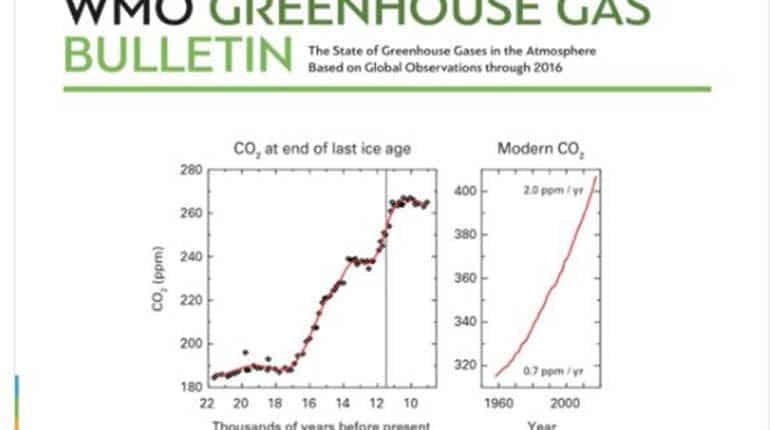
Carbon dioxide in atmosphere witnessed an unprecedented surge in the past 70 years, the World Meteorological Organisation's said citing its annual Greenhouse Gas Bulletin
Carbon dioxide or CO2 in atmosphere was at an all-time high in 2016 after witnessing an unprecedented surge in the past 70 years, the World Meteorological Organisation's said on Monday citing its annual Greenhouse Gas Bulletin said.
It also said that only drastic measures to meet targets set by the Paris climate agreement will help.
"Concentrations of carbon dioxide in the atmosphere surged at a record-breaking speed in 2016," the World Meteorological Organisation said.
In fact, last year's increase in CO2 was 50 per cent higher than the average of the past 10 years.
The agency attributed the spike in greenhouse gases to "a combination of human activities and a strong El Nino event".

The UN weather agency's Greenhouse Gas Bulletin tracks dangerous gases in atmosphere in the post-industrial era (since 1750).
The Earth experienced similar CO2 concentration rates three to five million years ago when the sea level was up to 20 metres (66 feet) higher than now, the report said.
"Without rapid cuts in CO2 and other greenhouse gas emissions, we will be heading for dangerous temperature increases by the end of this century, well above the target set by the Paris climate change agreement," WMO chief Petteri Taalas said in a statement.
US President Donald Trump announced in June that his country would like to pull out of the historic Paris agreement approved by 196 countries in 2015. Those nations remaining with the accord, however, decided to push ahead with the agreement without US and plan to press ahead with the agenda at the climate talks in Bonn, Germany next week. Delegates from 196 countries meet in
Bonn between November 6 and 17 deliberate on shifting the world economy away from fossil fuels and to develop a "rule book" in that connection.
"The numbers don't lie. We are still emitting far too much and this needs to be reversed," the head of UN Environment Erik Solheim said in a statement, reacting to the new report. "What we need now is global political will and a new sense of urgency."
The Greenhouse Gas Bulletin tracks concentrations of gasses in the atmosphere, rather than emissions with data compiled from a monitoring station in Mauna Loa, Hawaii.