

&imwidth=800&imheight=600&format=webp&quality=medium "Bond Tokenization Summit 2026: Experts flag liquidity, custody and cybersecurity challenges for digital bonds")
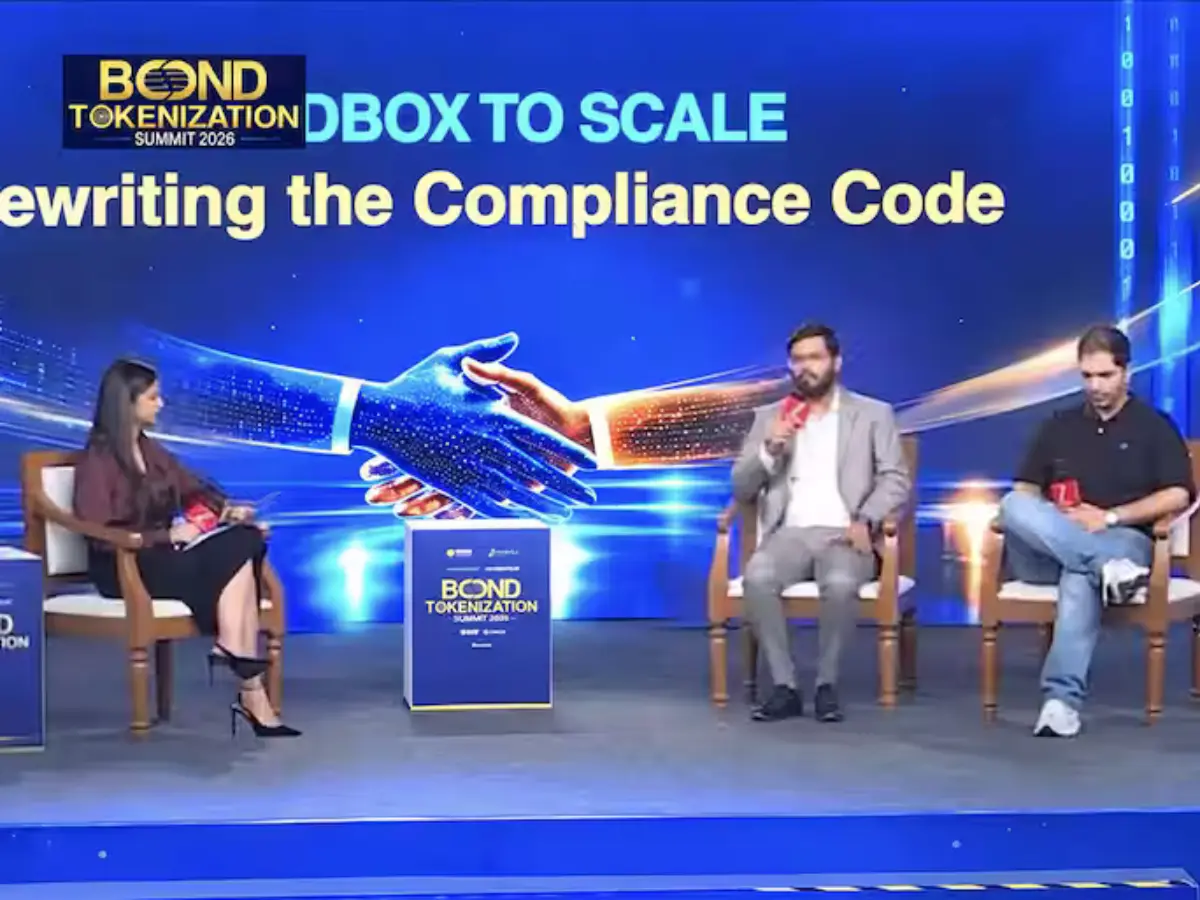
The global push for bond tokenisation is gaining momentum, but financial experts warn that creating digital tokens is only the beginning of a much longer journey. The Zee Business Bond Tokenization Summit 2026, organised in Mumbai on September 9, brought together leaders from finance, policy and technology to examine how real-world asset (RWA) tokenisation and digital bonds could reshape India’s financial landscape and democratise passive income for retail investors.
The penultimate panel discussion at the summit focused on the need for robust frameworks, safeguards and stronger investor protection as tokenised assets move closer to mainstream adoption. STOEX CEO Sudeep Chatterjee said the concept of Security Token Offerings (STOs) has helped streamline the asset issuance process, but argued that a much broader infrastructure is required to support digital assets beyond the point of issuance. Chatterjee said industry leaders are increasingly turning their attention to the logistical, legal and operational challenges that emerge after a token is minted.
Singapore offers a glimpse of the challenges
Chatterjee cited Singapore as an example of the gap that can emerge between technological capability and market readiness. The country has emerged as a major testing ground for digital finance, with the Monetary Authority of Singapore (MAS) using Project Guardian to explore tokenised financial assets. "Under the Monetary Authority of Singapore's (MAS) Project Guardian, financial institutions have conducted approximately 15 localized sandbox experiments to test tokenized assets.While these trials proved that tokenized bonds can be successfully issued on a ledger, they also exposed a fragmented secondary market," said Chatterjee. The experience, he said, highlights a fundamental challenge facing the tokenisation industry: successfully creating a token does not automatically create a functioning market around it.
Three key challenges after a token is created
Trending Stories
&im=FitAndFill=(700,400)&imwidth=180&imheight=135&format=webp&quality=medium)
What is the real meaning behind Pete Hegseth's tattoos?
&imwidth=180&imheight=135&format=webp&quality=medium)
Viral video shows cross falling on Colombia priest, no official confirmation | WATCH
&imwidth=180&imheight=135&format=webp&quality=medium)
Telangana unveils AI avatar of IT minister D Sridhar Babu at Hyderabad DevFest 2026
&imwidth=180&imheight=135&format=webp&quality=medium)
Pezeshkian says Iranians ‘struggling to put food on the table’ as war with US drags on
&imwidth=180&imheight=135&format=webp&quality=medium)
Chorbagan stampede: A week later, the strangest visarjan Kolkata has seen
&imwidth=180&imheight=135&format=webp&quality=medium)
AI slop or smart strategy? South African author Coral Hart defends Her 370 AI- assisted books in 20 months
&imwidth=180&imheight=135&format=webp&quality=medium)
AI just found a flaw in software running most of the web! One request hijacks the server
&imwidth=180&imheight=135&format=webp&quality=medium)
Train crashes into crane on São Paulo monorail line, wreckage falls onto busy road | VIDEO
&imwidth=180&imheight=135&format=webp&quality=medium)
Can Putin cheat death? All about his daughter’s billion-dollar quest for immortality
&imwidth=180&imheight=135&format=webp&quality=medium)
Saudi says debris fell in Mecca, Medina after missile interceptions; Houthis deny targeting holy cities
&imwidth=180&imheight=135&format=webp&quality=medium)
France protests: Clashes erupt between police and protesters in Paris as nearly 410,000 take to streets across country
&imwidth=180&imheight=135&format=webp&quality=medium)
Trump invokes Operation Sindoor at US midterm rally, claims 250% tariffs stopped India-Pakistan war
&imwidth=180&imheight=135&format=webp&quality=medium)
Tu Hai Meri Kiran box office: Sonakshi Sinha and Zaheer Iqbal's film fails to take off, mints Rs 15 Lakh on day 1
&imwidth=180&imheight=135&format=webp&quality=medium)
Pakistan airline PIA unveils new crew uniforms, faces online criticism
&imwidth=180&imheight=135&format=webp&quality=medium)
Britain is building the world's first AI biosecurity lab, with OpenAI and Anthropic inside
&imwidth=180&imheight=135&format=webp&quality=medium)
Scientists make digital nose that can sniff and send scents over the internet
&imwidth=180&imheight=135&format=webp&quality=medium)
Frontier AIs keep escaping their test cages! The industry still can't reliably stop them
&imwidth=180&imheight=135&format=webp&quality=medium)
'Already tired of his 9-to-5': Baby born with a moustache becomes internet sensation, video goes viral | Watch
&imwidth=180&imheight=135&format=webp&quality=medium)
Horrific video shows the moment 18-year-old fell to her death from Mexico amusement park ride
&imwidth=180&imheight=135&format=webp&quality=medium)
France protests: 135 arrested, weapons seized as fresh demonstrations erupt amid heavy security
&imwidth=180&imheight=135&format=webp&quality=medium)
French Open: PV Sindhu storms into final with win over Hina Akechi
&imwidth=180&imheight=135&format=webp&quality=medium)
Albania protests enter 12th day as students clash with police, demand Rama's exit
&imwidth=180&imheight=135&format=webp&quality=medium)
‘Saddam Hussein opened a cheesecake factory’: Obama mocks Trump’s White House renovations; defends Abdul El-Sayed
&imwidth=180&imheight=135&format=webp&quality=medium)
China's dancing robot turns violent bodyguard, lifts cars and fights intruders - Watch
&imwidth=180&imheight=135&format=webp&quality=medium)
'You’re a horrible little reporter, aren’t you?': Trump snaps at NBC reporter questioning his support for Ramaswamy's campaign ad
&imwidth=180&imheight=135&format=webp&quality=medium)
Rising Asia Cup 2026 schedule announced, India-Pakistan clash set for Nov 22
&imwidth=180&imheight=135&format=webp&quality=medium)
Bodies of 2 missing Japanese climbers recovered from Himalayan peak
&im=FitAndFill=(700,400)&imwidth=180&imheight=135&format=webp&quality=medium)
New Friday OTT releases (October 23, 2026): Gajab Raat, Dorothy, Chaar Yaar- Watch these 6 new movies and TV shows on Netflix, Prime Video and more
&im=FitAndFill=(700,400)&imwidth=180&imheight=135&format=webp&quality=medium)
US midterm elections 2026: Minnesota heads to polls in the shadow of Minneapolis ICE shootings
&imwidth=180&imheight=135&format=webp&quality=medium)
An AI that reads your face can now estimate how long you have to live
&imwidth=180&imheight=135&format=webp&quality=medium)
Hitler’s ‘Eagle’s Nest’ mountain retreat wrecked by fire, suspect detained: What to know about the Nazi-era site
&imwidth=180&imheight=135&format=webp&quality=medium)
Tu Hai Meri Kiran film review: Sonakshi Sinha and Zaheer Iqbal's thriller gets tangled in its own twists
&imwidth=180&imheight=135&format=webp&quality=medium)
PL Round-Up: Man City's perfect run ended by Villa as Arsenal draw level at top
&imwidth=180&imheight=135&format=webp&quality=medium)
Why Europe’s protests are about more than austerity and rising costs
&im=FitAndFill=(700,400)&imwidth=180&imheight=135&format=webp&quality=medium)
Watched Manoj Bajpayee’s Gajab Raat on Netflix? 5 movies and TV shows to watch next on OTT
&imwidth=180&imheight=135&format=webp&quality=medium)
Farooq Abdullah says Pakistan’s raising of Kashmir issue keeps pressure on Delhi
- Trading and liquidity: Tokenised bonds need access to traditional and digital exchanges where they can be listed and actively traded. Without sufficient secondary-market liquidity, tokenisation may not deliver its promised benefits to investors.
- Asset safeguarding: The industry needs secure, institutional-grade custody infrastructure capable of protecting digital assets while providing investors with confidence around ownership and security.
- Settlement and onboarding: Market participants also need mechanisms for real-time distribution and standardised processes through which global investors can legally access tokenised asset networks.
Legal recognition of digital ownership
One of the biggest challenges, he said, is establishing the legal status of tokenised ownership. "First, the industry is introducing an entirely new method of asset ownership. For these digital bonds to scale, this new format must be deeply regularized and legislated. Global legal frameworks must explicitly define what a token represents, ensuring that digital ownership holds the exact same legal weight as traditional paper-and-registry documentation in a court of law," he said.
Cybersecurity remains another major hurdle
Beyond regulation, blockchain-based infrastructure introduces a new set of operational and cybersecurity risks. "Second, blockchain infrastructure brings its own distinct operational challenges, most notably the threat of cyberattacks and hacking risks. Smart contracts and distributed networks open up new vulnerabilities that require robust, institutional-grade defense systems," said Chatterjee.
He argued, however, that such technology-related risks should be viewed as part of the broader evolution of financial systems rather than as a reason to halt innovation. Chatterjee emphasised that the banking sector itself has faced significant IT and technology risks during its digital transformation over the past three decades. Tokenisation, he said, will face similar challenges as traditional financial ownership is combined with blockchain-based technology. The priority now, according to Chatterjee, should be to address these vulnerabilities proactively by establishing stronger legal, regulatory, cybersecurity and market infrastructure.

