Bill to enhance strategic relationship with India introduced in US Congress

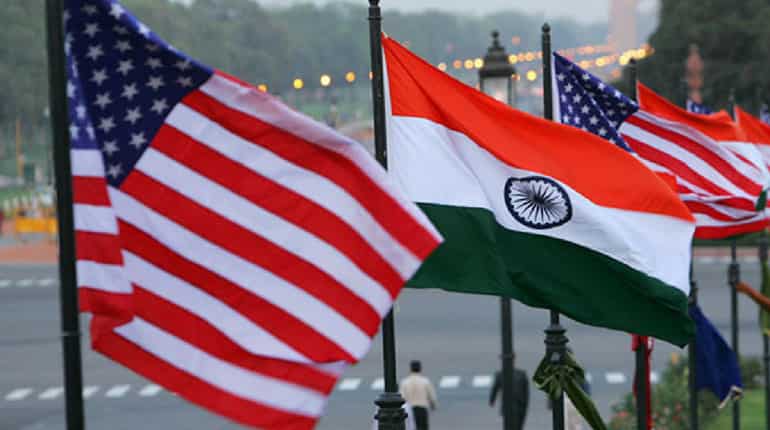
India US
The US India Enhanced Cooperation Act was introduced by Congressman Joe Wilson along with Indian-origin lawmaker Ami Bera, George Holding and Tulsi Gabbard.
A bill that seeks to further strengthen the US’ strategic relationship with India has been introduced in the House of Representatives by several influential American lawmakers.
The US India Enhanced Cooperation Act was introduced by Congressman Joe Wilson along with Indian-origin lawmaker Ami Bera, George Holding and Tulsi Gabbard.
The Senate and House Armed Services Committee in a joint conference report to the National Defense Authorisation Act (NDAA)-2019 provided a modified waiver to section 231 of the Countering America's Adversaries Through Sanctions Act or CAATSA. A conference report refers to the final version of a bill that is negotiated between the House of Representatives and the Senate via the conference committee.
The act seeks legislative changes in the Arms Export Control Act that would bring India on par with its major allies.
“The United States-India relationship is a cornerstone of security in the Indo-Pacific region. By designating India as a Major Defence Partner, we can strengthen our alliance and enhance our defence and security cooperation with India,” Wilson said.
“Together, we can address emerging common threats, support maritime security in the region, and enhance military cooperation for joint exercises and humanitarian assistance,” he said.
“The citizens of America and India cherish the same values and independent freedoms, and the United States-India Enhanced Cooperation Act will strengthen this important alliance,” Wilson said.
CAATSA waiver though general in nature is intended at preventing US sanctions on India, which is planning to buy five S-400 Triumf air defence systems for around $4.5 billion from Russia.
Unlike the existing version of the act, the proposed modified waiver requires presidential certifications designed to protect US alliances, military operations, and sensitive technology, said a statement issued by the Senate Armed Services Committee after the two committees announced details of the conference report.
The John McCain National Defence Authorisation Act for Fiscal Year 2019, which authorises funding for the Department of Defense and the national security programmes of the Department of Energy, encourages US allies and partners to reduce the inventory of Russian-produced major defence equipment and advanced conventional weapons.
The proposed legislative amendments would provide a valid ground to the Trump administration to provide necessary waiver to India, even if it goes ahead with its decision to buy S-400.
India's dependence on Russia for its military hardware has experienced sustained reduction over the last one decade. At the same time, India's defence trade with the US has increased.
India is in the process of placing orders worth of billions of dollars to the US – ranging from fighter jets to unmanned drones. Over the past few months, CAATSA had emerged as a major irritant to India-US relationship. An India-centric top American business advocacy group today welcomed the Congressional move.
At the same time, it excludes the possibility of waivers for Russian intelligence agencies and other entities engaged in cyber attacks.
Seeking to enhance the capabilities of the US and India to address emerging common threats, increase security cooperation, and expand joint military exercises, the act urges the US to encourage and facilitate India’s role as priority partners in the South Asia and greater Indo-Asia-Pacific regions.
It asks the US to support the mutual interest in maritime security and maritime domain awareness, as well as enhanced military cooperation in joint exercises, training, and humanitarian assistance and disaster relief.
The act says the US is committed to continuing to work towards facilitating technology sharing with and transfer of advanced strategic military capability to India on a level commensurate with that of its closest allies and partners.
The leaders of the two countries reached an understanding under which India would receive licence-free access to a wide range of dual-use technologies in conjunction with steps that India had committed to take to advance its export control objectives, it said.
The move comes days after US defence secretary Jim Mattis asked the Congress to give the secretary of state the waiver authority. "Doing so allows nations to build a closer security relationship with the US as they continue to transition from reliance on Russian military equipment," he said.
"The fundamental question we must ask ourselves is do we wish to strengthen our partners in key regions or leave them with no other option than to turn to Russia, thereby undermining a once-in-a-generation opportunity to more closely align nations with the US vision for global security and stability," Mattis said.
(With inputs from PTI)