Bharat bandh today: Privatisation, labour code, why trade unions are protesting?

&imwidth=600&imheight=450&format=webp&quality=medium "Bharat bandh today: Privatisation, labour code, why trade unions are protesting?")
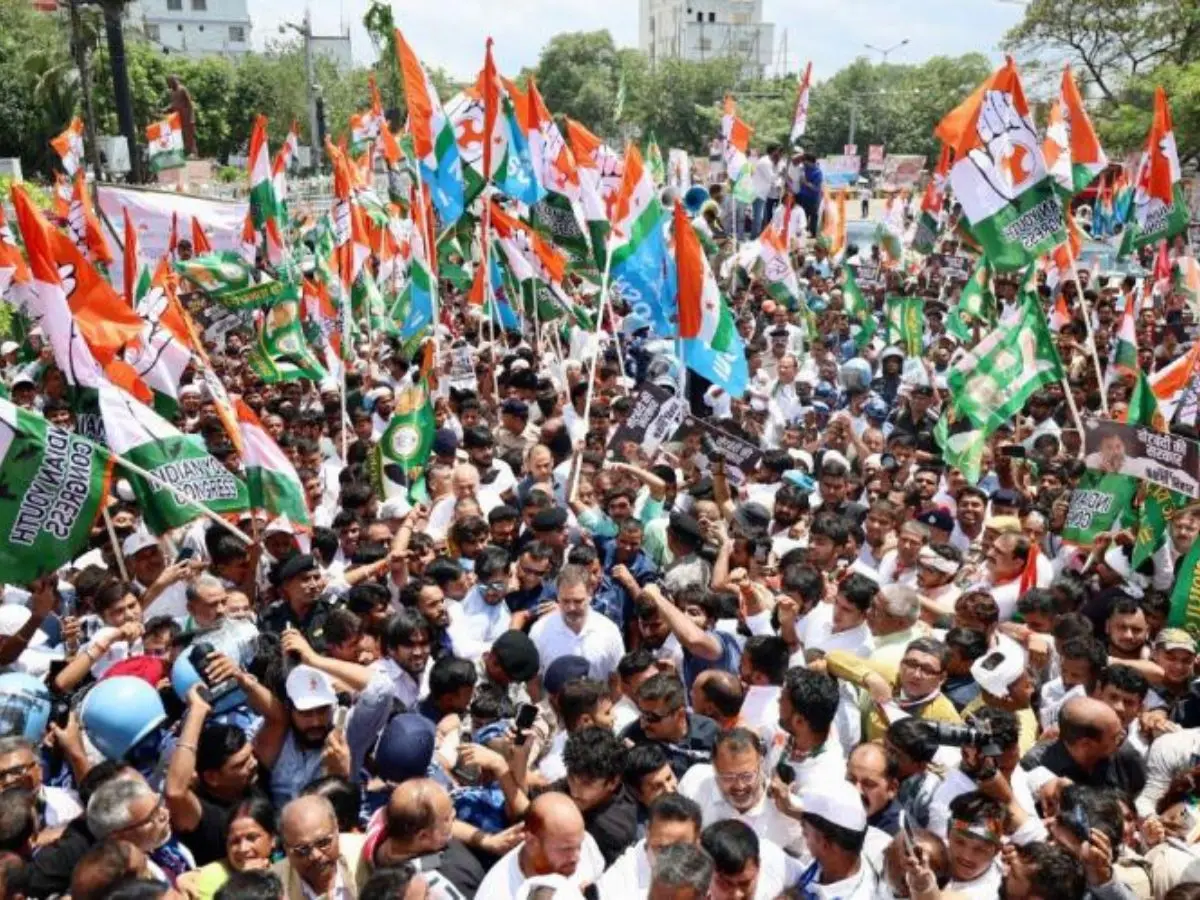
Workers assembled for the Bharat Bandh Strike Photograph: (X)
As workers are gathered in the streets across India, we look at why trade unions are protesting? The four labour codes, minimum wage, social security, privatisation, and more.
The unprecedented Bharat Bandh across the nation brought the country to a standstill. Against the government's pro-corporate and crony capitalist policies, more than 25 crores of workers assembled, joining hands to express the deep agrarian distress as well as the rising inequality in India. The government and its hostile policies have pushed billions of Indians to raging unemployment, high cost of living, and stagnating income. Workers across the spectrum, from white collar employees to gig workers, have supported the protests along with opposition parties in several states, such as Telangana, West Bengal, which have extended their support, even if it is to gain political mileage.
Why is there a Bharat bandh today?
Workers from 10 different organisations gathered in New Delhi on March 18, 2025, for the National Conventions of Workers to decide on the plan of action against the four labour codes, which “are a blueprint to impose a condition of virtual slavery” on the working people in the interest of the conglomerates. Apart from the labour codes, there is a concrete demand charter that is being pressed by the trade unions.
- Repeal of four labour codes: These four labour codes were being pushed by the Central Government to be implemented by April 1, but failed due to a lack of coordination among the states. According to the Trade Unions, these codes are aimed at curbing the democratic voices of dissent. Code on Wages makes the definition of wage ambiguous, undermining the federal structure by reducing the state-level negotiation powers of workers to demand better wages that reflect the local living costs. Industrial Relations Code reduces job security for workers, restricting lawful strikes and unionisation, and potentially weakening workers' protection. Code on Social Security fails to universalise mandates on social security, creates fragmentation, adds complexity and ambiguity, even though it recognises the gig workers, but it does not include a detailed framework related to job security, minimum wage, and working conditions. Occupational Safety, Health and Working Conditions Code leaves out informal workers and migrant labourers, defining 'workers and employers' vaguely.
- Protestors demand a national minimum wage of Rs 26,000 for all workers, including the unorganised sectors, informal labourers. They seek to implement ‘equal pay, equal work’, no casualisation of work, from outsourcing to fixed-term employment, apprentices, trainees, etc., under various schemes and pretexts. The government must ensure a minimum pension of 9,000 for all kinds of workers, from rag pickers to auto rickshaw drivers. They want to restore the Old Pension Scheme and scrap the New Pension Scheme and the Unified Pension Scheme.
- They seek compulsory registration of trade unions within a period of 45 days from submission of the application. Immediate ratification of ILO (International Labour Organisation) conventions C87 and C98 related to the right to organise and collective bargaining.
- The rampant privatisation has led to reduced subsidies for the weak and underprivileged category. The workers demand to stop the Privatisation of the Public Sector Enterprises, and the scrapping of the National Monetisation Pipeline (NMP). They want the Electricity Amendment Bill to be withdrawn, and the privatisation of electricity should be stopped. They want an amendment of the existing law on mining of minerals and metals and ensure 50% share of profit from mines, including coal mines, for the upliftment of local communities, especially adivasis and farmers.
- Farmers want MSP to be fixed at C2+50% for all farm produce with guaranteed procurement. Increase input subsidy to farmers on seed, fertilisers and electricity, etc., with a legal guarantee. Comprehensive loan waiver and crop insurance schemes. Implement the written assurances given by the Union government to the SKM, based on which the historic Kisan Struggle was suspended.
- Enhancing corporate tax, reintroducing wealth tax and succession tax.
- They also demand that the Right to work be made a fundamental right.
These are a few of the demands which prompted the trade unions to call for a nationwide strike. Workers have argued that the government is “anti-worker, anti-farmer and anti-national, pro-corporate". They argue that the protest becomes important to counter the increased informalisation of working conditions.

