Bengaluru water crisis: City turns to AI for managing groundwater levels

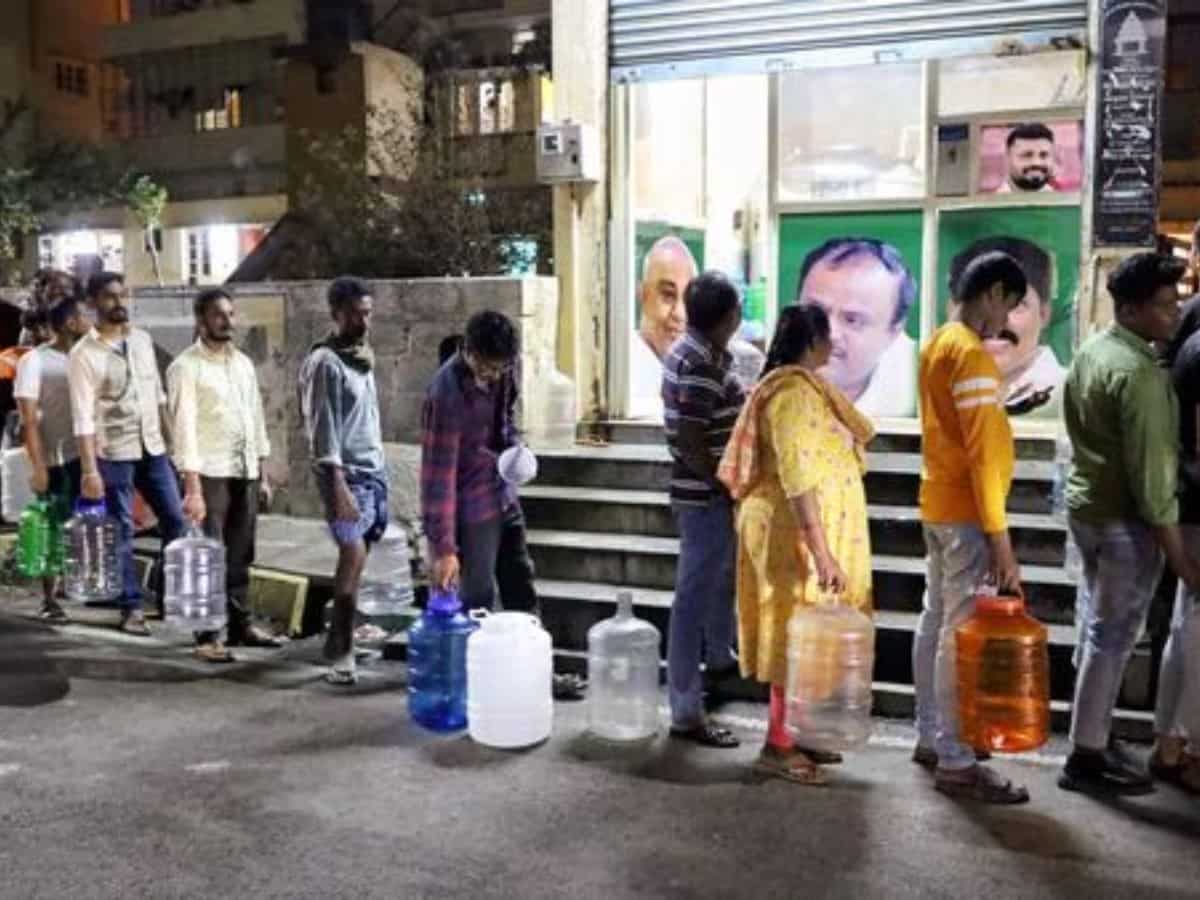
Bengaluru water crisis (File photo)
The Bangalore Water Supply and Sewerage Board (BWSSB) has announced that it will harness an artificial intelligence (AI-based) groundwater monitoring system to tackle the water crisis in the city.
The system hasbeen developedin collaboration with scientists from the Indian Institute of Science (IISc), Central Ground Water Board (CGWB) and Karnataka Groundwater Authority.Theobjective of the new systemis to better monitor and manage the groundwater levels in the city.
In a statement, the chairman of the BWSSB highlighted how the new system could prove to be a game-changer.
“Low groundwater levels are a major contributor to water scarcity in Bengaluru. Traditional monitoring systems have limitations in providing real-time, accurate data. The AI-based system will address these challenges effectively,” said V Ram Prasath Manoharas quoted by the Times of India.
He added that a dedicated ‘groundwater task force’ would be formed within theboard,that will useadvanced technology to monitor groundwater levels. The team willbe made upofexperts from IISc, CGWB, and Karnataka Groundwater Authority.
Thanks to the AI-driven system, the teamwould be able tomonitor real-time data, making it easier for them to do required analyses. The system will also report and provide comprehensive insights into groundwater availability and trends.
“The involvement of IISc scientists ensures we have access to state-of-the-art technology for accurate groundwater monitoring,” added Manohar.
“We’ll be able to identify areas with rising groundwater levels and implement appropriate measures to mitigate water scarcity,” he added.
Bengaluru has beenreelingunder an intense water crisis for weeks, with Karnataka Chief Minister Siddaramaiah saying the tech city was facing a shortage of 500 million litres of water every day.
Last year’s monsoon season, responsible for most of the annual rainfallthat thestate receives, turned out to be weaker, 18 per cent belownormal. Most of the reservoirs in the state are recharged during this period only, but the weaker monsoon season made the water stress inevitable.
(With inputs from agencies)