Bangladesh blames India for massive flooding; New Delhi responds

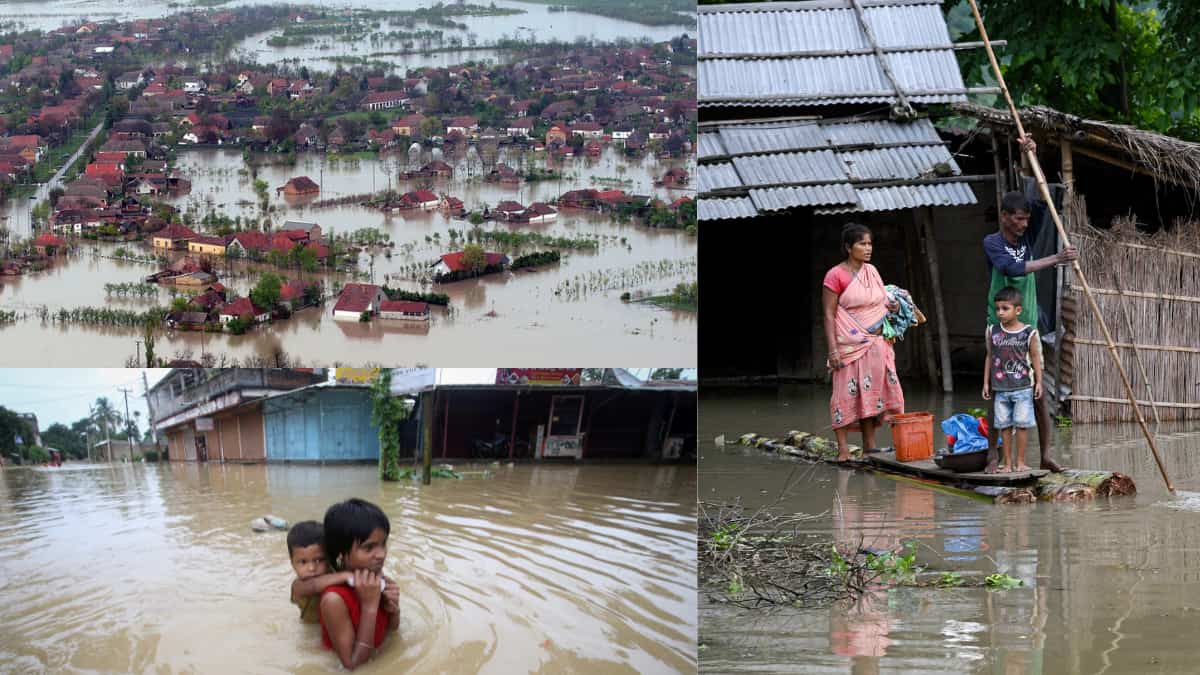
Bangladesh floods
As the massive floods in Bangladesh affected nearly 1.8 million people and resulted in five deaths, rumors began circulating, falsely blaming India’s opening of the Dumbur Dam on the Gumti River in Tripura for the deluge.
On Thursday (Aug 22), India firmly dismissed these allegations from Bangladesh, backing its stance with hardcore evidence.
"Concerns have been raised in Bangladesh that the current flooding in districts along the eastern border may be due to the opening of the Dumbur Dam upstream on the Gumti River in Tripura. However, this claim is factually incorrect," said the Ministry of External Affairs (MEA).
The Gumti River flows through the northeastern Indian state of Tripura before entering Bangladesh. The Dumbur dam, located in Tripura, is situated more than 120 km upstream from the Bangladesh border, explained the MEA.
However, the flood that caused the havoc in Bangladesh was due to water from those large catchments downstream of the dam, it added.
It may be mentioned here, Bangladesh is currently going through a political crisis and has seen a rise in anti-India sentiments.
Violent protests forced Prime Minister Sheikh Hasina to flee to India. A segment of the people in Bangladesh believes that India helped Hasina stay in power. Therefore spreadingmisinformation in such a situation becomes much easier for those with anti-India agendas.
New Delhi hits back
The MEA emphasised on bilateral cooperation and said floods in the common rivers between the two countries are a "shared" problem. And sufferings on people on both sides requires close mutual cooperation towards resolving it.
The MEA clarified that the catchment areas of the Gumti river, which flows through India and Bangladesh, have witnessed the heaviest rains of this year over the last few days.
The MEA stated that the flooding in Bangladesh was primarily due to water from the large catchment areas downstream of the dam.
The Dumbur dam is located quite far from the border -- more than 120 km upstream of Bangladesh -- the ministry said in a statement.
It further highlighted that the Dumbur dam, located over 120 km upstream of Bangladesh, is a low-height dam that generates power and supplies 40MW to Bangladesh.
"Along the about 120-km river course, we have three water-level observation sites at Amarpur, Sonamura and Sonamura 2," MEA said.
The Ministry of External Affairs (MEA) reiterated that the two countries share 54 common cross-border rivers, making river-water cooperation a key aspect of their bilateral relationship.
"We remain committed to addressing issues and mutual concerns in water resources and river management through bilateral consultations and technical discussions," the ministry stated.
Notably, around 18 lakh people have been affected by floods in six districts of Bangladesh, the Dhaka-based Daily Star reported on Thursday, while 3 million people have been stranded in eight districts.
Meanwhile, social media in Bangladesh has been abuzz, with some users accusing India of causing the floods.
"For the first time in generations, Bangladesh's entire southeastern region is facing its worst flooding in history affecting millions of people. The cause? Indian authorities opened the gates of the Dumbur Reservoir in Tripura for the first time in three decades, releasing massive volumes of water into an already rain-soaked region," said a user.
"Could there have been flooding without India opening the Dumbur Reservoir gates? Perhaps yes, but on a significantly smaller scale. The sudden release of water from the dam has inundated the region to an extent it hasn't experienced in generations," another user added.
"India has created an artificial flood in Bangladesh by releasing water from its dams and you still wonder why people hate India so much?" said a third user on X.
(With inputs from agencies)