Babri Masjid was destroyed by 'Hindu Taliban', case litigant tells Supreme Court

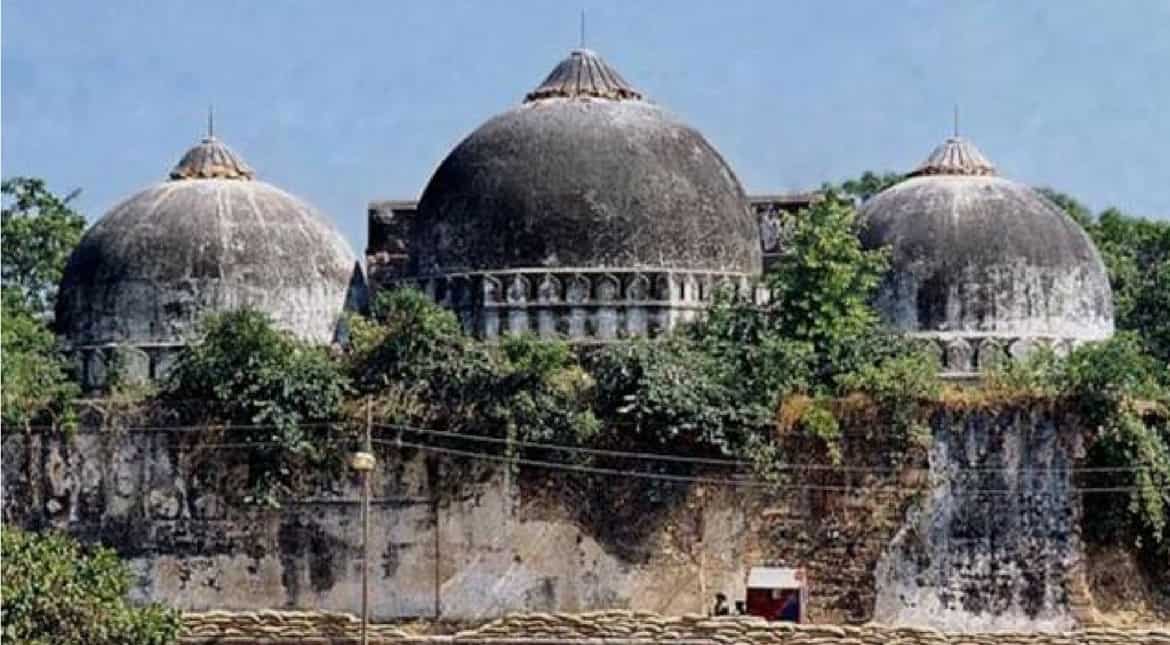
Babri Mosque
No law or the Constitution allows destruction of religious structures of any faith, the Supreme Court was told.
A litigant in the Ayodhya temple-mosque land dispute case told the Supreme court on Friday that the Babri Masjid was destroyed by the "Hindu Taliban" just like the demolition of the Buddha statue by the Taliban at Bamiyan in Afghanistan.
No law or the Constitution allows the destruction of religious structures of any faith, senior advocate Rajeev Dhavan, appearing for the legal heirs of M Siddiq -- one of the original litigants in the case and has died, told a bench of Chief Justice Dipak Misra and Justices Ashok Bhushan and S Abdul Nazeer.
Dhavan also questioned the locus of the Shia Central Waqf Board in the case.
His comments came after the Shia board told the bench that it was willing to donate one-third of the disputed land, which the Allahabad High Court had given to the Muslims, to the Hindu group for "peace, harmony, unity and integrity" in this great country.
The counsel for the Shia Central Waqf Board said they were the claimants of the Muslim share of land at the disputed Ayodhya site, as the Babri Masjid was built by Mir Baki, a Shia Muslim.
He argued that those who destroyed the mosque should be barred from making any claim since "no one has the right to destroy a mosque or any other religious structures."
He also questioned the "intervention" of an Additional Solicitor General (ASG), who was appearing for Uttar Pradesh government, in the matter and said that arguments by the law officer were "uncalled" for.
Dhavan also countered the arguments advanced by the Hindu group about "pilgrimage" and said as per their submissions, the Muslims do not have the right under Article 25 (freedom of conscience and free profession, practice and propagation of religion).
He said if arguments by Hindu group was to be accepted, then Christians might be asked to go directly to the Pope for prayers and Sikhs could be asked to go only to the Golden Temple at Amritsar.
The Muslim groups have argued before the bench that the "sweeping" observation of the apex court in the verdict needed to be reconsidered by a five-judge bench as "it had and will have a bearing" on Babri Masjid-Ram Temple land dispute case.
In February, the All India Muslim Personal Law Board (AIMPLB) said that the Babri Masjid will remain a mosque till eternity and Muslims can never exchange land for the masjid.
In a statement issued on the concluding day of its 26th plenary, the board said Babri masjid is an essential part of faith in Islam and Muslims can never "abdicate" the Masjid.
A special CBI court framed charges of criminal conspiracy against senior BJP leaders L K Advani, Murli Manohar Joshi and Uma Bharti in the 1992 Babri Masjid case.
The court rejected the discharge petition filed by the three leaders and nine others who have been accused of criminal conspiracy. Earlier, the court granted bail to all twelve accused on a personal bond of Rs 50,000.
(with inputs from PTI)