Agnikul Cosmos successfully launches world's first 3D-printed rocket engine

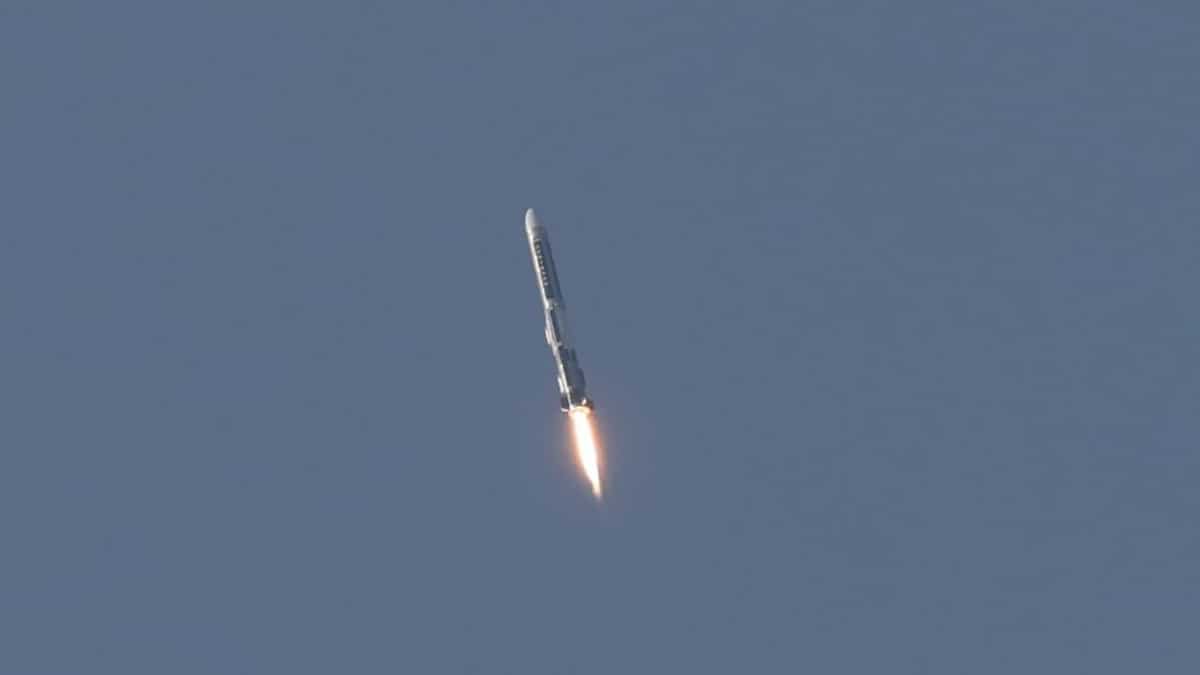
Agnikul Cosmos launches world’s first 3D-printed rocket engine
Indian space startup Agnikul Cosmos on Thursday (May 30) successfully launched its first sub-orbital test vehicle, powered by a revolutionary single-piece 3D-printed rocket engine, after facing several delays.
Agnibaan SOrTeD (Sub-Orbital Technology Demonstrator) lifted off at 7:15 am on Thursday.
Although it is the second launch by a private startup in India, it is the first to use a private launchpad that the company has set up at Sriharikota.

Prime Minister Narendra Modi congratulated the team and said on X, “A remarkable feat which will make the entire nation proud! The successful launch of Agnibaan rocket powered by world’s first single-piece 3D printed semi-cryogenic engine is a momentous occasion for India’s space sector and a testament to the remarkable ingenuity of our Yuva Shakti. My best wishes to the Agnikul Cosmos team for their future endeavours.”
Dr Pawan Goenka, chairman of IN-SPACe responsible for coordinating with the private space sector, wrote on X, “Elated at the successful launch of Agnibaan SOrTeD by @AgnikulCosmos! A historic moment for India’s space sector. Powered by world’s first single piece 3D printed semi-cryogenic engine, this achievement showcases brilliance of our young innovators.”
The Indian Space Research Organisation (ISRO) also took to X and stated, “a major milestone, as the first-ever controlled flight of a semi-cryogenic liquid engine realized through additive manufacturing”.
Usually, engine parts are manufactured separately and assembled later. Using the 3D-printed manufacturing process is likely to lower the launch cost and cut down the vehicle assembly time. The company aims to offer affordable launch services to small satellites.
“This is a significant achievement for India's space industry," said Professor Satyanarayanan R Chakravarthy, advisor to Agnikul Cosmos and head of IIT Madras' National Centre for Combustion Research and Development.
"We've developed India's first semi-cryogenic engine, and it's also the world's most intricate single-piece 3D printed component. This technology has the potential to revolutionize rocket assembly with its unmatched speed," he said.
(With inputs from agencies)