
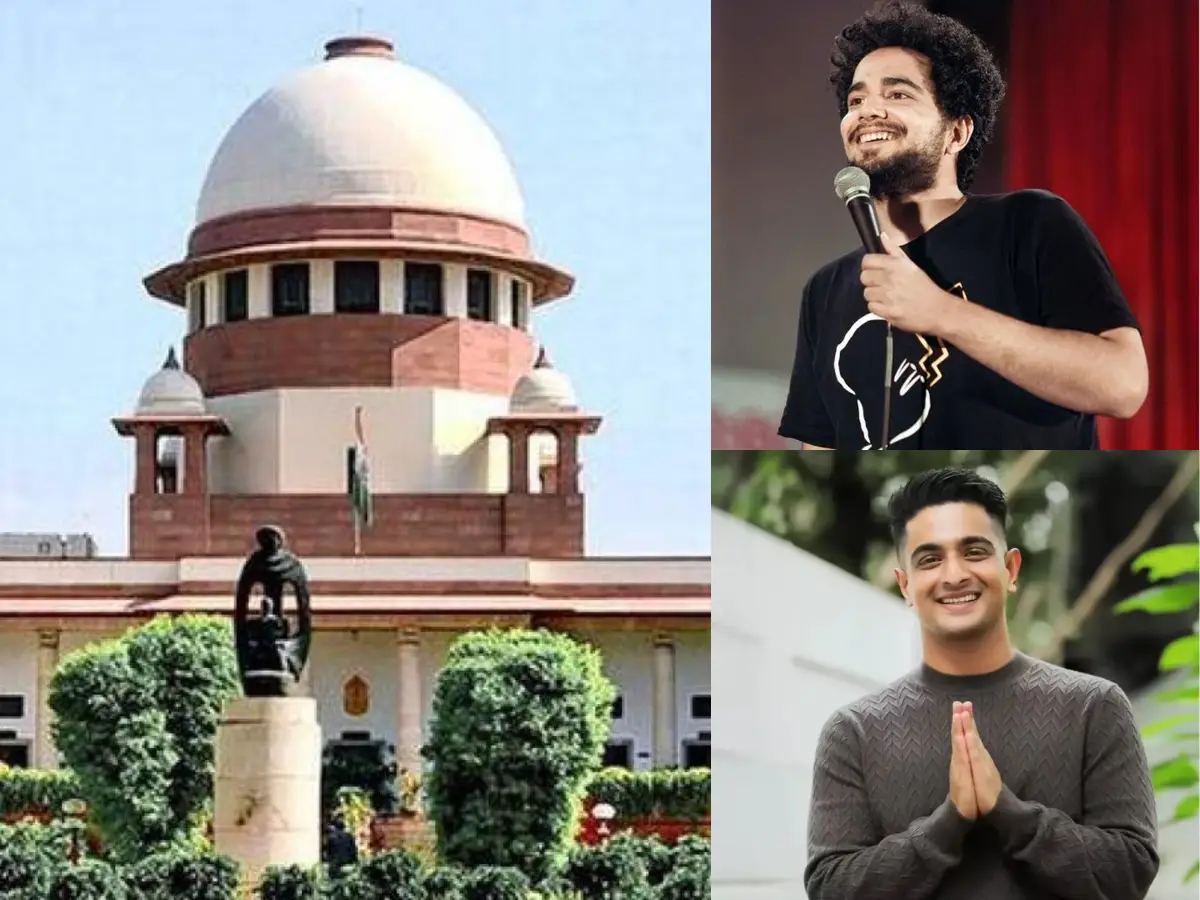
&imwidth=800&imheight=600&format=webp&quality=medium "'Right to dignity trumps free speech,' says Supreme Court while hearing pleas against Samay Raina, Ranveer Allahbadia")
The Supreme Court of India on Tuesday (Jul 15) said that an individual's right to life and dignity must prevail over another's right to free speech. The top court said this while hearing a batch of petitions concerning influencers, podcasters and YouTubers, including Samay Raina and Ranveer Allahabadia, who recently made headlines for their remarks during the online show India's Got Latent. The Supreme Court asked the union government to come up with a set of balanced regulatory guidelines to curb obscenity and offensive content on YouTube and social media but instructed that this must be done without crossing into censorship.
The central government is to come up with a regulatory framework
The court noted that if there was a race between Article 19 (free speech) and Article 21 (right to life with dignity", the right to a dignified life would trump that to express freely. "The right to dignity emanates from the same Constitution which the other people cite to protect their right to speech. Article 19 (freedom of speech and expression) cannot prevail over Article 21 (right to life and dignity). This is what it has to be. If there is a race between Articles 19 and 21, Article 21 has to trump Article 19".

While instructing the union government to come up with a balanced regulatory framework, the Supreme Court of India emphasised that the framework must not only define the boundaries of free speech but also define the obligations that come with the right. It said that the guidelines must take care of both the freedom and the limits where the rights end and duties start: "At the same time, we will be careful with the guidelines. Something approved by the court has to be for posterity, and we have to remain cognizant that they cannot be misused. State’s power needs to be balanced with citizens’ rights. We have to protect the citizens’ rights but at the same time we have to ensure this does not end up trampling upon fellow citizens' rights".
SC gave the government time to propose the guidelines while noting that any regulatory framework must be in line with "constitutional principles" and said, "We will invite open debates on these guidelines. Stakeholders, including members of the bar, may give their viewpoints".

