&imwidth=800&imheight=600&format=webp&quality=medium "'Green hydrogen, water taxis and road safety': Nitin Gadkari outlines India’s transport future at WION World Pulse summit")
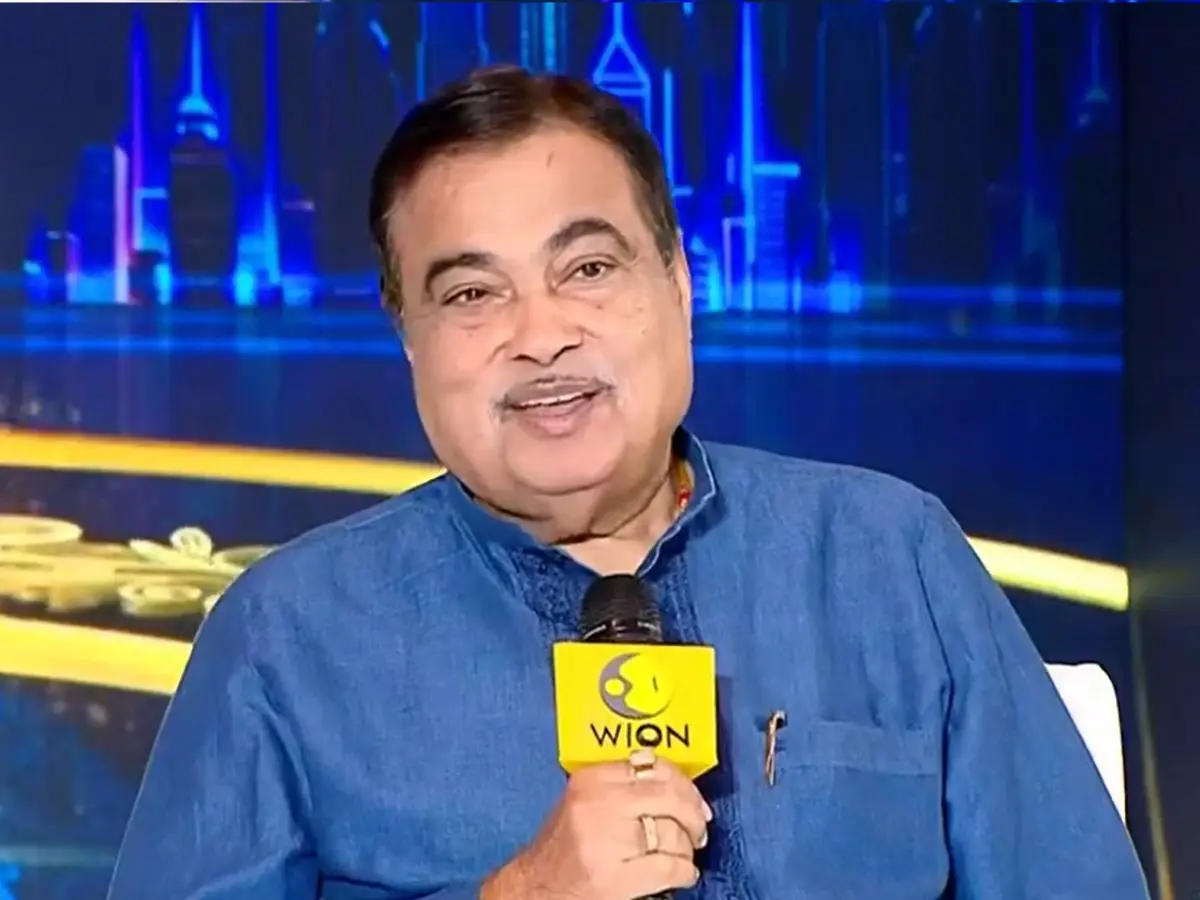
India’s Minister of Road Transport and Highways, Nitin Gadkari, outlined a bold vision for faster, smarter, and more sustainable mobility. He highlighted how emerging technologies, alternative fuels, and modern infrastructure can bridge transport gaps and make travel across the country more efficient. In an exclusive conversation at WION Pulse summit on Wednesday (Mar 18), he discussed the roadmap for achieving these goals and the initiatives already underway.
Gadkari emphasised the need to modernise the country’s transport systems. Many passengers face inconvenient travel times between airports and hotels, underscoring the need for faster, smarter solutions. To address this, teams in India and globally are exploring drone taxis. “While a commercially viable solution has not yet been achieved, I actively encourage these efforts,” Gadkari said.

The transport minister also highlighted initiatives from his tenure as Shipping Minister. “I converted 102 rivers into waterways, including 1,350 kilometres of navigable routes on the Ganga from Varanasi to Haldia. Waterways were also developed on the Brahmaputra, and river ports were established at Ghazipur, Varanasi, Haldia, and Sahibganj,” he explained. Giving a practical example, he noted that travel from Mumbai to Alibaug can take just 15–17 minutes via five-floor water ships. “My dream project in Mumbai, inspired by Venice, is a water taxi from Vasai-Virar to the new Mumbai airport in 17–19 minutes. India should invest in water transport, which is far more cost-effective. Transportation by road generally costs Rs.10, by rail Rs. 6, but by water only Rs. 1,” Gadkari said.
He concluded with a clear infrastructure hierarchy: “Our focus must be first on water transport, second on railways, third on roads, and fourth on aviation. Research and futuristic planning are essential to advance our mobility systems.”
Alternative fuels and hydrogen
Speaking on energy and mobility, Gadkari underlined the importance of ethanol blending, hydrogen, and green hydrogen. “I have been working on this since 2004. It takes time for people to build trust in alternative fuels and biofuels. Initially, neither the government nor anyone else provided support—it takes time. After all these efforts, the alternative fuel, biofuel, and e-vehicle economy has grown to Rs. 2 lakh crore,” he said.
However, challenges remain, particularly in hydrogen transportation and refueling infrastructure. “The basic problem is hydrogen transport and hydrogen filling stations; they remain the dark areas. There is no ready solution yet,” Gadkari admitted. He cited initiatives involving major industry players: “As part of the National Green Hydrogen Mission, the government has initiated five pilot projects for using hydrogen in buses and trucks.”
The minister acknowledged that progress is gradual. “The industry is growing, technology is evolving, and the government is supporting it. The reduction in GST has also been helpful. Slowly, people are accepting it. Unfortunately, fossil fuel imports have not decreased because demand continues to rise, which is why I campaign for alternative and biofuels, using vehicle that promotes ethanol and hydrogen fuel technology and advocating for e-vehicles, leaving behind my bulletproof vehicle,” he said.
Tackling urban congestion
On urban transport, Gadkari highlighted the challenge of addressing today’s problems while simultaneously creating infrastructure for the future. “Building new roads in Delhi and Mumbai is difficult, so we are now adopting a ‘bypass surgery’ approach, developing roads within existing routes. Even after constructing these new sections, traffic volumes and congestion do not decrease significantly,” he explained.
He outlined measures to improve urban mobility, including building ring roads in Bengaluru, and Hyderabad, and a new corridor connecting Delhi and Mumbai via Vasai-Virar. Targeted schemes are underway, he emphasised, to reduce congestion and streamline transport policies.
Road Safety and public behaviour
Road safety remains a critical concern. India experiences approximately 500,000 accidents annually, resulting in around 1,80,000 deaths. Gadkari noted that around 50,000 fatalities occur because helmets are not worn, while 30,000 are due to non-use of seat belts. He highlighted the key focus areas for improving road safety: “First, road engineering has historically had flaws, so we are correcting ‘black spots.’ Second, we have introduced significant improvements in automobile engineering, I have been actively involved in improvemnts, including mandatory six airbags and electronic braking systems,” Gadkari explained.
Gadkari acknowledged that human behaviour remains a major challenge, with traffic rules frequently ignored and rash driving persisting. To encourage civic responsibility, he explained, “Under a new scheme, anyone who assists an accident victim and ensures medical attention within the Golden Hour is eligible for a Rs. 25,000 reward and a Certificate of Appreciation, with recognition available up to five times a year for repeat acts of bravery.”
Despite these measures, Gadkari admitted the scale of behavioural change remains slow: “People neither fear the law nor respect it. We are working tirelessly, but we have not yet been able to significantly reduce fatalities and accidents.”