
&imwidth=800&imheight=600&format=webp&quality=medium "French police clash with students blockading schools, 440 detained | Gravitas")
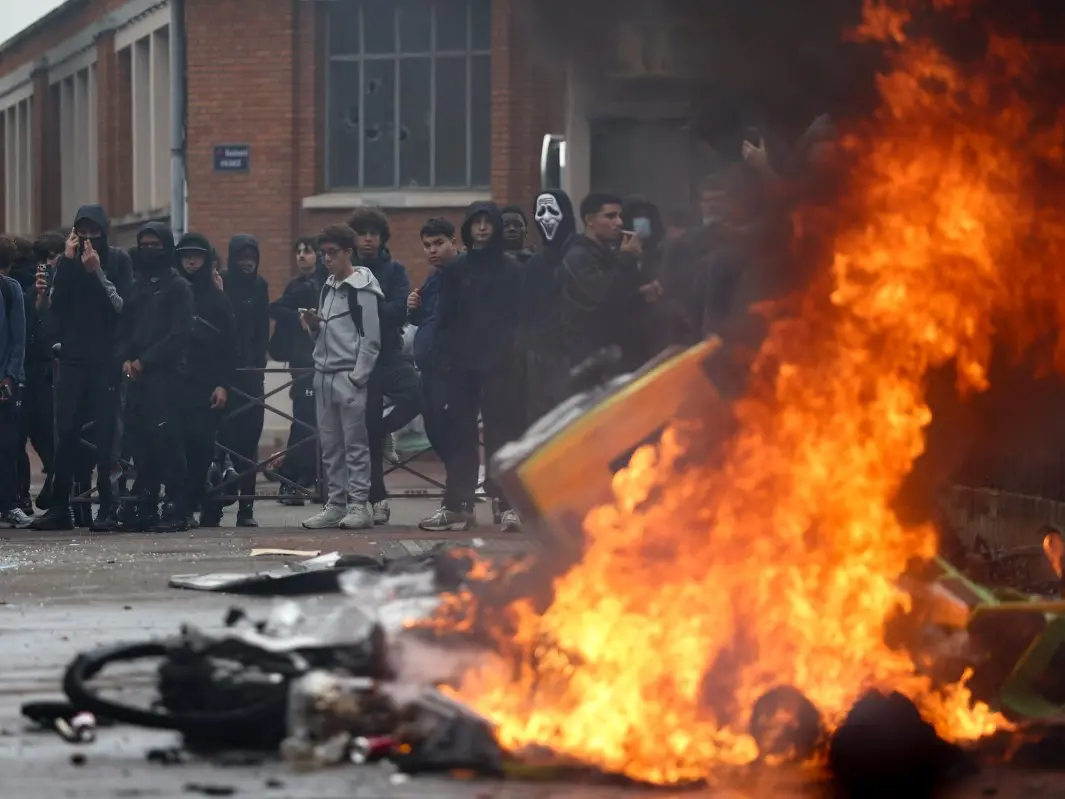
Student protests which started in Paris last week, have now spread to at least 400 high schools across the country. As the protests turned violent in some places, the police detained about 440 persons, most of whom were minors. 76 others have been injured. Take a look at these visuals.
High school students in the northern French city of Lille set garbage bins and electric bikes ablaze. Tensions flared outside a barricaded high school, where masked protesters threw projectiles at police officers. According to France's interior minister, there were seven incidents in which people threw hydrochloric acid at law enforcement officers.
But what has triggered the student protests? It has to do with the conditions in France's high schools where students between the ages of 15 and 18, generally spend their final three years of secondary education. Many protesters have complained of, deteriorating buildings, poor sanitary conditions and extreme temperatures in classrooms. Concerns have also been raised over large class sizes, absent teachers and exhausting schedules. Listen in to a student voicing her concern.

Now, the protests coincided with a nationwide public sector strike against the government's proposed budget which includes funding cuts worth 61.3 billion U.S. dollars. A day earlier, thousands of people working in the country's public services hit the streets in Paris, voicing discontent against the government's proposal to freeze base salaries of state employees in 2027. Firefighters also denounced the lack of resources alloted by the government to combat massive wildfires during the summer season.
Now, the protests also gained a political dimension, with politicians from France unbowed party joining the demonstrations. While the government has said that difficulties in high schools must be acknowledged and addressed, French president Emmanuel Macron made it clear that violence cannot be justified.