Interview | Sthal director Jayant Digambar Somalkar: Wanted to kick off a debate on patriarchy

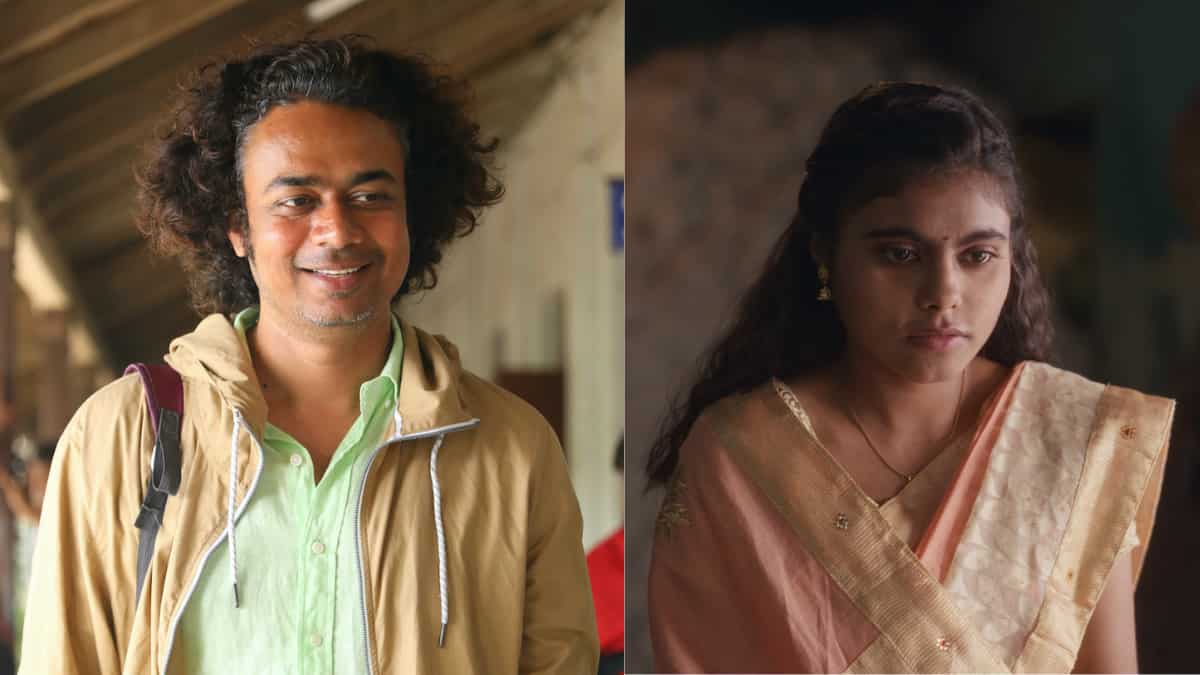
Jayant Digambar Somalkar discusses his debut directorial Sthal with WION.
Indian filmmaker Jayant Digambar Somalkar's debut Marathi feature film, Sthal (A Match), had its world premiere at the 48th Toronto International Film Festival earlier this month. It went on to win the prestigious NETPAC (Network for the Promotion of Asian Cinema) award. This movie, representing the sole Indian entry in the Discovery Programme, delves into the customs of arranged marriages in rural India, addressing profound topics such as patriarchy, colourism, and societal constraints.
Set in Jayant's native village, Dongargaon, in the Chandrapur District of Maharashtra, Sthal features an ensemble cast of first-time actors from the village, led by Nandini Chikte as Savita, the film's protagonist.
During a special conversation with WION, Jayant Digambar Somalkar discusses his transition from an engineering graduate to a filmmaker, the selection of arranged marriages as the film's theme, the decision to cast non-actors in crucial roles, and his expectations regarding the film's impact on audiences.

Edited excerpts:
You have an engineering background and yet you pursued filmmaking. Can you describe your journey?
Many can relate to my story (laughs). I come from a middle-class family in Maharashtra's Chandrapur district, where the common career choices are engineering or medicine. Although I excelled in my studies, I always had a creative side, enjoying activities like drawing and writing poems. During college, I got involved in cultural programmes, but I was still pursuing engineering. After completing my degree, I mustered the courage to discuss my desire for a different path with my family, which resulted in protests and arguments. I didn't have a clear plan, but I was determined to follow my own path. Through a series of random opportunities and a stint as an assistant director in advertising, I eventually found my way into the creative industry. Watching stand-up comedy sparked the idea that I could write jokes too, leading me to work with Sony TV on Comedy Circus. From there, one thing led to another, and I became a filmmaker. My filmmaking education mainly came from watching great cinema at film festivals. Today, with the internet, access to knowledge is easier, and I finally realised that filmmaking was my true calling.
I understand the mindset of parents when it comes to arranging marriages for their daughters. To them, it often feels like they are relieving themselves of a responsibility. You delve into that in Sthal. What motivated you to make this film, especially as a debut project?
Actually, I've witnessed it firsthand. I come from a family of four siblings—two brothers and two sisters. Both my sisters had arranged marriages, and as the youngest, I observed how people perceived them in our own household. I saw the kind of questions and judgments they faced. Although I was young at the time, these experiences left a lasting impression on me. You know how certain visuals and memories stick with you.
Later, I had an eye-opening experience when I went to meet a potential match for my cousin. It was the first time I truly focused on what might be going on in the young woman's mind as she was scrutinised by a group of ten people. This moment prompted me to return to Mumbai and craft a story. That was four years ago. However, my involvement in the web series Guilty Minds kept me occupied. Nevertheless, this personal connection and observation served as the catalyst for my film. Sthal is a slice-of-life story that presents the perspective of a girl in an arranged marriage, and it's deeply inspired by these experiences.
What led you to the decision to cast non-actors in Sthal, and what intrigued you about this approach?
My main goal was to infuse the film with authenticity. I chose to set the story in a village near Chandrapur, my hometown, where the Marathi dialect, known as Varhadi, is distinct from the Marathi spoken in cities like Mumbai and Pune. This dialect comes naturally to the local people. While trained actors can adapt, their pronunciation might not feel as genuine.
I considered using well-known actors, but I decided to cast locals from my village. I conducted auditions at my college and found the main protagonist there. Everyone else, including the mother, father, and other characters, were from the same village. The advantage was that they didn't need to act; they already lived the lives of those characters. For instance, the people playing farmers were real farmers, and the same applied to the housewife. They were intimately familiar with the language and lifestyle of the roles they portrayed.

Were there any challenges?
There were many challenges because these actors had never been in front of a camera before. They hadn't even dreamed of working in a film. Initially, they were excited about being on camera, as most people are in theory. However, when we provided them with scripts and started preparations, they became nervous and often forgot their lines. The actress playing the protagonist was exceptional from the beginning, but with the others, I had to put in a lot of effort. Despite these challenges, I'm extremely pleased with the outcome. You wouldn't even notice that these individuals are non-actors.
The lady portraying the protagonist's mother initially thought her role would take just a couple of hours. When she and the others had to spend 10 to 12 hours on set, she expressed disbelief, asking if it was over after every shot. I told her to think of it as labour pains — painful at the moment, but the end result would make it all worthwhile.
Films have often been seen by many as harbingers of social change. Did you make the film thinking that it would start some sort of conversation about arranged marriages?
See, change does not come that quickly. But if your movie or your book makes some people think about the issue at its centre, I think you have done your job. If 10 per cent people who watch Sthal think deeply about the unjust tradition of arranged marriage... I'll be happy You know how they say marriages are made in heaven? When it comes to arranged marriages, women and her family have to go through hell. Not every arranged marriage is like that obviously. I have tried to make my film as non-preachy as possible, but I do want my audience to think about what they saw. Girls deserve to choose their life partner without any familial pressure. It should not be like, 'Oh she's old enough, let's marry her off'. So that's what I want: to kick off a debate over patriatchy.
With the international exposure your film is getting, do you thinkoverseas audiences will be able to relate to Sthal's story?
Yes, absolutely. I firmly believe that most stories have a universal quality to them. While Sthal is set in a small village in Maharashtra, the themes of patriarchy and the oppression of women are global issues. In one way or another, these challenges exist nearly everywhere, albeit with varying degrees of intensity. Therefore, I think that anyone, regardless of their background, can relate to the story and its characters.
WATCH WION LIVE HERE
You can now write for wionews.com and be a part of the community. Share your stories and opinions with us here.