The Fabelmans review: Steven Spielberg's ode to cinema is his career's best

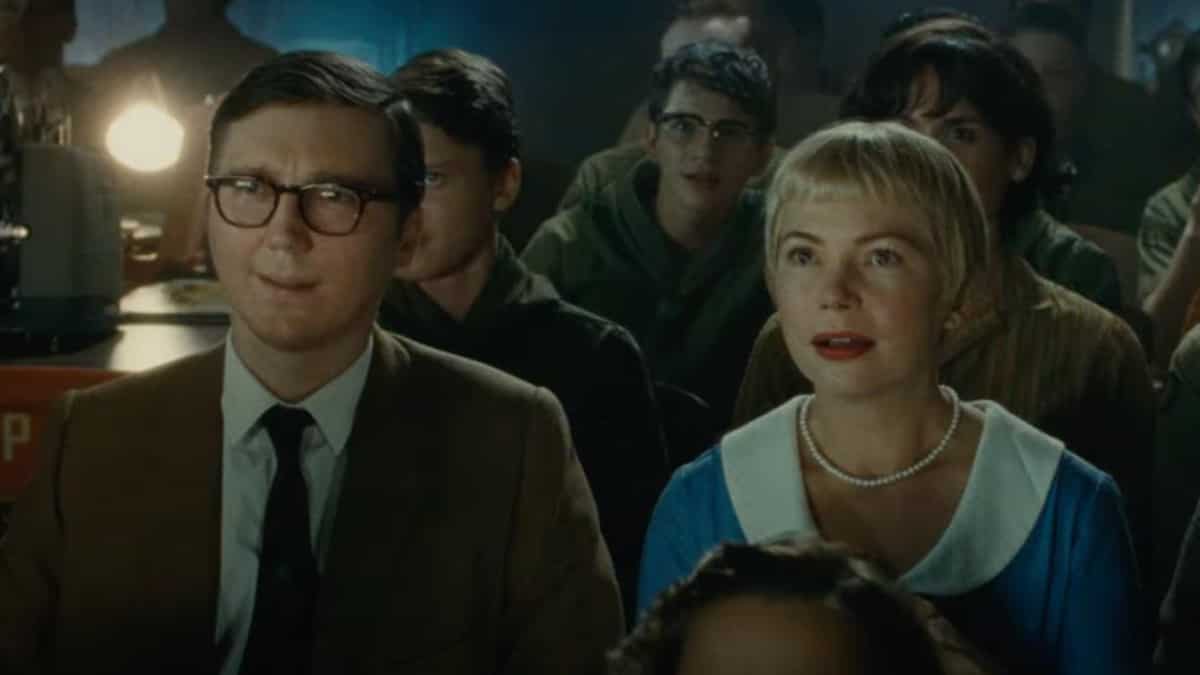
'The Fabelmans'
If one is asked to pick on Steven Spielberg's best film to date, it would be difficult to pick one because the maverick filmmaker in his nearly five-decade-long career has given cinema lovers some of the most pathbreaking, some time ahead of its time, endearing films. From musicals to war dramas to stories based on fiction, to science-fiction, Spielberg has always managed to captivate the audience with his nuanced storytelling, giving emotions and visualisation great importance in all films. A theme that runs high in his latest, 'The Fabelmans' which is his most personal film to date and perhaps his best.
Semi-autobiographical in nature, 'The Fabelmans' narrates the story of Sam Fabelman and his somewhat dysfunctional family. Sam navigates life and the drama that comes with it in his own way with a camera as his constant companion. 'The Fabelmans' not only is a coming-of-age story of a young boy but also of following one's passion and listening to heart over head and learning to strike a balance when need be. While the story is not the most unique, it is the treatment and Spielberg's personal touch, that makes 'The Fabelmans' a stunning film.
When 8-year-old Sam Fabelman is taken to the theatre to watch his first film, he is initially scared. But his parents Burt and Mitzi are quite convinced he would like his first movie outing even though the couple later aren't sure if they should have brought their son to watch a screening of 'The Greatest Show On Earth.' Often considered a path-breaking film for its time, the film's last scene ends with an elaborate train crash scene and while Burt and Mitzi uncomfortably exchange looks with each other over the violence shown on screen, little Sam watches with absolute fascination and soon enough get obsessed in recreating the scene at home with his toy trains. He soon develops a liking for filming things at home with his father's camera. While his mother, a former piano player, encourages her son's new passion, his father Burt, a scientist only considers it as a hobby.
As the family grows and they move cities owing to better job opportunities for Burt, Sam finds his camera as the constant companion. He may not be excelling in sports like other boys in school, but he captures stunning visuals on camera and even holds private screenings of short films he shoots, often experimenting with effects in post-production. His fascination for filming everything is a blessing and a curse as he not only finds it as a form of expression but also leads to trouble in his parent's complicated relationship.
Written by Spielberg along with Tony Kushner, the beauty of the film's narration lies in the detailing. The narrative relies heavily on slow reveals, from the introduction of each new character in the frame to the big reveals in the plot, the reveals take time, building suspense and intrigue into a linear narrative. It helps that the nuanced writing is ably enacted on screen by the actors. Michelle Williams, in her Oscar-nominated role, infuses life into an artistic, slightly different Mitzy. She is a proud mother to a gifted boy but is also never quite okay with being worshipped by her genius but bland husband Burt. Michelle emotes through her eyes and delivers a stunning performance. But Williams is not the only star of the show, actor Paul Dabo plays the kind, understanding, and practical Burt Fabelman, the patriarch of the family who wants to keep a healthy balance in his familial life but is also ambitious about his career.
The film is though a coming-of-age story of Sam Fabelman, ably performed by Gabriel Labelle who in his breakout performance is commendable. Labelle brings in the right amount of vulnerability to his portrayal of a boy who is passionate about cinema but also realises the perils of capturing anything and everything. He brings in the right amount of innocence that is required to play a boy whose life is shown through the years.
The film's cinematography byJanusz Kamiński and music by John Williams aids the narrative effectively. Also, watch out for the terrific cameo by David Lynch at the end!
The beauty of 'The Fabelmans' is that even though it is talking about a person's love for cinema- a theme well explored in numerous films in the past- it never glorifies that passion. Perhaps because of its biographical nature, 'The Fabelmans' allows the viewers to look at the passion for cinema through an objective lense, just like Burt.
While biopics and memoirs usually whitewash the lead protagonist, 'The Fabelmans' provides aperspective. It steers clear of taking any sides and instead concentrates on the emotions of a family that is truly passionate about life in general.


