Palestinian filmmakers Farah Nabulsi and Darin J Sallam share difficulty in telling Palestinian stories

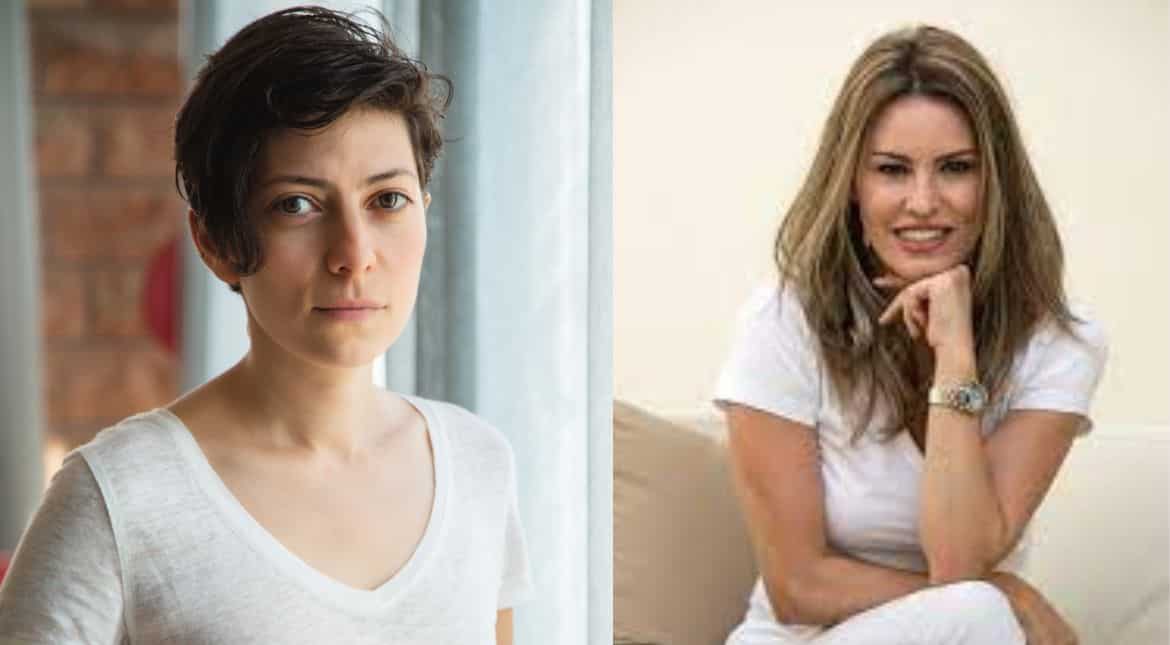
Palestinian filmmakers Farah Nabulsi and Darin J. Sallam
It’s possibly the most difficult thing being creative at a time when your people are being bombed with no respite in the future.This is what Palestinian filmmakers are going through.
Directors Farah Nabulsi and Darin J Sallam recently came together to discuss how ongoing violence in Gaza has impacted the Palestinian creative community.
They spoke about the collective guilt of not being able to help the situations of their people in Gaza, the hardships they’ve endured telling their stories, concerns over Hollywood censorship.
They hope to be able to preserve Palestinian history for the Muslim Girl Code podcast‘s debut episode “Will Storytelling Save Palestine?”
Palestinian identities influence filmmakers' stories
For the podcast’s first Ramadan episode, they got in conversation with MuslimGirl.com founder Amani Al-Khatahtbeh, filmmakers Nabulsi and Sallam shared how their identities as Palestinian women have influenced the stories they bring to focus.
Independent cinema poses tough challenges
Baring like it is, Nabulsi, a British-Palestinian filmmaker whose recent works include the Oscar-nominated short The Present and The Teacher, notes that the difficulties she has faced have mostly been because of independent cinema being a challenge in itself and that the stories she wants to tell are Palestinian and set in Palestine.
“Making it in independent cinema, regardless of whether you are Palestinian or not, is extremely difficult and hard,” Nabulsi said before adding that indie filmmaking is “an endurance test” especially in a male-dominated industry.
She added, “I am British-Palestinian, but even as a Palestinian, that’s never been an issue for me; it’s more that the stories I’m telling are Palestinian stories set in Palestine.
“You have a big majority of the film industry that isn’t necessarily particularly excited or interested in supporting films on that subject, whether it be from the development stage to the production stage, or to the distribution stage.”
Jordanian-Palestinian Sallam said that while working on her 2021 film Farha, she faced struggles not so much because of her Palestinian identity but because of the content of the film.
Farha is set during the Nakba of 1948, and centres around a 14-year-old Palestinian girl named Farha as she watches catastrophe consume her home.
Israeli forces enter her town as part of a military action that displaced more than 700,000 Palestinians.
The directors also spoke about the hatetheir films received online as they debuted.
“The climax in the struggle of ‘Farha’s” journey was just before the release of the film on Netflix. It was the same time when the film was nominated to represent Jordan in the Oscars race, and when the Israeli government launched this attack and this campaign against the film to harm it and to lower the rating on IMDb,” Sallam said.

