Dirk Maggs: 'In audio entertainment, you are a partner in the enterprise'

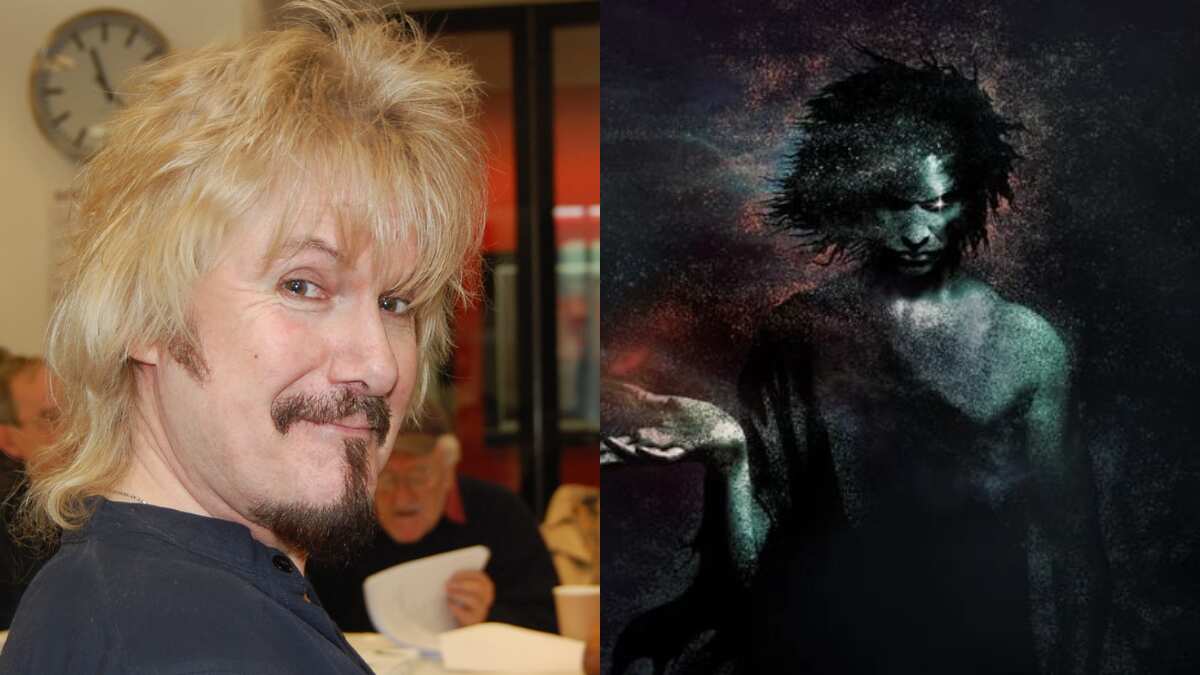
Dirk Maggs has been an audio storyteller since the 1970s.
It will not be an overstatement to say that Dirk Maggs has revolutionised sonic storytelling. Currently, the British writer-director, who exlusively works in audio entertainment has become the foremost name in the field. That's mainly due to the massive success of his adaptations of Neil Gaiman's DC comic-book series 'The Sandman' for Audible, Amazon-owned audiobook and podcast service. Notably, the series was also adapted as a TV series by Netflix.
Directed by Maggs and co-written by him with Gaiman, the adaptations sport an all-star voice-cast with names like James McAvoy, Kat Dennings, Taron Egerton, Samantha Morton, Bebe Neuwirth, Andy Serkis, Michael Sheen, and Riz Ahmed. It spawned a Hindi adaptation in India with Vijay Varma, Tabu, Kubbra Sait, among others in the cast.
In audio, direction works much as it does in film and TV. And Maggs is to audio entertainment what Denis Villeneuve is to cinema. He creates almost hypnotic auditory experiences that go way beyond a simple audiobook, which is a straightforward narration of the written word. Under his direction, entire worlds come alive. Using sound effects and layered soundscapes, he builds audio experiences that even without the presence of visual elements feel rich and immersive.
A megahit with the readers in the 80s and 90s, 'The Sandman' stories, which centre around a powerful, elemental being called Dream and his journey towards redemption, have found a whole new, not to mention much bigger, audience thanks to Maggs.
He spoke to Wion about how he got into the field, how he does what he does, the advantages audio has over video, his collaboration with Douglas Adams, and more. Here are edited excerpts from the interaction.
Q. How did you get into this field?
I wanted to be a filmmaker. I thought I would be making films. And when I joined the BBC as a trainee studio manager, I said to everybody on the course, 'I'm out of here as fast as I possibly can. I'm going into TV, then I'm going to go into films.' And within a year, I had worked on a film in a film studio in Canada on a feature film, and I'd worked and I was doing an attachment a secondment to BBC television, and I hated both of them. There was a lot of waiting around. It was such a literal medium. What was on the screen... that was it. There was no ability to weave the story in and out of the thing. And in those days, it wasn't HDTV. We didn't have CGI. So to be fair, it might be a little different now. But I went back into audio and I began to play with what was possible. And when I had the opportunity to make stories in the medium, it was mainly comedy. But that was a good thing, which I'll explain. But I realised as soon as I was hearing sound effects, I was seeing something as soon as I heard a background, if you hear just city skyline, you have a vision of a city, it's in your head. Your brain will create these images. It's a bit like when you're falling asleep, after a very big dinner, relaxing on your chair, and someone somewhere in the house drops a teaspoon or a book, and your brain will incorporate that into the dream you're having. And the brain is an amazing thing you don't need to do stuff that goes in through the front door, you go in through the side doors, and the picture still happens in your mind. I realised the power of the medium. The first thing I did was a Superman docudrama to celebrate the superhero's 50th birthday. Sheer sheer chance. I thought I can make a Superman movie here. I can have all the special effects and you know, 'wooshes' and so on. And that was it. I was hooked. But I knew it was going to be hard work at the same time. I thought for the rest of my life, I'm going to be listening to stuff till my brain runs out of my ears. But it has been a joyful journey. And I love that it's a hidden art. I love that. You're not seeing it being created. You were just entering a world.
Q. You said the first thing you did at BBC was comedy, and that was a good thing. Why?
A. Comedy is the best teacher of how to do drama. There was thisactor who on his deathbedwas asked what's it like to die. And he said 'Dying is easy. Comedy is hard.' And it kind of is in a way. One of the first shows I did was a weekly topical satire. It was jokes about the news, but it was an audience show so we had 300 people every week, with the performers working two microphones at the audience. So you hear the audience laughing on the track. They're part of the show. But you had to get those laughs. You couldn't have them sitting there silently. So the script had to be funny. And if you're doing that on a weekly basis, no exceptions. That's tough work. And so you learn the rhythms of comedy. In order to get the laugh, you plant the idea, you develop the idea, and then you spring the surprise. And then the audience laughs because they weren't expecting that. Well, drama is pretty much the same thing. And a really good storyteller like Neil Gaiman is very much into comedy. I think comedy and drama are really close. Because in the end, you're there to set up an idea, develop it, and then you pay it off. Now, the payoff can be a joke or dramatic beat in the story.
Q. I loved Netflix's 'Sandman'. But even with the advantage of visuals, I connect on a deeper level with the audio adaptation. What advantages do you think audio has over video specifically when it comes to storytelling?
A. Well, the joke answer would be you can do your ironing at the same time. *pause* I love pictures. At the end of the day, if I've been working in sound all day, I'll just go and put my feet up and veg out to a movie. So there's nothing wrong with visual media. In audio we let you, the listener, be the focus all the effort. At the same time, you are part of the creation of the thing, you are a partner in the enterprise. And without your participation what we do isn't the same and interestingly, different listeners interpret audio stories differently. How you see Dream in our stories is entirely up to you. It might be the Dream of the comic books or it might be something else. So you have the choice of creating any world you want, and we will supply everything else and put you in that world. How you choose to see it is your affair. And I love that we are working in partnership together.
Q. While adapting written material into audio, how do you ensure that the essence of the original story is kept intact even as you add your own voice? I think you succeeded on that level with 'Sandman'.
A. It's brilliant that you saw that. It's a case of wanting to represent it accurately. How many movies have we all seen, for example, where they seem to have thrown the book out the window and just done their own way? I hate that. If it's someone as important as Neil, I want to show that the guy's genius in every facet. So it wasn't that hard to do [with 'Sandman']. Comic books aren't hard to do in audio because we aren't fighting the image, we can live comfortably alongside the image in the book. There are moments where I have to slightly explain more, and hopefully, my dialogue then doesn't sound too clunky. There have been very few problems and they have more to do with the years that have passed since the comics were written (in late 1980s and 1990s). Attitudes have slightly changed. The way he introduces these issues is slightly out of date. So I can massage that. When you get to the second act of Sandman in which we have a whole storyline about a trans person, and that didn't need substantial work. But there are serial killers, and a whole scene in a diner where people are being murdered. You don't want to step away from it, you want to be as graphic. But at the same time, you want to be sensible. But I think the one thing I'm really pleased with Kshitij is that we I managed to get inside Neil's head. I knew that there would be a TV series quite early on. And my approach to this changed completely at that point. I threw out the script when I was about halfway through episode one. Because I knew I had to absolute, I knew that a TV series would change things, it would be a different kind of experience because it is. So in our version, I decided the listener is going to be sitting on Neil's shoulder as he imagines this. You will be in his head as the pictures come. And so when Neil said, if you're having a narrator, I'd quite like to do the job if you'd have me. And I said 'Yes, please!' immediately because I didn't want to give him a minute to change his mind.
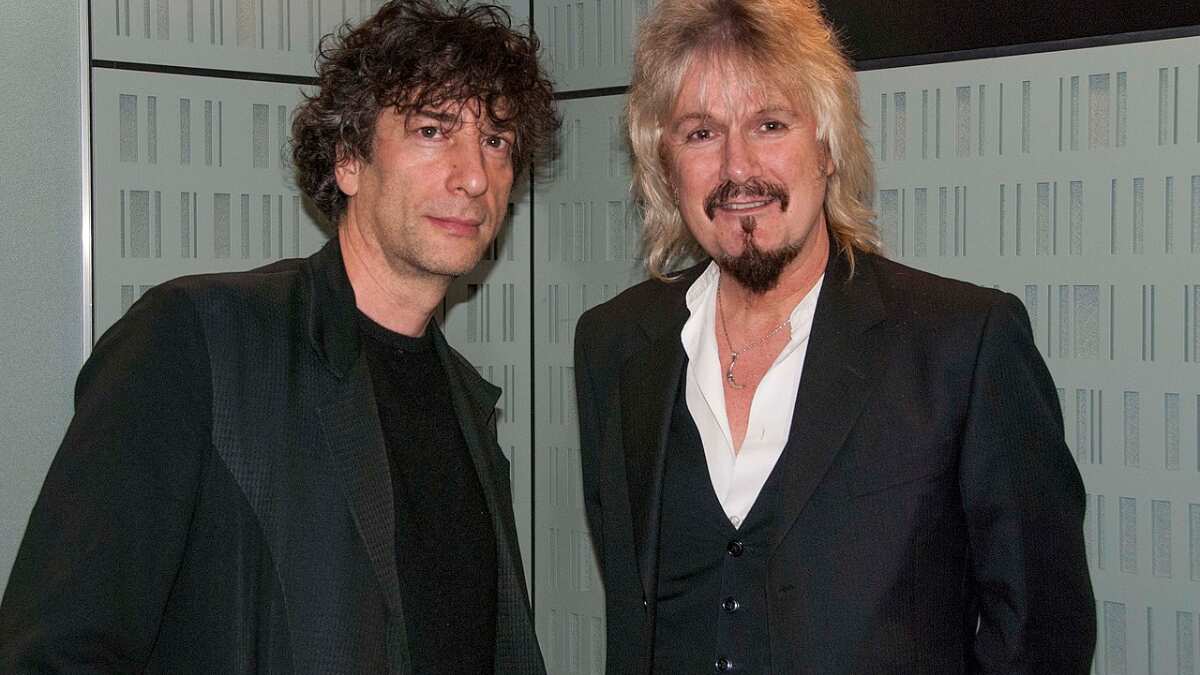
Q. Can you describe your process of adapting stories and how the words you write will or should sound when they are voiced? Do you have any control?
A. Well, I'm very fortunate in that I direct as well as write. So having written the script, I'm in the room with the actor as they are saying the lines. The process with James McAvoy who played Morpheus for us was that he and I had about three long zoom calls, with just him sitting in his kitchen and me here talking through how we saw the character and where Morpheus was coming from. And how, and this is really interesting about the character, he is not a hero, he can be despicably mean. It was quite a complicated thing, and we had to find a way into it. And there were technical things like James has a Scottish accent. But he can do any accent. I said he needs to have a straight English accent here. And I'm certain that Vijay Varma, as Morpheus would have had the same conversation with the team directing the Hindi version. I was always at the end of the phone, if somebody had a problem.
Q. What are some of the challenges that you have faced while adapting stories for audio? You also worked with Douglas Adams.
A. I'm lucky because Douglas and I got to discuss everything, you know, and then, and then it didn't happen. And then it did happen after he died. So thank God I had that conversation with him. You know, I didn't have to use a seance to check stuff with him. There's always the risk of making it clunky. Most of my problem-solving is with sound effects, getting sound effects to tell the story so the actors don't have to, and that can be magic at times and other times a real headache because you don't know how to. I mean, gun in my hand is loaded is quite easy. If you just hear a gun cocked, for example, that tells you a gun is in the room. And if the line is 'I'm gonna kill you', you know that this is the guy who's probably holding the gun.
Neil and I disagree a lot about narrators. Neil likes narrators, and I don't. But when Neil offers to be the narrator, you say 'fine!'. I try not to have a narrator because I like the challenge of telling the story as if it was a movie, where dialogue and sound effects and music bring that emotional warmth to it. And of course, you've listened to 'Alien' dramas. So you know one of the key characters in the alien drama doesn't have language. It's just a kid. So then you really have to be inventive. After a bit, it becomes fun to challenge yourself to tell a story without words as crutches, and isn't as Douglas said once to me, "You don't have to tell the audience everything, they will work it out." And it's just how far can you push that is really my thing.
Q. You have a great relationship with Neil Gaiman. Do you actively have conversations with authors whose books you are adapting while you are writing the script?
A. Very much so. I asked Neil if he still had the scripts of 'Sandman' and thank goodness he did. So I could get those and see what he'd written and that was important because I literally wanted to take what he'd said. And that also helps because sometimes he would write in the original scripts. There's a sort of preface where he says, 'I've had a terrible week. I've written this story three times, I can't make it work. So I've started again, here it is.' And you realise that it's not easy for him. And in the same way, I'm talking to Douglas Adams, 30 years ago in the basement of his house in London. And somebody's just written a script, supposedly for the first episode of the third series of 'Hitchhikers', and he hates it. And he rang me in my office at the BBC and said, 'Can you come around?' and I turn up at the house. He's sitting in the basement at his laptop, typing out a script as it should be. And he's done about two pages. And then he slams the laptop saying, "I can't write this twice. And I said, "Well, I'll do it." And then he goes, "Oh, yeah, alright, you do it." And you can take the credit. But so you get a sense of how hard it is to do creative work. And with Douglas we had a lot of technical conversations about 'How do we solve this? How do we do this?' What's really interesting about these stories is that have created such rich mythologies for people, but at the end of the day, you have to approach it like an engineer — taking apart a machine, taking a toolkit and, and using a wrench to undo the bolts and take the top off and lift off the lid and look inside and think, 'Oh, my God, you know, how could this still be running when it's such a mess?' But you see the trial and error that helped Douglas and Neil arrived at a result and how finely judged something is when you see a director's cut of a movie that isn't as good as the movie you remember, things like that.
Editorial choices are so subtle and tight. When I can talk to the authors or see their work... not their final work, but the prep work. That works.
Watch WION live here: