'Dhadak': Janhvi and Ishaan hold their own in a synthetic remake of 'Sairat'

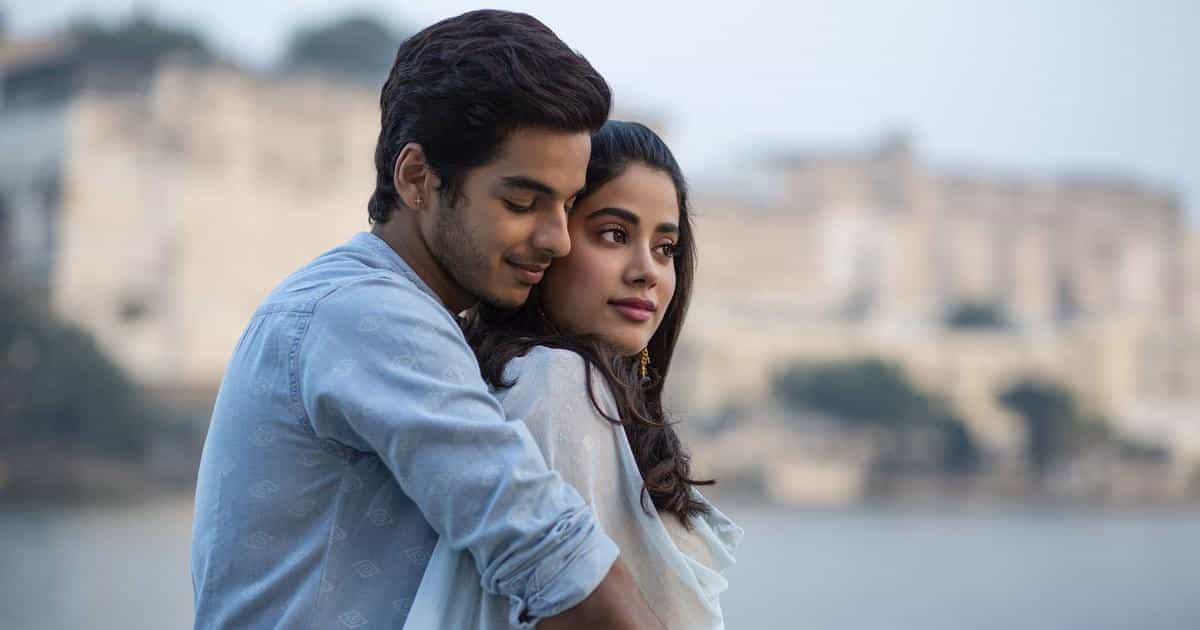
Perhaps the best way to enjoy 'Dhadak' is to watch it without comparing it to the original.
Remaking a cult classic is always tricky. Even if the makers harp that its an adaptation and not really a remake. Comparisons are bound to occur and even if one casts a bunch of talented actors- it is nearly impossible to make the film look as authentic and convincing as the original one.
Director Shashank Khaitan's latest film 'Dhadak', an 'adaptation' of Nagraj Majule's 'Sairat'may have served the perfect launchpad for two star-kids, Janhvi Kapoor and Ishaan Khatter, where they got to showcase all that they had - but the film, despite the glitz, glamour and colours of Rajasthan, lack the authenticity that Sairat had.
Let's face it. Udaipur might be a small-tourist town in Rajasthan but it isn't Karmala taluka(the backdrop of Sairat). So the class divide that exists in the city that has scores of foreigners visiting it every year, is perhaps abysmall. Or even if it is- the modernity that has come to the city thanks to the tourists, the mix of culture that now co-exist, makes the lines between upper caste and lower caste blur a bit. It definitely isn't as harsh as it is in the interiors of teh country. So when Madhukar (Ishaan Khatter) aka Madhu's father warns him to stay away from Parthavi (Janhvi Kapoor) because she is upper caste- you almost say out loud 'So?'.
Nagraj Manjule's story, adapted in the urban milieu by Shashank Khaitan, tries hard to convince the viewers of the hardships that the couple has to endure in the film once they come to Kolkata. In Sairat, the two escape and live in a slum in Hyderabad, where Archie, who comes from an affluent family, has issues drinking water from the tap or using the public urinal or doing the daily chores. In Dhadak, the struggles are almost on the surface because Khaitan never really shows the stark disparity. Parthavi doesn't know how to wash clothes properly, which unlike Archie's anguish is hardly a problem that we can empathise with.
The two new actors- Janhvi Kapoor and Ishaan Khatter- try to fit into their small town characters. Unlike the original where the lead pair were rank newcomers from actual small towns with zero exposure to acting- 'Dhadak' couple are far more aware of how filmmaking works. Far more polished, city-bred and literally play acting- which shows in many of the scenes. Nevertheless, the two are good in their respective roles. Ishaan stands out more than Janhvi in his role as the vulnerable, innocent Madhu who is forced to mature and grow up because of his love. Ishaan emotes through his eyes, knows where to restraint and where to show exuberance and makes you love his character Madhu. Janhvi's performance suffers a bit because of poor writing. Archie in Sairaat was a boss lady, knew what she wanted. Janhvi- perfectly dressed in designer Manish Malhotra's, hair blow-dried perfectly even in distress, is a lot more vulnerable and dependant on Madhu. But the debutant tries and manages to shine in some of the scenes although she has less screen presence than Ishaan.
The music by Ajay-Atul is fresh and beautiful much like the duo's compositions in the original. I just wished they had not put a very Marathi Zingaat in a Rajasthani set-up.
Perhaps the best way to enjoy 'Dhadak' is to watch it without comparing it to the original. The original, amid all the romance, fun and frolic- spoke of the grim reality. It was raw and hence was able to connect with audiences across the country despite having non-actors in its cast. Dhadak, on the other hand, is acommercial film that subdues a lot of the grim realities with glamour and opulence. The stark diference in the two families is not apparent, it is just spelt out coupla e of times, the hardships they endure in Kolkata do not stir anything in you.

