Why China cannot afford to fund its campaign of provocation

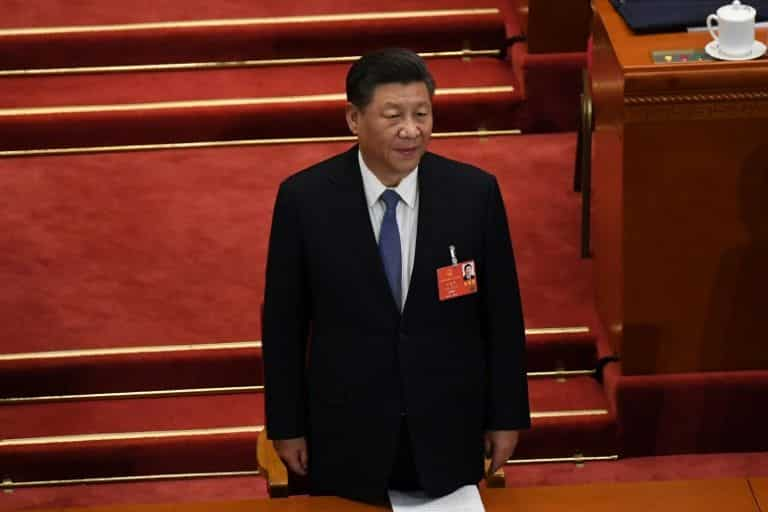
China President Xi Jinping
The coronavirus outbreak has brought China’s extraordinary,nearly half-century-long run of growthto an enda stark reminder of the enormous task ahead for world leaders trying to restart the global economy.
Since mid-August, the United States has repeatedly riledChinaby sending warships to theSouthChinaSeaand has blacklisted 24 Chinese entities over their involvement in building and militarising artificial islands there.
China's faulty policies have exposed the countries to vulnerabilities such as financial stress due to massive unpaid debts.
Chineseofficials said that the world's second-largesteconomyshrank 6.8 percent in the first three months of the year compared with a year ago, ending a streak of untrammeled growth that survived the Tiananmen Square crackdown, the SARS epidemic, and even the global financialcrisis.
The five largest Chinese banks posted at least 10 percent profit declines for the first half of the year. These poor results, the result of increased provisions for bad loans, were the biggest profit drops in at least a decade.
The profit drops are a warning of long-term troubles, especially because, in all probability, the banks are understating the severity of bad loan problems. Moreover, the outlook for China’s banks is gloomy because the outlook for China’s economy is gloomy.
These five Chinese institutions—the Big Four of Industrial and Commercial Bank of China, China Construction Bank, Agricultural Bank of China, and Bank of China plus the Bank of Communications—are struggling.
The essential problem is that the Chinese economy—like the economies of almost all other countries—was flattened by efforts to control the coronavirus. Gross domestic product contracted 6.8% year-on-year in the first calendar quarter of this year, according to the official National Bureau of Statistics. In reality, it was down about twice that.
At least 43.8 billion yuan could not come in because 7 companies filed bankruptcy restructuring applications.This includesthe Peking university founder group.
Technology is the worst-hit industry which has accounted for more than a third of the average default.
China's property market is the biggest "grey rhino" - a very obvious yet ignored threat - in terms of financial risks, given it is so deeply intertwined with the financial industry, the head of the country'sbanking regulator said.
Guo Shuqing, who is chairman of theChinaBanking and Insurance Regulatory Commission (CBIRC) and party chief of the country's centralbank, made the comments in a collection of articles by policymakers onChina's 14th Five-Year Plan, the official Shanghai Securities News reported on Monday.
Loans related to the property market currently account for 39% of totalbankloans inChina- to say nothing of a large amount of bonds, equities and trust investments with exposure to it, Guo said.
"It's safe to say that the property market is currently the greatest grey rhino in terms of financial risks," he was quoted as saying.
Guo also noted that modern technologies have brought and will continue to bring big changes to the financial industry, with digital currency, cybersecurity and information security emerging as key challenges for regulators.
In response, Guo said the CBIRC would use innovative ways to regulate large technology firms to prevent risks and monopolies, while promoting their development, according to the report.