US job openings sink to two-year low, labour market remains tight

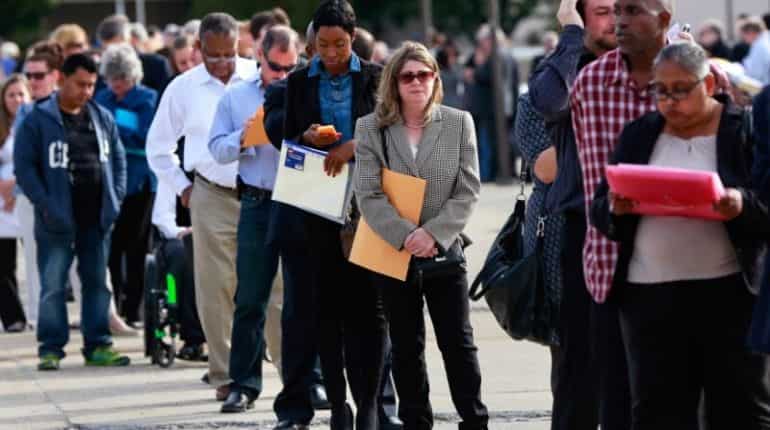
US jobless
The recent job openings data indicates that the state of the U.S. economy remains concerning. This poses a significant challenge for the Biden administration, which has been actively seeking ways to revitalize the struggling economy.
According to the Job Openings and Labor Turnover Survey (JOLTS) report cited by Reuters, job openings, which serve as a barometer of labor demand, experienced a decline of 34,000, settling at 9.582 million by the end of June. This figure marks the lowest level since April 2021, falling short of economists' prediction, which anticipated 9.610 million job opportunities.
These numbers reflect conditions typical of a tightly competitive labor market, potentially influencing the Federal Reserve's decision to maintain current interest rates.
Reduced job transitions may impact inflation positively
Labor Department data released on Tuesday reveals a declining sense of confidence among workers in the labor market, as resignations experienced their most significant drop since April 2020. The decreasing trend in people transitioning between occupations indicates that wage growth will slow down and eventually help in reducing inflation.
Reuters cited Eugenio Aleman, chief economist at Raymond James in St. Petersburg, Florida, as stating, "While today's report discusses data from June, this continued strength in the labor market is likely to keep Fed officials hawkish."
In the wake of last month's reports highlighting a substantial decline in inflation during June, the JOLTS survey has further reinforced the notion that the economy is on a trajectory toward the Federal Reserve's "soft landing," as opposed to a recession. The Federal Reserve has raised its policy rate by 5.25 percentage pointssince March 2022, including the most recent increase last week.
Despite prevailing opinions among analysts that additional rate hikes are unlikely in the current phase of tightening, the trajectory will heavily depend on the upcoming job and inflation data.
Mixed sector trends emerge
Furthermore, hiring experienced a decline of 326,000, reaching a low of 5.905 million — marking the lowest point since February 2021. This drop led to thehiring rate dropping to 3.8 percent, the lowest recorded since the initial wave of the pandemic, down from 4.0 percent in May.
In a shift across industries, healthcare and social support saw a notable increase of 136,000 job opportunities, while vacancies in state and local government expanded by 62,000, excluding education roles.
Conversely, sectors such as transportation, warehousing, and utilities saw a decrease of 78,000 available positions, likely due to the alleviation of supply chain bottlenecks.A reduction of 29,000 unfilled positions occurred in state and local government education, along with a decline of 21,000 federal government vacancies.
(Inputs from Reuters)
WATCH WION LIVE HERE